If you want to understand the Korea behind the sageuk dramas, the folklore and the food — the whole long story of this country — there's one place to start: the National Museum of Korea (국립중앙박물관) in Seoul. It's the nation's flagship museum, one of the largest in the world, and it holds Korea's greatest treasures from the Stone Age right through the Joseon dynasty.
Best of all, the permanent galleries are completely free. It's beautiful, calm and not remotely stuffy — soaring stone halls, a huge reflecting pond, and a famously meditative room — and it's an easy subway ride from central Seoul. Here's everything you need to do it well.
A quick word on scale, because it genuinely catches people out. This is one of the largest museums in the world by floor area, with a collection numbering in the hundreds of thousands of objects and permanent galleries spread across three big floors. You will not see all of it, and you shouldn't try — the surest way to ruin a visit here is to march dutifully past every case until your feet give out and your eyes glaze over. I've made that mistake. The museum is far better treated like a city you're sampling than a list you're completing: pick a few neighbourhoods, see them properly, and leave the rest for next time. Below I'll give you a short highlights loop that does exactly that.
Where: Yongsan, Seoul — right beside Ichon Station (Subway Line 4 & the Gyeongui–Jungang Line), linked to the museum grounds by a covered moving walkway. Admission: the permanent exhibitions are free; only special exhibitions are ticketed. When: open most days, with extended evening hours on some days — but times and closed days do change, so confirm on the official National Museum of Korea website before you go. (Send me the official link or a VisitKorea page and I'll add it here.)
Why this is the museum to start with
If you're coming to Korean culture through dramas, music or food, there's a missing piece you might not even know you're missing: the long story underneath all of it. Why are the sageuk kings so obsessed with ancestors and legitimacy? Why does so much Korean art prize restraint over flash? Where do the folklore creatures and the celadon and the gold crowns actually come from? The National Museum of Korea is where all of that gets joined up. It walks you, in order, from the first stone tools on the peninsula through the ancient kingdoms, the Buddhist golden age of Goryeo, and the Confucian centuries of Joseon — the same Joseon court you've watched scheme and suffer on screen.
It's also worth knowing that the museum in its current form is relatively young. The building you visit in Yongsan opened in 2005, purpose-built and vast, after the national collection had spent decades moving between temporary homes — including, painfully, a spell inside the former Japanese colonial headquarters that once stood in front of Gyeongbokgung. So this isn't a dusty old institution; it's a confident, modern statement about a country reclaiming and presenting its own history on its own terms. That backstory quietly informs a lot of what's on display, and it's part of why a visit here feels less like homework and more like meeting the country properly.
How the museum is laid out
The permanent collection fills three floors, each with its own focus. Knowing the map saves you a lot of aimless wandering:
- 1st floor — Korean history. The Prehistory & Ancient History galleries (Stone Age, Bronze Age, the Three Kingdoms, Silla, Gaya, Balhae) and the Medieval & Early Modern History galleries (Goryeo and Joseon). This is the whole storyline of Korea, in order.
- 2nd floor — art on paper. The Calligraphy & Painting gallery, including a breathtaking Buddhist painting hall, plus a Donations gallery of gifted private collections.
- 3rd floor — sculpture, craft & Asia. The Sculpture & Crafts galleries — Buddhist statues, metalwork and the celebrated celadon — plus a World/Asian Art gallery with pieces from across the continent.
You walk in through the dramatic central hall — the "Path to History" — with the great stone pagoda rising up through the middle of the building.
What to see — the highlights
The museum is huge, so don't try to see everything. These are the pieces worth making a beeline for.
1. The Room of Quiet Contemplation (사유의 방)
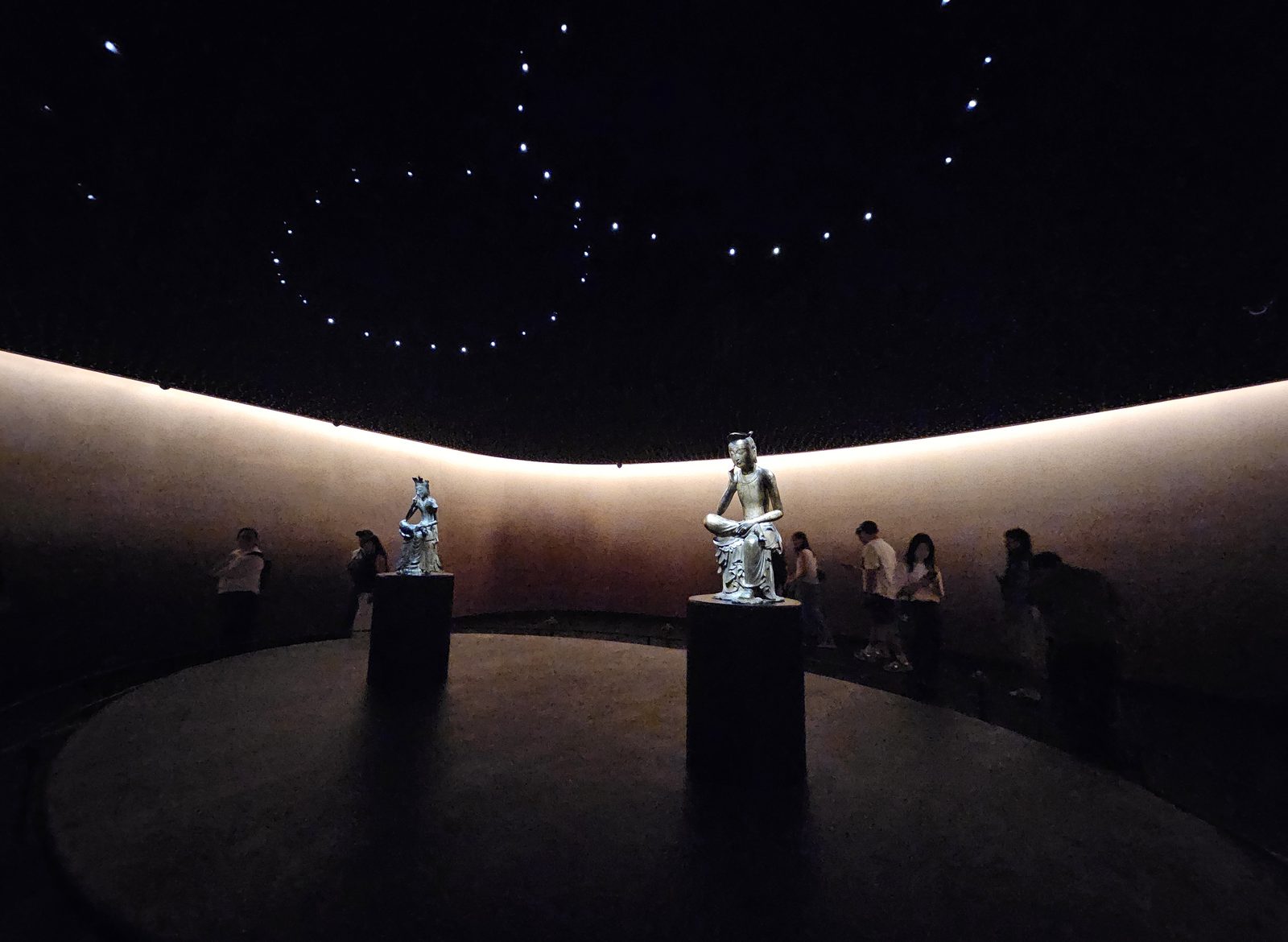
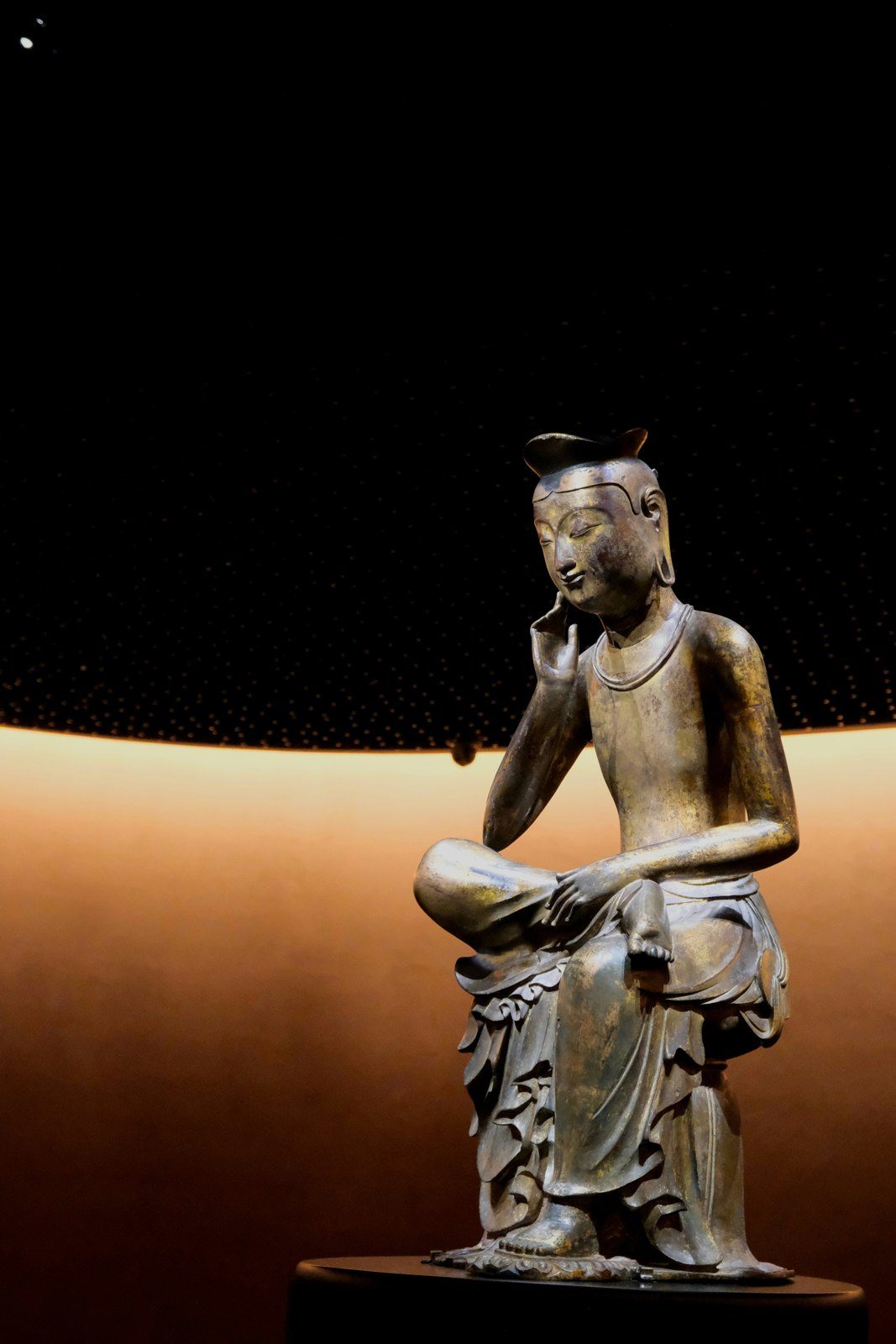
A dim, hushed gallery built around two gilt-bronze Pensive Bodhisattva statues (반가사유상) — both former National Treasures, shown together in a space of their own. With their faint half-smiles and endlessly studied poses, they make up the museum's most beloved and most photographed room. It's genuinely moving in person; give it more time than you think you'll need.
2. The Ten-Story Pagoda of Gyeongcheonsa (경천사 십층석탑)
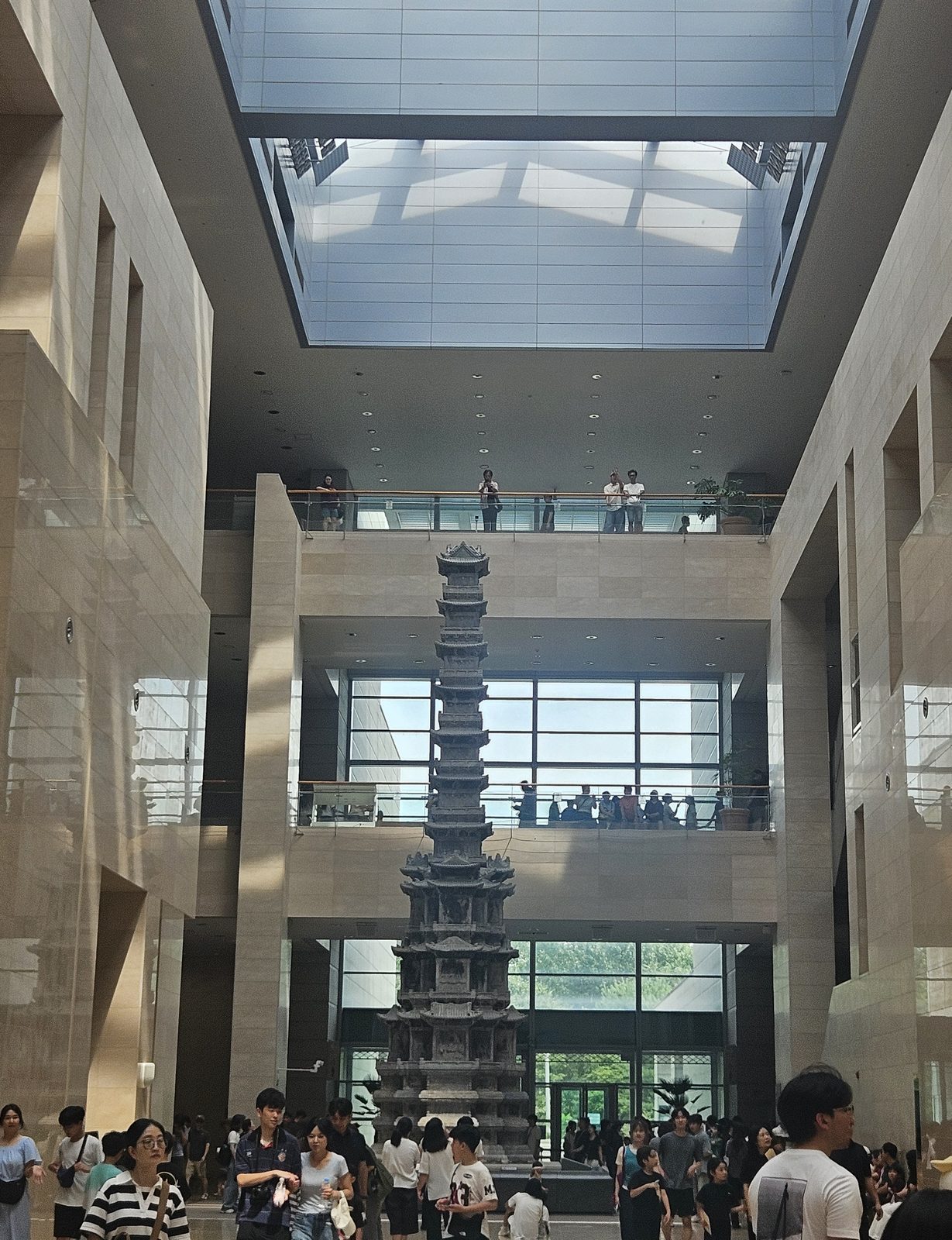
A soaring, almost impossibly intricate marble pagoda from 1348, in the late Goryeo period. It stands ten storeys tall right inside the museum's central hall — it was even carried off to Japan during the colonial era and later returned home. You literally cannot miss it; it's the spine of the whole building.
3. Goryeo celadon (고려청자)
The serene jade-green ceramics that are among Korea's proudest artistic achievements — especially the inlaid sanggam celadon, where delicate patterns of cranes and clouds are carved into the surface and filled with coloured clay. The plum-shaped maebyeong vases are the stars.
4. Silla gold (신라 금관)
Dazzling gold crowns, belts and ornaments pulled from the royal tombs of the Silla kingdom — the same ancient era you can walk through in Gyeongju. Up close, the gold-and-jade work is extraordinary.
5. Joseon white porcelain (조선백자)
After the jade-green flash of the celadon, the Joseon ceramics feel like the opposite philosophy in clay: plain, milky-white baekja porcelain, often with the barest brushstroke of blue or a single sprig of decoration. It can look almost too simple at first — until you understand that the restraint is the point. These pieces are pure Confucian taste, prizing modesty and quiet over ornament, and the big full-moon jars (달항아리, dalhangari) in particular have become something close to a national symbol. Sit with one for a minute and you start to see why Koreans find them so moving.
6. The Buddhist painting & calligraphy hall
Up on the second floor, the Calligraphy & Painting galleries hold some of the museum's most atmospheric rooms, including a darkened hall for fragile Buddhist paintings and large hanging scrolls. Because old silk and paper can't take much light, these galleries are kept dim and rotate their displays to protect the works — which means you never quite know what you'll catch, and it's part of the pleasure. The hush and the low light make it one of the calmest corners of the whole building.
7. The outdoor stone garden
Don't rush straight out. The museum grounds hold a quiet open-air collection of old stone pagodas, lanterns and Buddhas, plus a large reflecting pond — a lovely, free place to slow down before or after the galleries.
Join Seoul Mate free and I'll send you "Where to Start" — the 10 K-dramas I recommend to every beginner — plus a weekly pick. No spam, leave anytime.
When to visit
Because the whole thing is indoors and climate-controlled, the National Museum is a true any-weather, any-season stop — which makes it the perfect card to keep up your sleeve for a rainy day, a brutally hot summer afternoon, or a cold snap when you don't fancy palace-walking. Within the week, weekday mornings are calmest; weekends and Korean public holidays bring families and tour groups, and the Room of Quiet Contemplation in particular can develop a queue. If you can, go early.
One lovely option to know about: on certain days the museum stays open into the evening, and those late hours are quieter and genuinely atmospheric, with the big stone halls lit up and the crowds thinned out. The exact closed days and evening-opening days do change, though, so check the official National Museum of Korea site before you build your plan around a specific slot.
How to get there
This is one of the easiest major sights in Seoul to reach by subway. The museum has its own station — Ichon Station, served by Line 4 and the Gyeongui–Jungang Line — and from there a covered moving walkway leads you most of the way to the entrance, so you're barely outdoors at all. From central Seoul it's a quick, direct ride. If you're already in Yongsan or near the river it's also a pleasant walk in through the park. As always in Korea, use Naver Maps for door-to-door directions rather than Google, and if the subway itself is new to you, our Seoul subway guide will get you sorted.
If you only have one or two hours
The collection is far too big for a single visit, and trying to "do it all" is the quickest route to museum fatigue. A great short loop:
- Start in the central hall with the Gyeongcheonsa Pagoda.
- Walk the 1st-floor history galleries in order for the big picture — pause at the Silla gold.
- Head up to the 3rd floor for the celadon and the Buddhist sculpture.
- Finish in the Room of Quiet Contemplation — the perfect, calming last stop.
Practical tips
- Use the free audio guide — the museum offers free audio guides and a smart-guide app that explains the key pieces in English.
- Travelling with kids? There's a separate, hands-on Children's Museum on site (also free; it can need a reservation at busy times).
- Free lockers and cloakroom — drop your bags and coat so you can wander unburdened.
- Food and a shop — there are cafés and a restaurant on site, plus an excellent museum shop for gifts and replicas.
- Photos are fine — no flash, and keep it quiet and still in the contemplation room.
- Best time to go — weekday mornings are calmest; the contemplation room can draw a queue, and the late-evening opening days are quieter and atmospheric.
If you have even a flicker of curiosity about Korean history, art, or the world behind your favourite dramas, yes — and it's free, indoors (a perfect rainy-day plan) and family-friendly. Even a focused one-to-two-hour visit hitting the highlights is well worth it; you'll follow sageuk dramas very differently afterwards.
Make a day of it
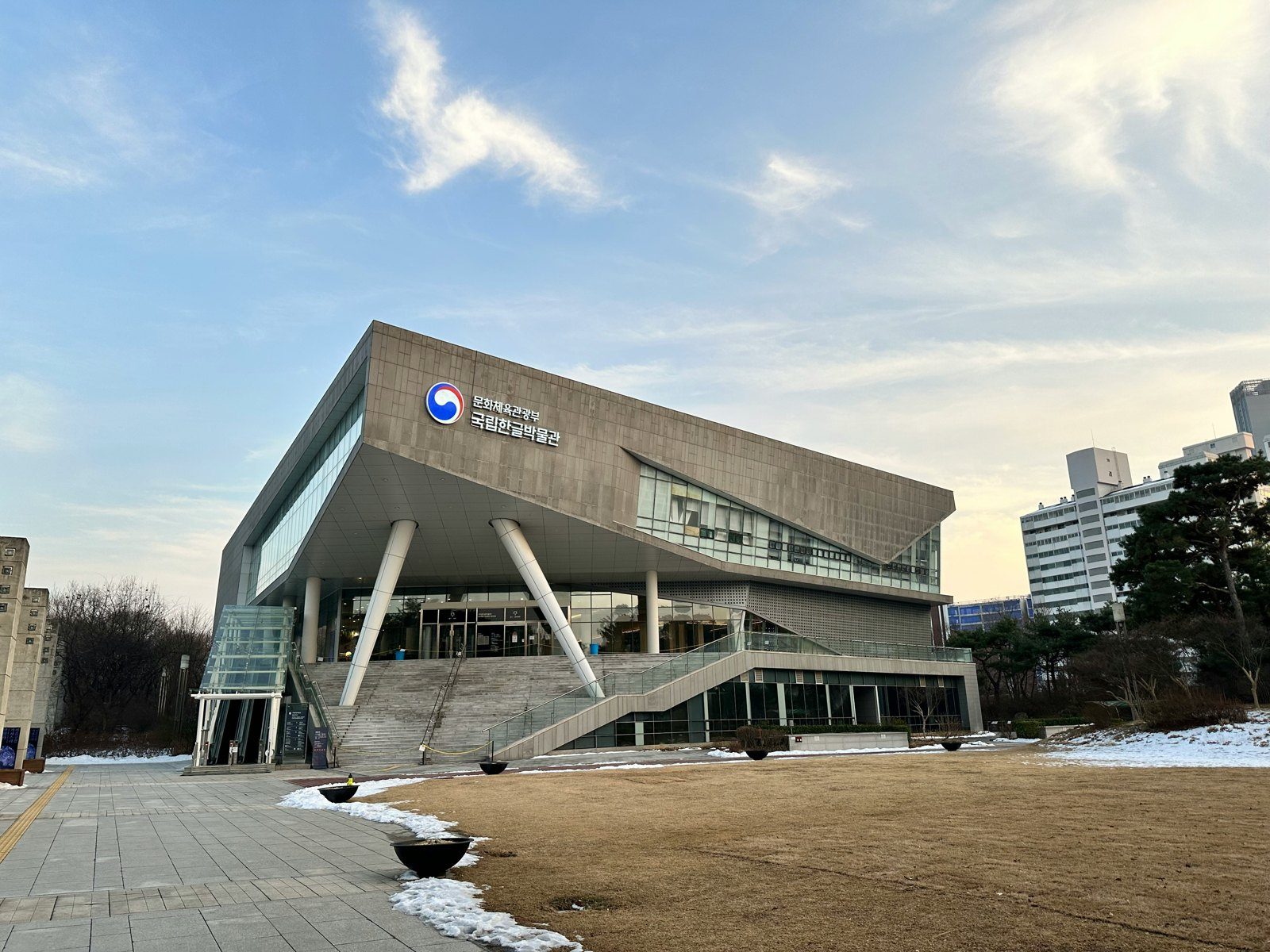
The museum sits in a green pocket of Yongsan next to Yongsan Family Park, so you can pair it with an easy stroll. The National Hangeul Museum — devoted to the Korean alphabet — is right next door and also free, if it's open when you visit (worth checking first). And from Ichon it's a quick subway hop back into central Seoul, so the museum slots easily into a wider city day.
Frequently asked questions
Is the National Museum of Korea really free? Yes — the permanent exhibitions are free to enter, no ticket required, which is remarkable for a museum of this calibre. Only the temporary special exhibitions are ticketed, and even those are usually modestly priced. So you can walk in, see the Pensive Bodhisattva, the Gyeongcheonsa pagoda, the Silla gold and the celadon, and walk out again without spending a won.
How much time should I budget? Be realistic: the place is enormous. A focused one-to-two-hour highlights visit (using the short loop above) is genuinely satisfying and the right call for most people. If you love museums and want to go deep, you could easily spend half a day or more — but pace yourself, use the cafés, and don't try to see everything in one go. Museum fatigue is real, and this is exactly the kind of collection that causes it.
Is it good for kids, or for a rainy day? On both counts, yes. There's a separate hands-on Children's Museum on site (also free, sometimes needing a reservation when it's busy), plenty of space for restless legs, and the whole thing is indoors and climate-controlled — making it one of the best rainy-day or extreme-weather plans in Seoul. Bring the family, drop your bags in the free lockers, and take it at an easy pace.
Affiliate link — if you book through it, KContentGuide may earn a small commission at no extra cost to you. We only point you to things we'd happily use ourselves.
This is the first stop in our slowly-growing Seoul series — more of the city's best places to come. Subscribe below and you won't miss them.
Getting around the city? See our Seoul subway guide and Naver Maps guide, and once you've got the history, dig into what Hallyu is and what to eat around Korea.