Korean food can be a brilliant fit for a gluten-free diet — so much of it is built on rice, vegetables and grilled meat. But there's a catch that trips up almost everyone: the two ingredients at the heart of Korean flavour, soy sauce and gochujang, very often contain wheat.
So "is Korean food gluten-free?" has the same answer as so much in this corner of the site: it depends entirely on how the dish was made. Here's where the wheat hides, what's genuinely safe, and how to ask.
Naturally gluten-free building blocks (rice, glass noodles, grilled meat, most vegetables) are everywhere — but the seasonings are the problem. Regular soy sauce (ganjang) contains wheat, and most gochujang contains wheat or barley. Swap to tamari and certified gluten-free gochujang and a lot opens up.
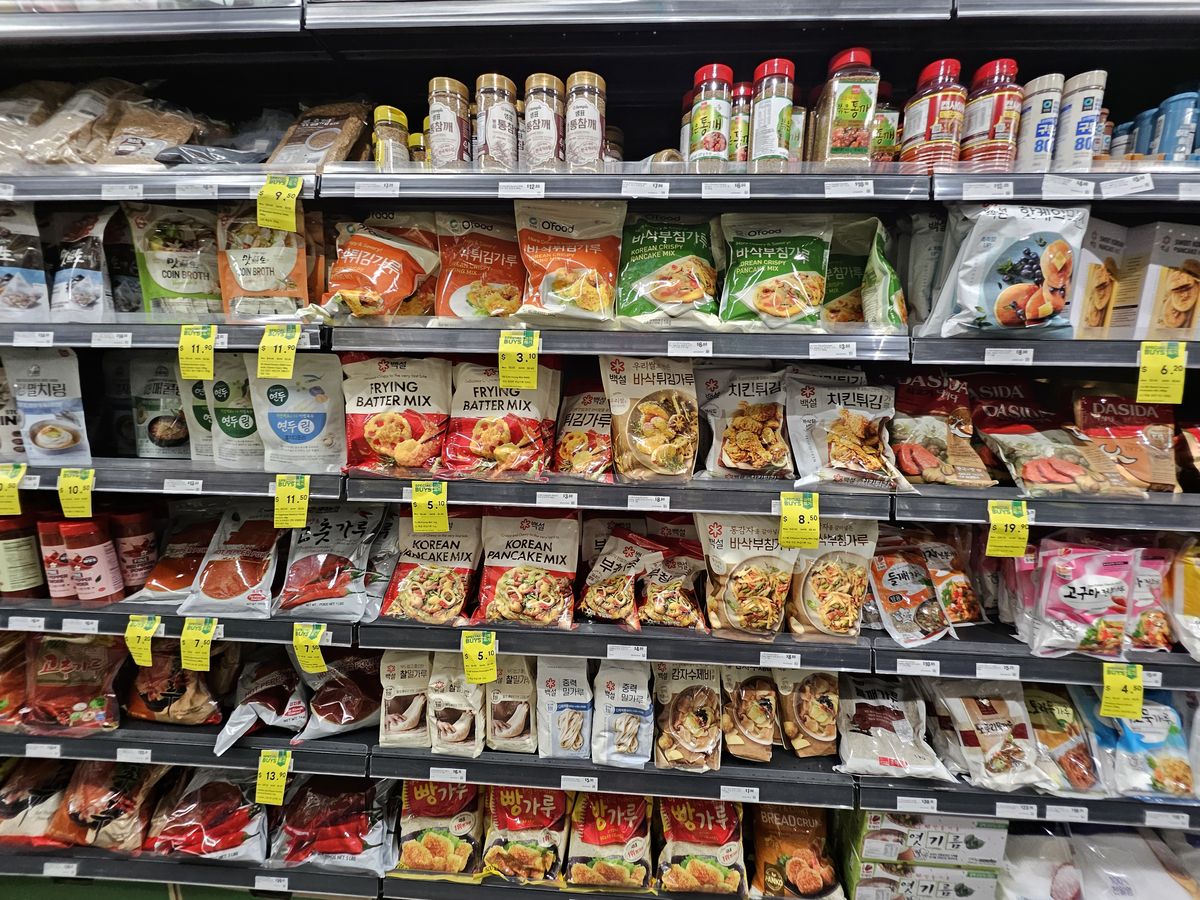
Where the wheat hides
Most everyday Korean and Asian soy sauce is brewed with wheat. Since soy sauce seasons a huge share of dishes — namul, japchae, marinades, dipping sauces — it's the single most common source of hidden gluten. The fix is tamari (a wheat-free soy sauce), but a restaurant won't be using it unless you ask.
Traditional gochujang (red chilli paste) is usually made with wheat or barley malt, so it's typically not gluten-free. That puts a question mark over anything "spicy and red" — tteokbokki, bibimbap sauce, many stews. Certified gluten-free gochujang exists for home cooking. Plain doenjang (soybean paste) is more often gluten-free, but still check the label.
Some are easy to spot once you know: wheat noodles (ramyeon, kalguksu, jjajangmyeon, somyeon), fish cake (eomuk — bound with wheat flour), jeon (flour pancakes), mandu (wheat dumpling wrappers), fried foods (twigim, Korean fried chicken batter), and most bunsik — a word that literally means "flour food."
Join Seoul Mate free and I'll send you "Where to Start" — the 10 K-dramas I recommend to every beginner — plus a weekly pick. No spam, leave anytime.
The gluten-free guide
How common Korean dishes and ingredients line up. Remember the recurring theme: the base is often fine, the seasoning is the risk.
| Dish / ingredient | Gluten-free? 🌾 | The catch |
|---|---|---|
| Plain rice & samgyetang | 🟢 | Rice, ginseng chicken soup — naturally safe |
| Bibimbap | 🟡 | Ask for gluten-free gochujang or soy on the side |
| Japchae (glass noodles) | 🟡 | Noodles are GF; the soy-sauce seasoning isn't |
| Grilled meat (salt, not marinated) | 🟢 | Bulgogi/galbi marinades use soy sauce 🔴 |
| Regular soy sauce / gochujang | 🔴 | Contain wheat/barley — use tamari & GF gochujang |
| Noodles, fish cake, jeon, mandu, fried | 🔴 | Wheat flour — avoid |
🟢 naturally gluten-free · 🟡 can be made gluten-free with a swap/request · 🔴 contains gluten. None of this accounts for shared fryers or utensils — if you have coeliac disease, cross-contamination matters as much as ingredients.
The noodle trap
Here's a catch that surprises people: several Korean noodles sound gluten-free but usually aren't. Naengmyeon (cold noodles) is famous for buckwheat, and dotori-guksu for acorn — but both are typically cut with wheat flour or wheat starch for texture, so they're a "check, don't assume." The one noodle you can rely on is dangmyeon — the sweet-potato glass noodle in japchae — which is naturally gluten-free (its only problem is the soy-sauce seasoning, easily solved with tamari). Ordinary wheat noodles — ramyeon, kalguksu, somyeon, jjajangmyeon — are off the table.
Tamari and the swaps that open everything up
Most of what's off-limits comes back with two swaps. Tamari is a soy sauce brewed without wheat — it tastes almost identical and replaces regular ganjang in any dish. And certified gluten-free gochujang (made without the usual wheat or barley malt) brings the spicy-red dishes back. Both are easy to find at Korean and health-food grocers and online. Carry a few tamari sachets when you travel, and a bowl of rice with grilled meat or vegetables is safe almost anywhere.
One hopeful nuance: traditional Korean soup soy sauce — guk-ganjang (국간장), brewed the old way from just soybeans and brine — can be wheat-free, unlike most modern jin-ganjang, which adds wheat. It varies by maker, so still check the label, but it means some home-style and temple dishes are friendlier than they first look.
Your safest bets
When you want low-stress options, lean on dishes that are gluten-free by nature: samgyetang (ginseng chicken soup — rice, chicken, ginseng), plain rice with grilled meat seasoned with salt and sesame oil rather than marinade, bibimbap with the sauce on the side, and simple soups and stews you've confirmed use a wheat-free base. Korean BBQ can work well if you order an unmarinated cut (like samgyeopsal) and skip the soy-based dips.
"I can't eat wheat or gluten." — "Jeoneun mil-eul mot meogeoyo" (저는 밀을 못 먹어요). And the key one: "Does this have soy sauce in it?" — "Yeogi ganjang deureoga-yo?" (여기 간장 들어가요?). For coeliac-level care, also ask whether fried foods share a fryer.
More gluten-free Korean dishes
Beyond the headline picks, plenty more works once you've checked the seasoning:
- Bone-broth soups — seolleongtang, gomtang and galbitang are usually just bone, meat, water and salt; naturally gluten-free, though confirm no soy-based seasoning was added.
- Hoe (raw fish) and grilled fish — naturally GF; watch only the dipping sauces, and use salt-and-sesame-oil or tamari rather than the soy-chilli ones.
- Japchae with tamari — sweet-potato glass noodles are GF; ask for it seasoned with tamari, or make it at home.
- Kimchi — usually gluten-free, but a few add soy sauce or wheat-based seasoning, so scan the label.
- Namul and tofu — seasoned vegetables and plain tofu, as long as the dressing isn't soy-sauce heavy.
Korean BBQ, gluten-free
BBQ is one of the better options: choose an unmarinated cut (samgyeopsal, plain beef) and season with the salt-and-sesame-oil dip rather than the soy-based ones. The marinades on bulgogi and galbi contain soy sauce, so skip those. One thing that trips people up: ssamjang, the dipping paste, is part gochujang — which usually contains wheat — so it isn't automatically safe. Lettuce wraps, rice and most plain vegetable sides are fine.
Cross-contamination: the coeliac reality
For coeliac disease, ingredients are only half the picture. Korean kitchens pour from one shared soy-sauce bottle, fry tempura, twigim and Korean fried chicken in shared oil, and grill many things on a common surface, while the free banchan are passed around communally. If you're coeliac rather than simply avoiding gluten, ask about shared fryers and surfaces, not just recipes — and when a kitchen can't give a clear answer, it's wise to choose somewhere that can.
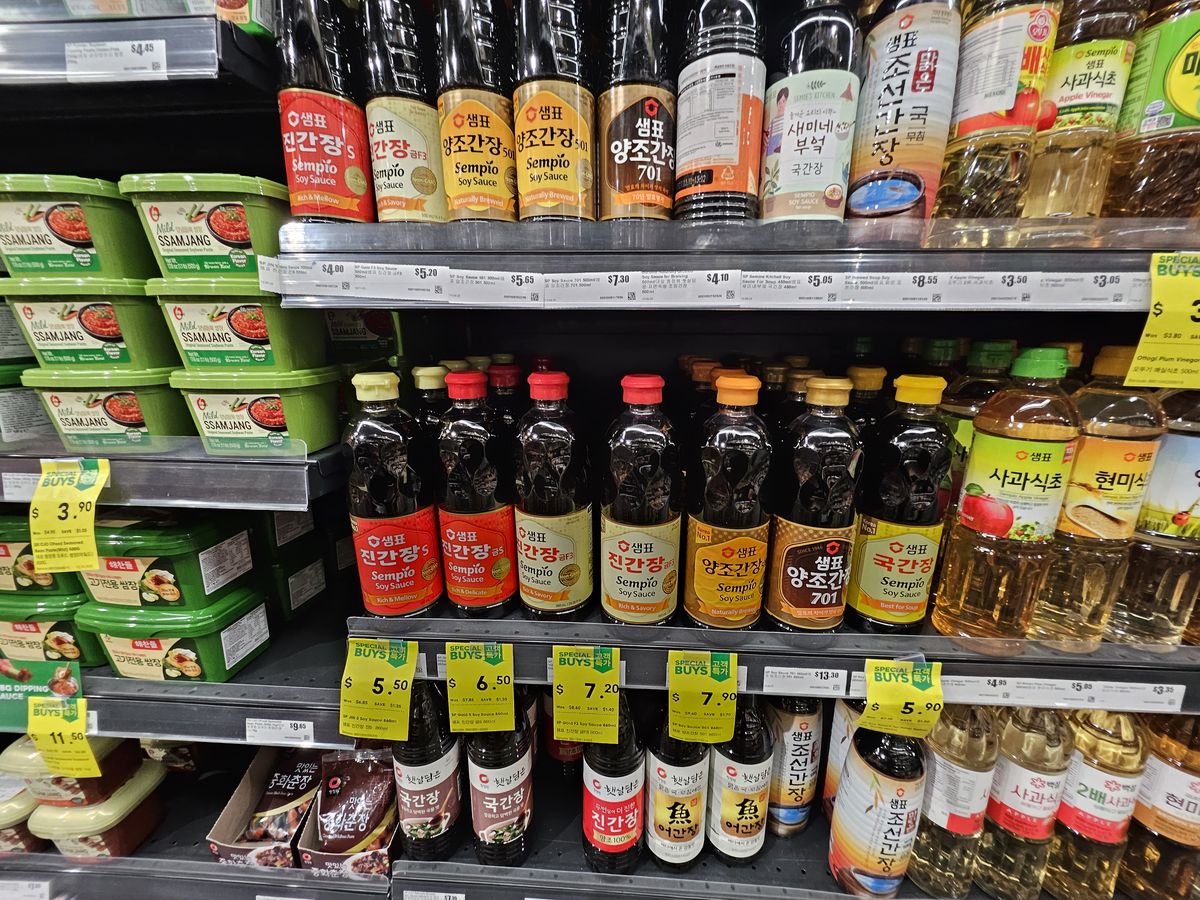
Reading labels and shopping
If you're buying ingredients or packaged food, the Korean words to scan for are 밀 (wheat), 소맥분 (wheat flour) and 글루텐 (gluten). Gluten-free tamari and certified GF gochujang are stocked at H-Mart and most Asian and health-food grocers, and a growing number of products carry a gluten-free label. For the full anatomy of a Korean package — the highlighted allergen box, the 함유 line and the master word list for every allergen — see our guide to reading Korean food labels. With a home kitchen and those two swaps, a huge amount of Korean cooking is suddenly back on your plate.
Eating out without stress
A simple plan makes gluten-free travel in Korea genuinely easy. Build meals around the naturally-safe anchors — bone-broth soups, samgyetang, grilled fish or unmarinated BBQ, and rice — rather than wrestling a wheat-heavy dish into shape. Carry your own tamari, keep the two key phrases ready ("저는 밀을 못 먹어요" and "여기 간장 들어가요?"), and use convenience stores for low-risk bites: plain rice triangles, fruit, nuts, boiled eggs and plain rice cakes. It takes a little forethought, but Korea's rice-and-vegetable foundation means you'll eat well — and once you're cooking at home with tamari and GF gochujang, it becomes effortless. For more dishes you can lean on, see our meat-free Korean dishes guide.
A sample gluten-free day
Here's an easy gluten-free day to show the shape of it. Breakfast: rice porridge (juk), or rice with a couple of namul (dressing checked). Lunch: bibimbap with gluten-free gochujang or the sauce on the side, or a bowl of samgyetang. Snack: fruit, nuts, or plain rice cakes from a convenience store. Dinner: Korean BBQ — an unmarinated cut with the salt-and-sesame dip — plus rice and lettuce wraps, or a bone-broth soup like seolleongtang. Carry tamari for anything you'd otherwise want soy sauce on, and the day comes together with very little compromise.
Sweets and drinks
Most traditional Korean sweets are rice-based and naturally gluten-free — tteok (rice cakes) and injeolmi among them — with yakgwa the notable exception, since it's made with wheat. Drinks like sikhye (sweet rice punch) and sujeonggwa (cinnamon-persimmon) are fine. One to know: boricha (barley tea), the default free tea in many restaurants, is made from barley, so coeliacs usually skip it in favour of oksusu-cha (corn tea) or water. With any packaged sweet, the label words 밀 and 글루텐 remain your guide.
Rebuild your favourites at home
A kitchen plus two swaps brings most of the menu back. With tamari and certified GF gochujang, you can make bulgogi (a tamari marinade), japchae (already gluten-free noodles), bibimbap, a kelp-broth doenjang jjigae, and even tteokbokki using GF rice cakes and GF gochujang. Most Korean rice cakes are naturally gluten-free, and rice flour stands in for wheat in many pancakes. It's one of the easier world cuisines to adapt at home, precisely because rice — not wheat — is the foundation.
A word on barley and malt
Beyond wheat, two relatives are worth knowing. Barley shows up in boricha (barley tea), some teas and malt syrups, and in the malt used to ferment ordinary gochujang. Oats are naturally gluten-free but are frequently cross-contaminated with wheat, so coeliacs look for certified versions. Neither is as ever-present as wheat in Korean food, but for coeliac-level care they belong on the list to scan for.
Affiliate link — if you book through it, KContentGuide may earn a small commission at no extra cost to you. We only point you to things we'd happily use ourselves.
Coeliac disease is a serious medical condition, and this is a food guide based on experience — not medical advice. Recipes, brands and kitchens vary, and cross-contamination (shared fryers, soy sauce on everything) is a real risk. If you have coeliac disease or a wheat allergy, treat everything here as a starting point for your own questions, follow the plan from your doctor or dietitian, and confirm ingredients in person every time. When you can't get a clear answer, choose something else.
Bottom line
Korean food has a gluten-free heart — rice, vegetables, grilled meat — wrapped in two wheat-heavy seasonings. Learn to spot soy sauce and gochujang, lean on the naturally-safe dishes, and ask the two questions above. For more, browse the Eat guides, including our genuinely meat-free Korean dishes and what to ask in a Korean restaurant.