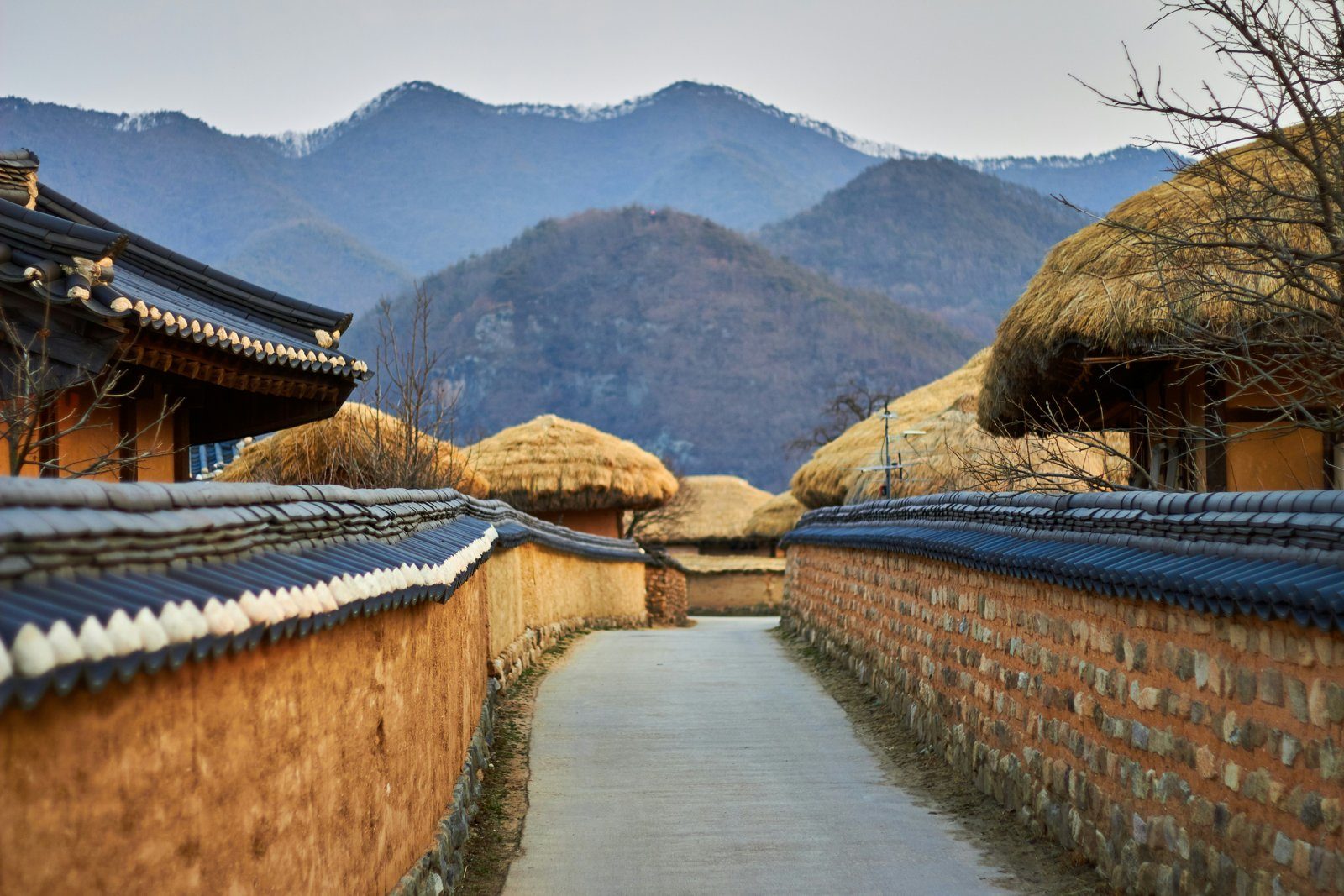
Andong (안동) is where Koreans go to touch the country's older, slower soul. Tucked into the inland hills of Gyeongsang province, it was a stronghold of Confucian, scholarly culture in the Joseon era, and that heritage is still everywhere — in its UNESCO folk village, its old academies, its mask-dance tradition, and food recipes passed down for generations. If Gyeongju is ancient kingdoms and Jeonju is food, Andong is living tradition.
I'll be honest with you: Andong is not a place that performs for tourists. There's no glittering skyline, no theme-park version of "old Korea." What it has instead is the real thing — clans who have farmed the same river bend for six centuries, scholars' libraries that still smell of pine and ink, and grandmothers who'll tell you their family has made the same salted mackerel the same way since long before anyone alive can remember. For a lot of Koreans, including me, Andong is the place you go when you want to remember what the country was before the apartments and the KTX and the neon. It moves at the pace of a slow river, and that's exactly the point.
It's an easy KTX ride from Seoul, and a rewarding one. Below I'll walk you through the places I'd take a visiting friend, then get practical about when to come, how many days you need, how to actually get between everything (it's more spread out than people expect), and what to eat while you're here. Let me start with the obvious crown jewel.
Why Andong is worth the trip — and who it's for
Let me set expectations, because Andong isn't for everyone and I'd rather you know that going in. This is a quiet, contemplative kind of travel. If your idea of a great day is shopping, nightlife and big-city buzz, Busan or Seoul will serve you better. But if you love history you can walk through, villages that are genuinely lived in rather than staged, and the feeling of a place that has held onto its soul, Andong will get under your skin the way it did mine.
The region was the heartland of the Confucian scholar-gentry — the yangban — during the Joseon dynasty, and that's the thread that ties everything together. The folk village, the academies, the ancestral rites, even the food traditions all grew out of a culture that prized study, lineage and ritual above almost anything else. You don't need to be a history buff to feel it; you just need to slow down enough to notice. I'd point Andong at culture lovers, photographers, slow travellers, families with curious kids, and anyone doing a deeper second or third trip to Korea who's already ticked off the headline cities. First-timers can absolutely come too — just pair it with somewhere livelier so the trip has range.
The heart of Andong, and a UNESCO World Heritage Site. Hahoe is a 600-year-old village wrapped inside a loop of the Nakdong River — clay-walled thatched cottages and elegant tile-roofed noble houses, all still lived in by descendants of the original clans. Wander the lanes, look across the river to the cliffs, and you're walking through a Joseon-era painting that never stopped being real.
People live here — be respectful of homes and gardens. A shuttle runs from the village entrance.
Andong's other claim to fame is its mask dance — the Hahoe byeolsingut tal-nori, a centuries-old folk drama of satire and ritual, performed in carved wooden masks that are treasures in their own right. You can often catch performances near Hahoe, and every autumn the city throws the Andong International Mask Dance Festival, when troupes from around the world fill the streets. It's the best time to visit if you can.
The festival is usually held in autumn (around late September–October). Dates change yearly, so check the official festival site.
A serene hillside Confucian academy founded in honour of Yi Hwang (Toegye), one of the most revered scholars in Korean history — the face on the 1,000-won note. Set among trees above a river, with simple wooden halls and study rooms, it's a quiet, dignified place that tells you a lot about the values that shaped this region. One of Korea's Seowon academies inscribed on the UNESCO World Heritage list.
A little outside town, best reached by car or taxi. Pairs well with a riverside drive.
Join Seoul Mate free and I'll send you "Where to Start" — the 10 K-dramas I recommend to every beginner — plus a weekly pick. No spam, leave anytime.
A long wooden footbridge across the Nakdong River, built in a traditional style and lit beautifully at night, when its lights reflect on the dark water. There's a touching local love story behind it, and an evening stroll across it — especially with the fountain shows in season — is one of Andong's gentlest pleasures. A lovely way to end a day.
Closer to town than the village; especially pretty after dark.
Andong's food is famous nationwide. Andong jjimdak is a big sharing dish of chicken braised in a sweet-savoury soy sauce with vegetables and glass noodles — comfort food at its best. Andong gangodeungeo is salted mackerel, a tradition born from preserving fish carried inland. And Andong soju is a strong, traditional distilled liquor far removed from the green-bottle kind. Try the jjimdak at the city's famous "jjimdak alley."
Jjimdak portions are generous — great for sharing. The old market area is the place to find it. See our full Andong food guide →
A little beyond Andong proper, in neighbouring Yeongju (영주), sits one of the oldest and most beautiful wooden temples in Korea. Buseoksa climbs a mountainside in a series of stone terraces, and its main hall — Muryangsujeon — is among the oldest surviving wooden buildings in the country, with gracefully curved columns that scholars travel just to admire. The real reward is the view: stand on the upper terrace and the whole range of mountains rolls away below you in soft blue layers. I've been twice, and both times I just sat there far longer than I planned to. It's part of Korea's "Sansa, Buddhist Mountain Monasteries" UNESCO listing.
It's a drive out from Andong and worth pairing with the Dosan Seowon side of things if you have a car. The climb to the main hall is gentle but uphill — comfortable shoes help.
If the weather turns or you want the context behind everything you're seeing, the Andong Folklore Museum is a calm, well-told introduction to the rhythms of old village life here — weddings, funerals, ancestral rites, the seasons of farming. It sits near the Woryeonggyo bridge, so it slots neatly into a riverside afternoon. I always think places like this make the folk village mean more — you walk Hahoe differently once you understand what those courtyards and ancestral shrines were actually for.
An easy, central stop near the bridge — good to keep in your back pocket for a hot afternoon or a shower.
Best time to visit
Andong is beautiful year-round, but the seasons here really do change the experience, so let me be specific about what each one gives you.
Autumn is the crown. If you can only come once, come in autumn. The hills around Hahoe and Dosan Seowon turn gold and rust, the light goes soft and clear, and — best of all — the Andong International Mask Dance Festival usually falls in this window (around late September into October, though dates shift yearly). Cool days, glowing trees, masks in the streets: it's the city at its absolute peak. It's also the busiest, so book a room early.
Spring is gentler and quieter, with blossom along the river and mild walking weather — lovely if you want the villages and academies without the festival crowds. Summer is green and lush but genuinely hot and humid inland, and Andong sits in a valley that holds the heat; plan your walking for mornings and evenings and keep the museum or a teahouse in reserve for the worst of the afternoon. Winter is cold and stark, but there's a real beauty to a thatched village under frost, and the moonlight bridge looks magical when the air is sharp. Just dress properly — inland Korea gets colder than the coast.
How many days you need
Here's my honest read. Andong rewards slowness, so don't try to blitz it. A confident plan looks like this:
- One full day covers the essentials if you're tight on time: Hahoe village in the morning, lunch in town, the Folklore Museum or market in the afternoon, and Woryeonggyo bridge after dark. It works, but it's a march.
- Two days is the sweet spot. It lets you give Hahoe the slow morning it deserves, add Dosan Seowon and the riverside, eat properly, and still have time to just sit somewhere quiet — which is the whole reason to come to Andong.
- Three days if you want to fold in Buseoksa, or use Andong as a relaxed base and day-trip to nearby Gyeongju (경주). I'd only do this if you genuinely love this slow, traditional flavour — and if you do, you'll be glad of it.
How to get there & get around
Andong is well connected: the KTX from Seoul to Andong Station takes roughly two hours. The town sights (the bridge, the market, jjimdak alley) are central and easy to do on foot, but here's the thing most guides gloss over — Hahoe village and Dosan Seowon are well outside the centre, and they're the two things you most want to see. So getting around Andong is really a question of how you'll cover those out-of-town distances.
You have a few options. Local buses run from town out to Hahoe and the academies; they're cheap and they work, but they're not frequent, so check return times before you set off so you're not stranded waiting an hour for the next one. Taxis are the easy fix for a single hop — reasonable for the ride out to Hahoe, and worth it if you're short on time or travelling as a small group splitting the fare. And honestly, if you can drive, renting a car is the most relaxed way to do Andong; the sights are scattered across pretty countryside and having wheels turns a logistical puzzle into a lovely drive. I'd use Naver Maps for bus times and routing — Google Maps is unreliable for navigation in Korea.
If Andong is part of a wider trip — it pairs naturally with Gyeongju — a rail pass keeps the train legs simple:
Affiliate link — if you book through it, KContentGuide may earn a small commission at no extra cost to you. We only point you to things we'd happily use ourselves.
What to eat in Andong
Andong takes its food seriously, and you should too — this is one of the genuine reasons to come. The big three are worth planning meals around.
Andong jjimdak (안동찜닭) is the dish everyone knows: a heaping platter of chicken braised with potato, carrot, glass noodles and dried chilli in a dark, sweet-savoury soy sauce. It's built for sharing, so it's a shame to eat it alone — gather a couple of people and order one big plate between you. The old market has a whole row of jjimdak restaurants, the famous "jjimdak alley," and half the fun is watching them ladle out these enormous portions.
Andong gangodeungeo (안동간고등어) is salted mackerel, and there's real history in it. Andong sits inland, far from the sea, so in the old days fish had to be heavily salted to survive the journey over the mountains — and somewhere along the way the salting itself became the delicacy. Grilled until the skin crisps, it's simple, savoury, deeply comforting, and very Andong. Andong soju (안동소주) is the local traditional distilled liquor — strong, clean and a world away from the cheap green-bottle soju you'll find in convenience stores. Sip it slowly, ideally with the mackerel. And if you see heotjesatbap (헛제삿밥) on a menu — a bibimbap-style meal descended from the food offered at ancestral rites — try it; it's a quietly delicious window into the Confucian culture that shaped this place.
A sample one-to-two-day plan
Here's roughly how I'd spend a couple of days, leaving plenty of room to slow down — because if you're rushing in Andong, you're doing it wrong.
Day 1 — village and river. Head out to Hahoe village in the morning when it's cool and quiet, and give yourself a couple of hours to wander the lanes properly rather than ticking it off. Come back into town for a shared jjimdak lunch in the old market. Spend the afternoon at the Folklore Museum to soak up the context, then walk Woryeonggyo bridge after dark, when the lights catch the river — a perfect, gentle end to the day.
Day 2 — academy and countryside. Drive or taxi out to Dosan Seowon in the morning, when the riverside academy is at its most peaceful, and take your time. If you've got a car and the appetite for more, carry on to Buseoksa for that mountain-temple view in the early afternoon. Finish with grilled salted mackerel and a small glass of Andong soju before you head off. If you only have one day, do Day 1 and squeeze Dosan Seowon in where you can.
Frequently asked questions
Is Andong worth visiting if I only have a short Korea trip? If it's your first trip and you only have a week, I'd be honest — Andong is a deeper cut, and you might get more range pairing it with a livelier city or saving it for a second visit. But if you specifically love history, tradition and quiet, it's one of the most rewarding small cities in the country, and a day here is easy to slot onto a Gyeongju leg.
Do I need to speak Korean to get around Andong? It helps more here than in Seoul, since Andong is smaller and less touristy, but you'll be fine with a translation app and a bit of patience. People are warm and used to the occasional visitor. Use Naver Maps for directions and bus times — it's far more reliable than Google Maps in Korea.
When is the mask dance festival? It's usually held in autumn, roughly late September into October, but the exact dates change every year, so check the official festival pages before you build a trip around it. If you can line your visit up with it, the whole city comes alive — it's the single best time to come.
The Andong International Mask Dance Festival in autumn is the city at its liveliest — performances, parades and food everywhere. Exact dates shift each year, so check the official festival pages before you build a trip around it. Subscribe below for festival timing as the seasons come.
The bottom line
Andong is for travellers who want the deep, quiet, traditional Korea — the one of masks and academies and ancestral homes. Walk Hahoe village, cross the moonlight bridge, share a steaming jjimdak, and if you can, come in autumn for the masks. It's one of the most soulful days out in the country.
Planning more? See my guide to Korea's best small cities, the Gyeongju guide nearby, and grab a T-money card for the buses and trains.