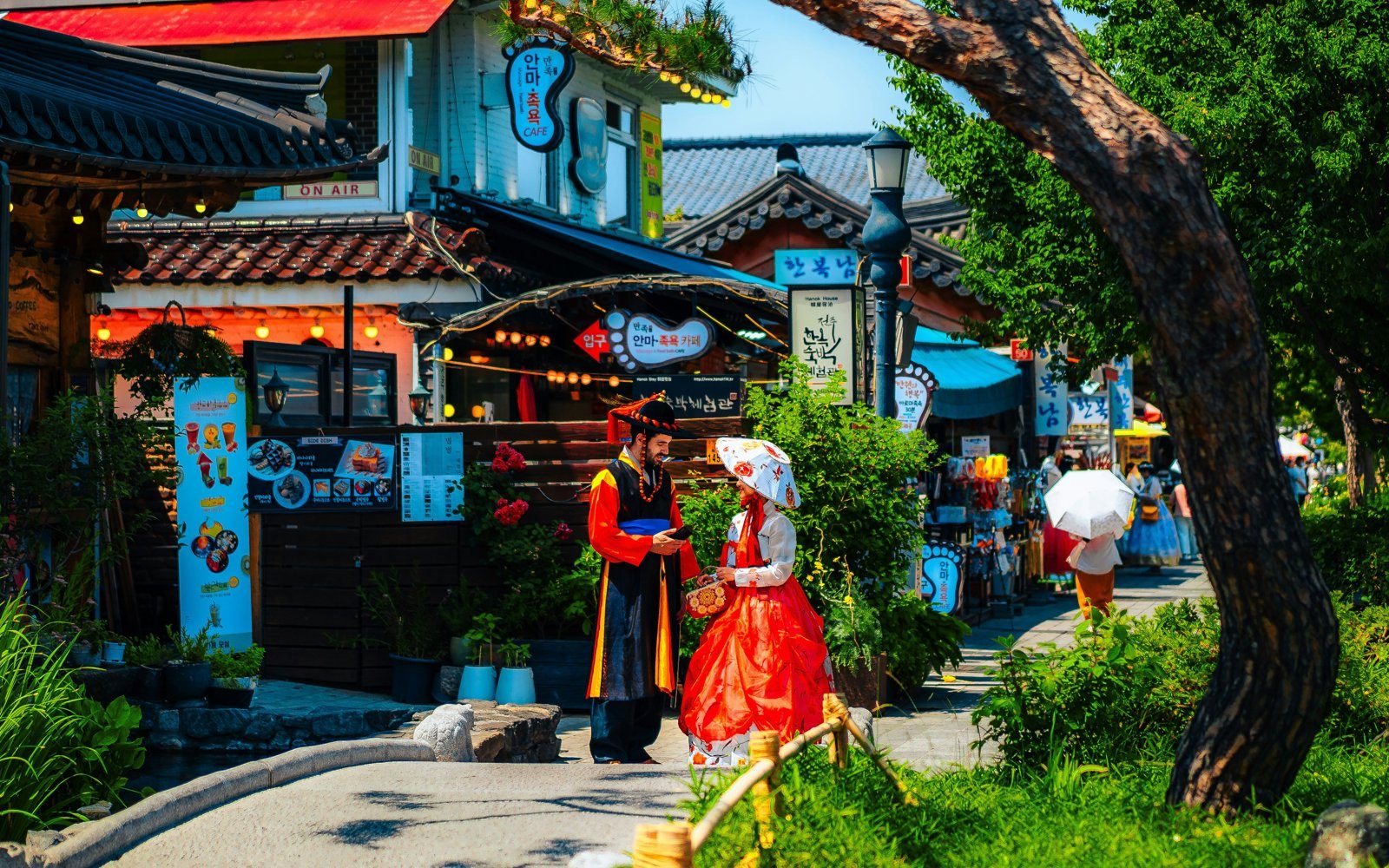
Ask Koreans where the best food in the country is, and a lot of them will say one word: Jeonju. This is the city that gave the world Jeonju-style bibimbap, it's an official UNESCO City of Gastronomy, and even its convenience-store snacks somehow taste better. But Jeonju isn't only about eating — its hanok village is the largest traditional-house neighbourhood in Korea, a whole quarter of tiled roofs, tea houses, craft workshops and shrines you can lose a happy day in.
I want to be upfront about my bias: Jeonju might be my favourite easy trip out of Seoul, and it's entirely because of the food. There are prettier hanok villages, grander palaces, more dramatic scenery elsewhere in Korea. But nowhere else makes me eat the way Jeonju does — slowly, constantly, and a little shamelessly. You arrive, you wander the old lanes, and the day just turns into a series of small delicious decisions: a bowl of bibimbap here, a skewer of something grilled there, a kettle of rice wine that arrives buried under free side dishes. By evening you're full, happy and slightly stunned at how much you've eaten. That's the trip.
It's an easy journey from Seoul and one of the most rewarding in the country. Below I've laid out what to eat and where to go, plus the practical things — when to come, how long you need, how to get around, a sample plan — so you can build a day or two that fits you. Just promise me you'll come hungry.
Jeonju is a city you experience mostly through your mouth — bibimbap, bean-sprout soup, street snacks, rice wine. Don't fill up before you arrive, and pace yourself: half the fun is grazing your way through the hanok lanes and the market.
Why Jeonju is the food capital
Jeonju's reputation didn't come from nowhere. The wider Jeolla region around it is some of Korea's most fertile farmland — rich soil, good rice, abundant vegetables and a long coast not far away — and historically this was a prosperous provincial centre with the wealth and the ingredients to develop a refined, generous table. The result is a regional cooking culture famous across the country for two things: an almost absurd number of side dishes (banchan) with every meal, and a deep respect for doing simple ingredients really well. When Koreans say food is "Jeolla-style," they usually mean abundant and a little fancy, and Jeonju is the showcase city for it.
The headline dish, of course, is Jeonju bibimbap, traditionally served in a heavy brass bowl, its vegetables arranged with real care. But the city's deeper food identity is the everyday stuff: the hangover-curing bean-sprout soup eaten for breakfast, the makgeolli houses where one kettle of rice wine summons a whole feast of free snacks, the market stalls, the street snacks. UNESCO formally recognised all of this when it named Jeonju a City of Gastronomy — one of only a handful worldwide — and once you've eaten here you understand the designation isn't hype.
What makes it a great trip rather than just a great meal is that the eating happens inside a beautiful setting. The hanok village wraps the food experience in tiled roofs, shrines, craft workshops and lantern-lit lanes, so you're not just restaurant-hopping — you're wandering a preserved old quarter between bites. Food and place reinforce each other, and that combination is exactly why I keep coming back.
What to do in Jeonju
Hundreds of traditional tile-roofed hanok houses packed into one walkable neighbourhood — the largest of its kind in Korea. Inside you'll find tea houses, hanji (traditional paper) workshops, craft studios, guesthouses, and an endless run of little eateries and street-food stalls. Rent a hanbok for the day (there are shops everywhere), and the whole place becomes your photo set. Touristy, yes — but genuinely lovely, and the food backs it up. Jeonju is actually the historic home of hanji, Korea's beautiful mulberry-bark paper, so the craft workshops here aren't a gimmick — you can watch paper being made and try a hands-on class if that appeals. My honest take on the hanbok rental: do it. It feels a little silly until you're inside one, and then the whole village reframes itself into the prettiest backdrop you've ever walked through, and you'll be glad of the photos. Go on a weekday if you possibly can; weekends turn the main lanes into a slow river of people.
Many spots give hanbok-wearers free or discounted entry, and rental shops are everywhere. Weekdays are far calmer than weekends. Wear comfortable shoes — you'll walk and graze for hours.
Jeonju bibimbap is the famous one — a bowl of rice, seasoned vegetables, beef and egg, traditionally served in a brass bowl and mixed with gochujang. But don't stop there: try kongnamul-gukbap (a hangover-curing bean-sprout rice soup), pile your plate at the street-food stalls, and find a makgeolli (rice wine) house where ordering a kettle brings a table covered in free side dishes. This is the heart of why people come. The bibimbap is worth ordering somewhere sit-down and traditional at least once, to get the full brass-bowl, beautifully-arranged version rather than a rushed touristy one. But if I had to name the most quietly perfect Jeonju meal, it's the bean-sprout soup for breakfast — light, clean, slightly spicy, often served with a raw egg and a side of toasted seaweed — and the makgeolli houses for the evening, where the spread of free side dishes that comes with the rice wine is genuinely the main event. Street snacks fill every gap in between. See our full Jeonju food guide →
The hanok village and Nambusijang (the city's traditional market) are both food central. Come with an appetite and small cash. Pace yourself across several small stops rather than one big meal — that's how locals do it.
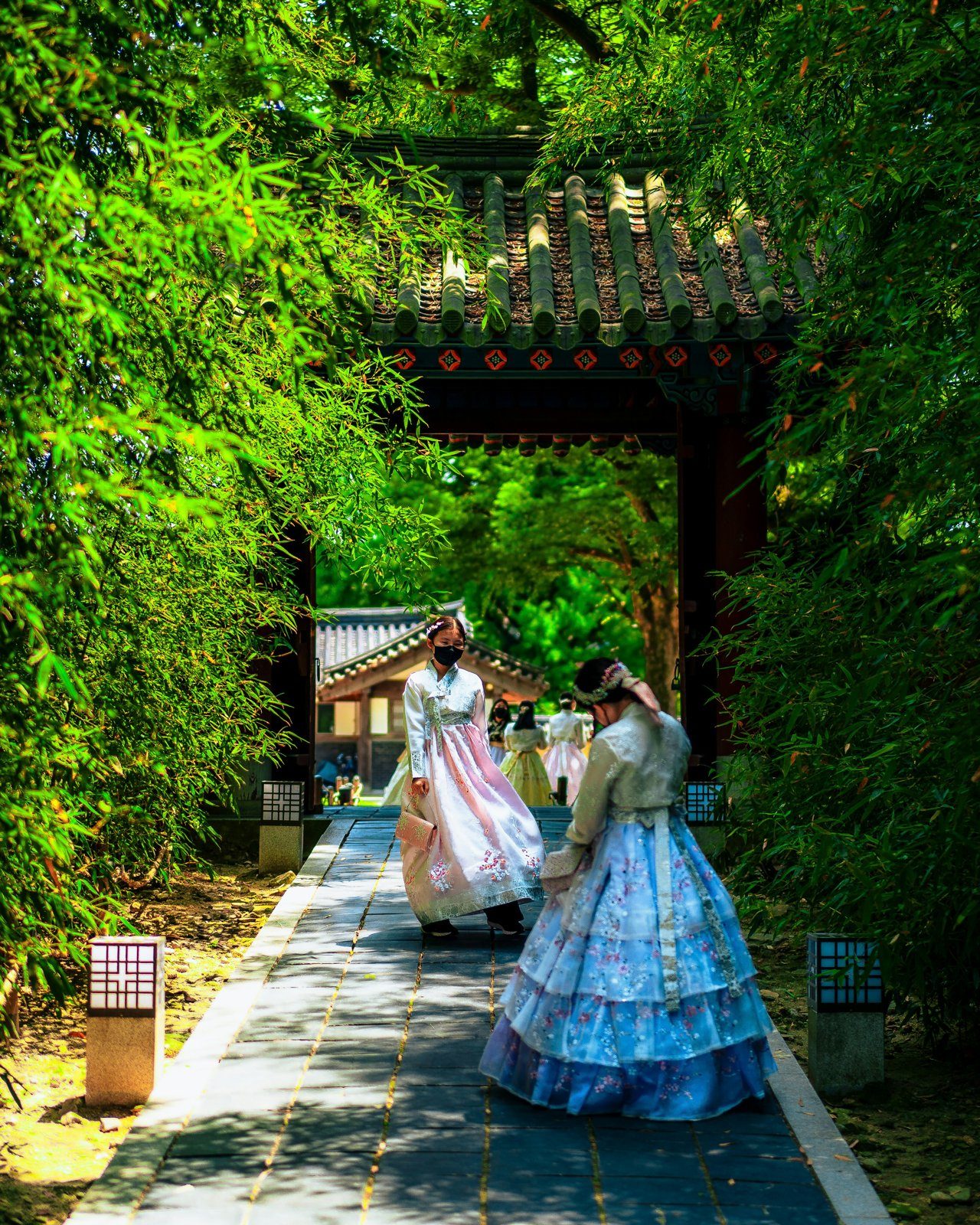
On the edge of the hanok village, Gyeonggijeon is a tranquil walled shrine that enshrines the portrait of King Taejo, founder of the Joseon dynasty — shady, atmospheric, with a lovely bamboo grove that's a favourite hanbok photo spot. Directly across the road stands Jeondong Catholic Church, a gorgeous early-1900s Romanesque-Byzantine building. The two side by side — Joseon shrine and European church — make one of Jeonju's most striking corners. There's real meaning behind why Jeonju has a royal shrine at all: this was the ancestral hometown of the Joseon royal family, the Yi clan, so the city carries a quiet dynastic pride. The shrine grounds are genuinely peaceful — the bamboo grove at the back is cool and green and a lovely escape from the busy lanes — and the contrast with the church across the street, all stone and stained glass, is the kind of only-in-Korea juxtaposition I never get tired of photographing.
Both are right in the hanok village, steps apart. Small admission for Gyeonggijeon; the church exterior is free to admire. The bamboo grove behind the shrine is the prime photo spot.
Join Seoul Mate free and I'll send you "Where to Start" — the 10 K-dramas I recommend to every beginner — plus a weekly pick. No spam, leave anytime.
For the postcard shot of the whole hanok village from above, climb up to Omokdae, a historic pavilion on the hill at the village's edge. Just behind it, Jaman Mural Village is a cluster of little hillside houses painted with colourful murals — a fun, quiet wander away from the main crowds, with cafés tucked in among the art. Omokdae has its own bit of dynastic lore — it's tied by tradition to the Joseon founder's family — which suits Jeonju's royal-hometown theme, but mostly you go for the view: that sea of grey tiled roofs spread out below you is the photo that makes people understand the scale of the place. The mural village behind is genuinely charming and refreshingly low-key after the busy main lanes; let yourself get a little lost among the painted walls and the tiny cafés. It's one of the spots where the crowds thin and Jeonju feels like a real neighbourhood again.
A short uphill walk from the hanok village — easy to combine in an afternoon. The climb is gentle but it is uphill, so save it for when your legs are fresh.
Nambusijang is Jeonju's big traditional market by day, but on weekend evenings part of it transforms into a buzzing night market (yasijang) full of food stalls serving everything from dumplings to global street eats, plus a young "Cheongnyeon Mall" of quirky shops run by local twentysomethings. It's a great, lively way to round off a day of eating. By day the market is the proper old kind — produce, dried goods, side-dish vendors, the kongnamul-gukbap places that locals swear by for breakfast. By night it becomes a tightly packed, steamy, neon-lit run of stalls where the move is simply to walk slowly, follow the queues, and share small plates of whatever looks good. The upstairs Cheongnyeon Mall, run by young entrepreneurs, gives it a fun creative edge. If your visit lands on a weekend, this is a great final act; if it doesn't, the daytime market is still well worth a graze.
The night market typically runs Friday and Saturday evenings — confirm current days locally before heading over. Bring small cash and an empty stomach; it's pay-per-stall.
Jeonju is the historic capital of hanji, Korea's traditional mulberry-bark paper, prized for centuries for its strength and soft glow. Scattered through the hanok village you'll find workshops and small museums where you can see paper being made and try a hands-on craft — fans, lanterns, little keepsakes — which makes for a lovely, calm break between meals and a souvenir you actually made yourself. If you've got kids in tow or you just want a slower hour off your feet, this is a more rewarding stop than another café. It's also a nice reminder that Jeonju is a city of makers, not only eaters.
Workshops cluster in and around the hanok village. A relaxed indoor option for a hot or rainy afternoon.
When the hanok lanes get too busy — and on a weekend they will — the Jeonjucheon stream along the edge of the village is where I go to reset. There's an easy walking path beside the water, a row of leafy trees, and the small historic Hanbyeokdang pavilion perched where the stream bends, a quiet old spot that locals have come to for the view for a very long time. It costs nothing, asks nothing, and gives you back the calm the crowds take. A short stroll here between meals does more for the day than you'd expect.
Along the southern edge of the hanok village — an easy, free add-on whenever you need a breather.
Best time to visit
Jeonju is a year-round city, since so much of it is about eating and wandering covered lanes, but a few seasons stand out. Spring and autumn are the sweet spots: mild weather for walking the village in a hanbok, comfortable temperatures for grazing your way around, and the city looking its best. Spring also brings the Jeonju International Film Festival, which fills the place with energy (more on that in the box below). Autumn adds golden foliage along the stream and a crispness that makes the hot food taste even better.
Summer here is hot and humid, with a rainy stretch midsummer, so plan indoor breaks — a hanji workshop, a long makgeolli lunch, a tea house — between bouts of walking, and carry water. Winter is cold but quieter and atmospheric, and there's nothing better than ducking out of the chill into a steaming bowl of bean-sprout soup. Whenever you come, the single biggest factor isn't the season — it's the day of the week. Weekdays are dramatically calmer than weekends, when the main lanes can get shoulder-to-shoulder. If you have any flexibility, choose a weekday.
How many days you need
Jeonju makes a very satisfying day trip from Seoul — the train gets you in, you spend the day eating and wandering the hanok village and its shrines, and you head back full. For a lot of people that's exactly the right dose, and the highlights genuinely fit into one good day on foot.
But I'd gently argue for an overnight if you can swing it, for two reasons: the food and the light. Staying over lets you eat across more meals — bean-sprout soup for breakfast, bibimbap for lunch, makgeolli and side dishes for dinner, the night market after — instead of cramming everything into a single afternoon. And the hanok village is at its most magical in the early morning before the day-trippers arrive and in the evening when the lanterns glow, both of which a day-tripper misses. Sleeping in a hanok guesthouse inside the village turns the trip into something you remember. Two days is plenty; this is a graze-and-stroll destination, not a checklist one.
Getting around
The happy truth is that once you're in the hanok village, you barely need transport at all.
- On foot is how you do Jeonju. The hanok village, the shrines, the church, the stream, the craft workshops and most of the eating are all clustered together and walkable. This is a city you experience at strolling pace, stopping constantly, which is the whole point.
- City buses and taxis handle the connection from the train station or express bus terminal to the village — a short hop — and the run out to Nambusijang market if you're not up for the walk. Taxis are cheap over these short distances and easy when you're full and tired.
- Omokdae and the mural village are a gentle uphill walk from the main lanes; no transport needed, just a little energy.
A transit card covers the buses and saves fumbling for change — my full guide to that is linked at the end. You really don't need a car for Jeonju; if anything it's a liability given how walkable and parking-tight the old quarter is.
A simple day plan
Here's how I'd shape a single, glorious eating day, easy to stretch over two:
- Morning: Start with a bowl of kongnamul-gukbap (bean-sprout soup) for breakfast, then rent a hanbok and wander into the hanok village while it's still calm.
- Late morning: Gyeonggijeon shrine and the bamboo grove, the church across the road, and a graze through the street-food stalls.
- Lunch: A proper sit-down Jeonju bibimbap in a traditional spot — the full brass-bowl version.
- Afternoon: Climb to Omokdae for the rooftop view, wander Jaman mural village, then a calming break — a hanji workshop, a tea house, or a stroll along Jeonjucheon stream.
- Evening: A makgeolli house for rice wine buried under free side dishes, and if it's a weekend, the Nambusijang night market to finish.
Don't try to diet, and don't over-plan. The best Jeonju days are the ones where you follow your nose.
How to get there
Jeonju is in the southwest, and easy from Seoul: take the KTX to Jeonju Station (under two hours), then a local bus or short taxi to the hanok village, where everything clusters together and is best explored on foot. There are also direct express buses from Seoul if that suits your route better.
If Jeonju is part of a longer loop through Korea, a rail pass keeps the train hops simple:
Affiliate link — if you book through it, KContentGuide may earn a small commission at no extra cost to you. We only point you to things we'd happily use ourselves.
Jeonju hosts the Jeonju International Film Festival in spring, which fills the city with screenings and energy, plus food-focused events through the year. Dates change annually, so check the official festival pages before you plan around one. Subscribe below for festival timing as seasons come.
Frequently asked questions
Is Jeonju worth it if I'm not a big foodie?
Yes, though the food is the headline. Even setting the eating aside, the hanok village is the largest in Korea and genuinely beautiful, with shrines, a striking old church, craft workshops and rooftop views. You can have a lovely day here on the strolling, the hanbok photos and the history alone — the food just makes it unforgettable.
Should I rent a hanbok, and where?
I'd say do it — it transforms the village into your personal photo set and often gets you free or discounted entry at some sites. Rental shops are everywhere around the hanok village, so there's no need to book ahead; just pick one when you arrive, choose a look, and they'll help you into it. Wear comfortable shoes underneath, since you'll be walking all day.
Can I do Jeonju as a day trip, or should I stay over?
A day trip from Seoul works well and many people do exactly that. But staying overnight lets you eat across more meals and catch the village in the quiet early morning and the lantern-lit evening, both of which day-trippers miss. If you can spare a night — ideally in a hanok guesthouse inside the village — it's worth it.
The bottom line
Jeonju is the easiest "real Korea" day or overnight trip from Seoul: a beautiful old quarter, deep food culture, and enough history to feel like more than a snack stop. Come hungry, wear comfortable shoes, and don't try to diet.
Planning more? See my guide to Korea's best small cities, nearby Namwon & Gwanghallu (the Chunhyang love-story garden), the Korean food guide, and grab a T-money card for getting around.