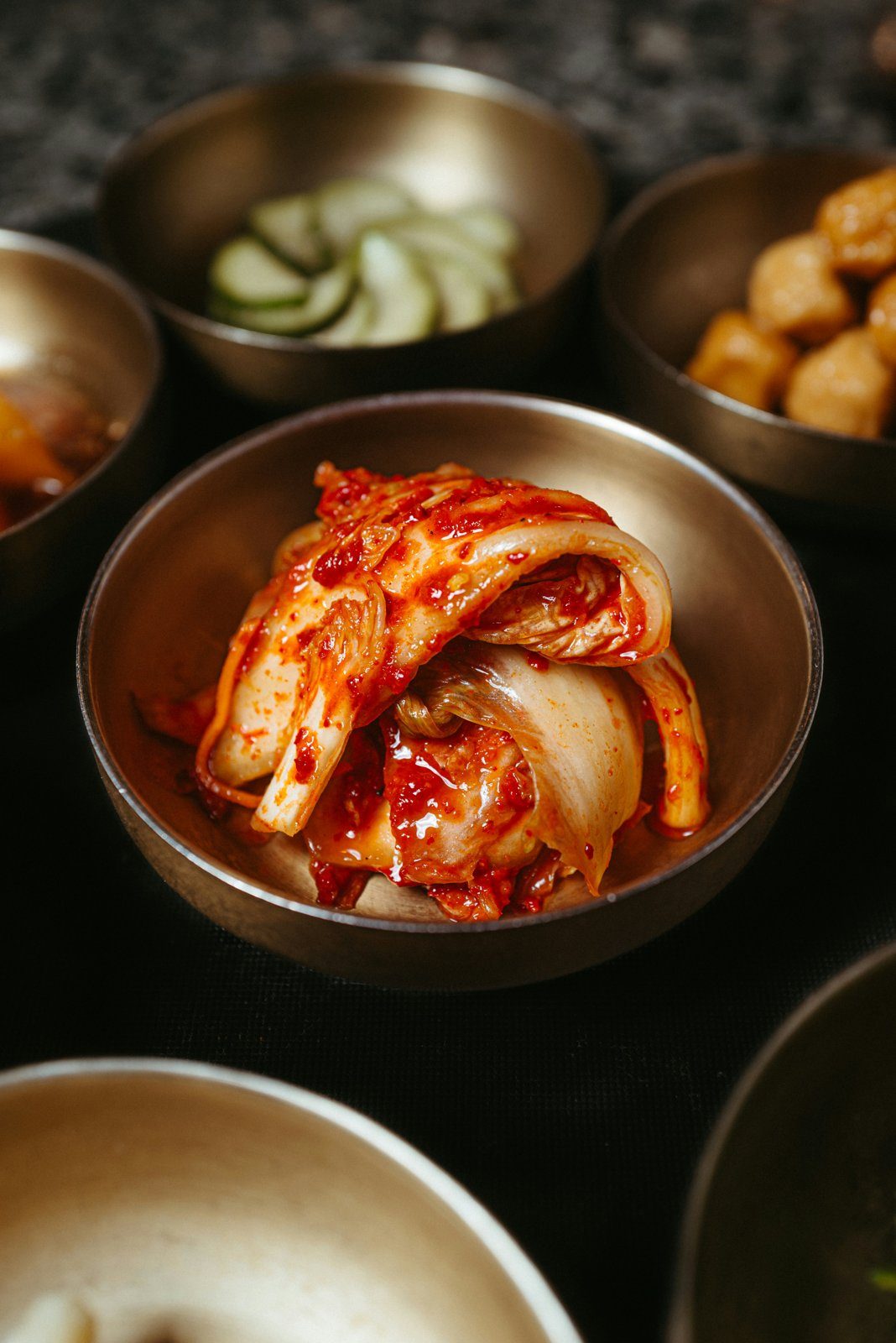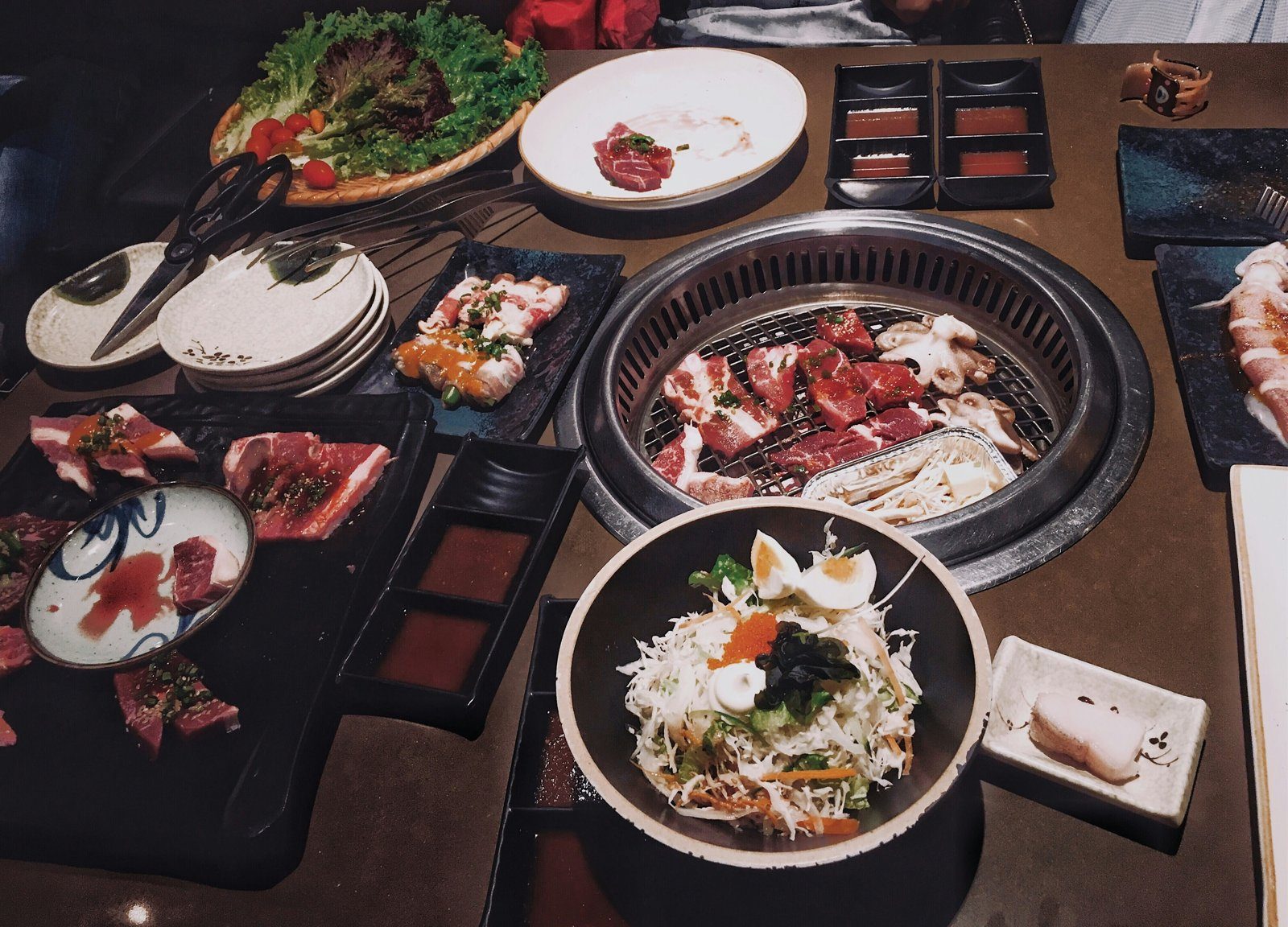
There's something about watching a K-drama that makes you desperately hungry. Characters slurping ramyeon at midnight straight from the pot. Friends crowded around a samgyeopsal grill, the meat hissing while someone reaches in with chopsticks. A heartbroken lead stress-eating tteokbokki from a street cart in the rain. I've lost count of how many times I've paused an episode and gone to raid my own fridge.
That's not an accident. Korean food is practically a character in every drama — it's how people on screen show love, make up after a fight, celebrate, or quietly fall apart. And once you've watched it enough times, there's really only one cure: eat it yourself. As someone who grew up with this food, I promise the real thing is even better than it looks on a screen.
This guide is the one I'd give a friend who's just getting curious. First I'll explain how a Korean meal is actually built — because once you understand the structure, the whole cuisine clicks into place — and then I'll walk you through the ten dishes I'd start with, where you've seen them, and how to eat them properly. There's a short section on table etiquette near the end too, so you'll feel confident rather than lost the first time you sit down.
Most of these dishes are easy to find at Korean restaurants worldwide. But if you ever visit Korea, try them fresh from street stalls or local restaurants — the difference is enormous.
How Korean food is structured
If you take one idea away from this guide, make it this one: a Korean meal is not a single plate of food. It's a little ecosystem. At the centre sits bap (밥), rice — so central that "have you eaten rice?" is literally how Koreans ask "how are you?" Around the rice goes a main dish, very often a jjigae (찌개), a bubbling stew, or guk (국), a lighter soup. And surrounding all of that is the part that surprises newcomers most: banchan (반찬), the spread of small shared side dishes that arrive without you ordering them. Kimchi, seasoned vegetables, braised tofu, tiny dried fish, pickled radish — a humble meal might come with three or four, a generous one with a dozen or more, and they're refilled for free.
You don't eat these in courses. Everything lands at once and you graze across the whole table, alternating bites — a spoon of rice, a sip of stew, some kimchi, back to the rice. The banchan are communal, sitting in the middle for everyone to reach, while rice and soup are usually personal. This is why Korean meals feel so social: you're literally sharing from the same dishes, and a meal for one can feel a little lonely precisely because the format is built for a table of people.
The other thing worth knowing is how much regional variety there is packed into one fairly small country. Coastal cities lean on seafood; inland regions on grains, beans and vegetables; the southwest (around Jeonju) is famous for the sheer generosity of its banchan; the southeast and Seoul have their own specialities. Seasons matter too — there are dishes Koreans eat specifically in the hottest days of summer and others that belong to deep winter. So "Korean food" isn't one fixed menu; it's a whole landscape. The ten dishes below are simply the most beloved, recognisable starting points — the ones you've almost certainly already seen on screen.
The essential 10
Chewy rice-cake cylinders smothered in a sticky, spicy-sweet gochujang (red pepper) sauce. This is the ultimate Korean comfort food — eaten at street stalls, pojangmacha tents, and school canteens across the country. It's warming, filling, and genuinely addictive in a way that sneaks up on you: the sauce is sweet first, then the chilli builds, and before you know it the plate is empty and your lips are tingling. For a lot of Koreans (me included) it's the taste of being a teenager, sharing a steaming paper cup of it with friends after school. Add fish cakes, a boiled egg or instant noodles to the pan and it becomes a small feast.
Thick slices of pork belly grilled right at your table over charcoal or gas, the fat crisping at the edges while you wait (a little impatiently). You wrap the cooked meat in a perilla leaf or lettuce with garlic, a smear of ssamjang (savoury paste), maybe a slice of grilled kimchi, and eat the whole parcel in one go. This is how Koreans bond — leaning over a shared grill, turning meat, topping up each other's soju glasses, talking for hours. The experience really is as important as the food, and that communal, smoky, slightly chaotic energy is exactly what you've seen in a hundred drama dinner scenes.
Not just instant noodles — ramyeon in Korea is an art form. Made in a pot (not a microwave), often with egg, cheese, and vegetables added. The "ramyeon scene" in K-dramas is practically a genre of its own. Shin Ramyun is the iconic brand — spicy, satisfying, and universally loved.
A bubbling, deeply flavoured stew made with aged kimchi, pork, and tofu. This is Korean home cooking at its most comforting — the kind of dish a Korean mum makes when you're sick, stressed, or just need a hug in a bowl. Eaten with rice and a table full of banchan (side dishes).
The legendary Korean combo of fried chicken (치킨, chikin) and cold beer (맥주, maekju). Korean fried chicken is double-fried for an impossibly crispy coating — available in soy-garlic, spicy, or original. It became a global phenomenon after My Love from the Star's famous chimaek scene.
Thinly sliced beef marinated in soy sauce, sesame oil, garlic, and Asian pear (which tenderises the meat beautifully). Grilled or pan-fried until caramelised and sweet. This is the gateway dish for many first-time Korean food eaters — approachable, fragrant, and universally loved.
Silky soft tofu in a fiery red broth with seafood, mushrooms, or pork, finished with a raw egg cracked in at the table. It arrives still bubbling in a stone pot. Spicy, warming, and soul-restoring — this is the dish Korean characters eat when they need to recover from heartbreak.
The simplest Korean comfort food — a bowl of hot rice, a fried or raw egg, butter, soy sauce, and sesame oil. Mixed together until creamy and golden. It's what Korean characters make at midnight when they're too tired to cook anything else. Humble, perfect, and endlessly satisfying.
Chewy Korean street pancakes filled with brown sugar, cinnamon, and crushed nuts, fried until golden and crispy on the outside. Eaten piping hot from street carts in winter — the caramelised sugar oozes out when you take a bite. Pure joy in pancake form.
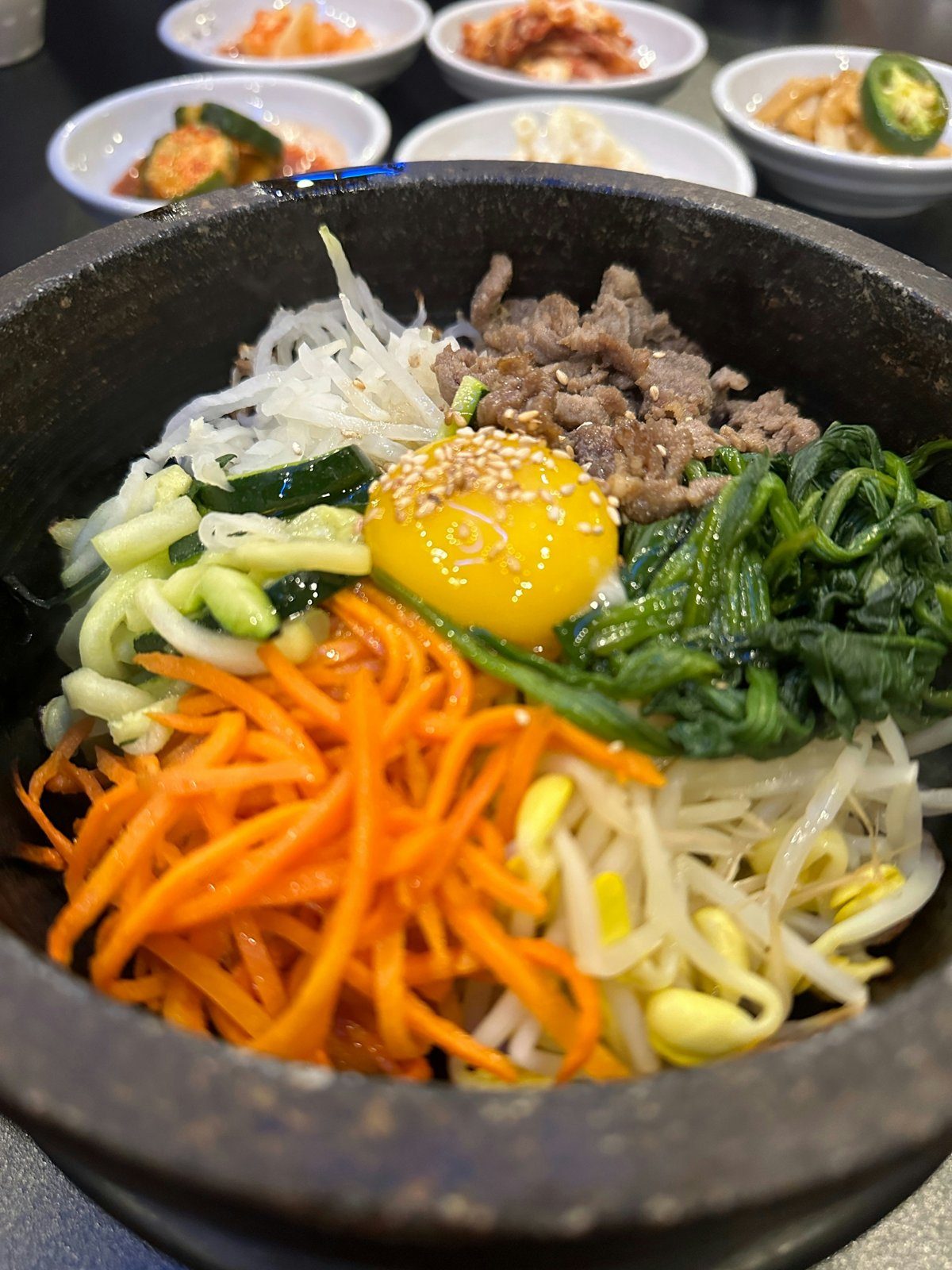
A colourful bowl of rice topped with seasoned vegetables, meat, a fried egg, and gochujang paste — then mixed vigorously at the table. "Bibim" means mix, "bap" means rice. The Jeonju version (전주 비빔밥) is considered the best in Korea. Beautiful to look at, even better to eat.
A little secret from a Korean: the restaurants packed with foreigners aren't always the best ones. In very touristy areas — parts of Myeongdong and Insadong, for example — some places quietly tweak their food for visitor tastes (often noticeably sweeter or milder), and locals tend to skip them. A spot with few tourists but a steady local crowd is usually where the real flavour is. My rule of thumb? Eat where Seoul's office workers eat — around business districts like Gwanghwamun, Jongno, Euljiro and Gangnam, white-collar workers eat out almost every day, so the food there has to deliver on taste and value. And if you don't eat meat, see our guide to Korean food for halal, vegan & allergy eaters.
How a Korean meal works
Walk into a Korean restaurant for the first time and a few things will happen fast, so let me set expectations. You sit down, you order your main dish (or dishes — Korean menus are often built around one shared centrepiece like a stew or a grill), and almost immediately a small army of banchan appears that you didn't order and won't be charged extra for. This is normal. It's not a mistake and it's not an appetiser you have to finish before the "real" food — it's part of the meal, there to be picked at throughout. If you empty the kimchi, you can usually ask for more.
When the main arrives, everything is on the table at once. There's no starter-then-main rhythm; you simply graze across all of it. Rice and soup are typically yours alone; the banchan and any big shared dish (a grill, a large stew, a seafood platter) are communal, so you reach into the middle with your own chopsticks. At a barbecue place the meat is cooked in front of you and eaten as it's ready, in wrapped bites, rather than plated up all at once. Rice often comes toward the end of a barbecue meal rather than the start, which throws some first-timers — that's deliberate, not an oversight.
One small practical note: tipping is not expected in Korea and can even cause confusion, and water (often barley or corn tea) and the banchan refills are free. You usually pay at the counter on the way out rather than at the table. None of this is hard — it just runs on slightly different rails than a Western meal, and once you've done it once it feels completely natural.
Dishes to try first
If the list above feels like a lot, here's how I'd actually order on your first few outings, building up gently rather than diving straight into the deep, spicy end.
- Start gentle and approachable: bulgogi (sweet, fragrant marinated beef) or a bowl of bibimbap. Neither is spicy, both are crowd-pleasers, and they're a soft landing into the flavours.
- Then try the comfort-food middle: a kimchi jjigae or sundubu jjigae with rice. This is the heart of Korean home cooking — warming, savoury, and the kind of meal that explains why Koreans are so attached to their stews.
- Make an event of it: a samgyeopsal or Korean barbecue dinner with friends. It's interactive, social, and the best single introduction to how Koreans actually like to eat together.
- Treat yourself to the fun stuff: chimaek (fried chicken and beer) on a Friday night, hotteok or tteokbokki from a street stall, and ramyeon cooked properly in a pot with an egg and cheese.
- When you're feeling brave: work up to the spicier dishes and, if you're somewhere with great seafood, fresh hoe (raw fish). There's no rush — Korean spice tolerance is built, not born.
Etiquette basics
You don't need to memorise a rulebook to eat Korean food, and nobody will be upset if you get something slightly wrong — but a handful of small habits will make you feel at home and earn a quiet nod from the people you're eating with. None of this is complicated.
- The spoon does the heavy lifting. Koreans use a spoon for rice and soup and chopsticks for everything else — and, unusually for Asia, you generally don't lift your rice bowl off the table. Leave it down and bring the spoon to your mouth.
- Don't stick chopsticks upright in rice. Standing them vertically in a bowl resembles incense at a funeral, so rest them across the bowl or on the table instead.
- Pour for others, not yourself. When drinks are flowing, you fill other people's glasses and they fill yours. With both elders and drinks, use two hands (or support your pouring arm with your other hand) as a sign of respect.
- Let elders start. At a table with older people, it's polite to wait for the eldest to lift their spoon before you dig in. It's a small gesture that means a lot.
- Sharing is the default. Reaching into communal banchan and stews with your own chopsticks is completely normal — that's what they're there for. Just don't rummage; take what's near you.
Where to try Korean food outside Korea
You don't need to fly to Seoul to start your Korean food journey. Korean restaurants have exploded globally, especially in cities with large Korean communities.
- Australia: Sydney (Strathfield, Campsie), Melbourne (Box Hill), Brisbane (Sunnybank)
- USA: Los Angeles (Koreatown), New York (Flushing, K-town), Chicago
- UK: London (New Malden, Soho), Manchester
- Canada: Toronto (North York), Vancouver
Check out our Incheon Airport guide and T-money card guide before you go — they'll save you a lot of stress on arrival!
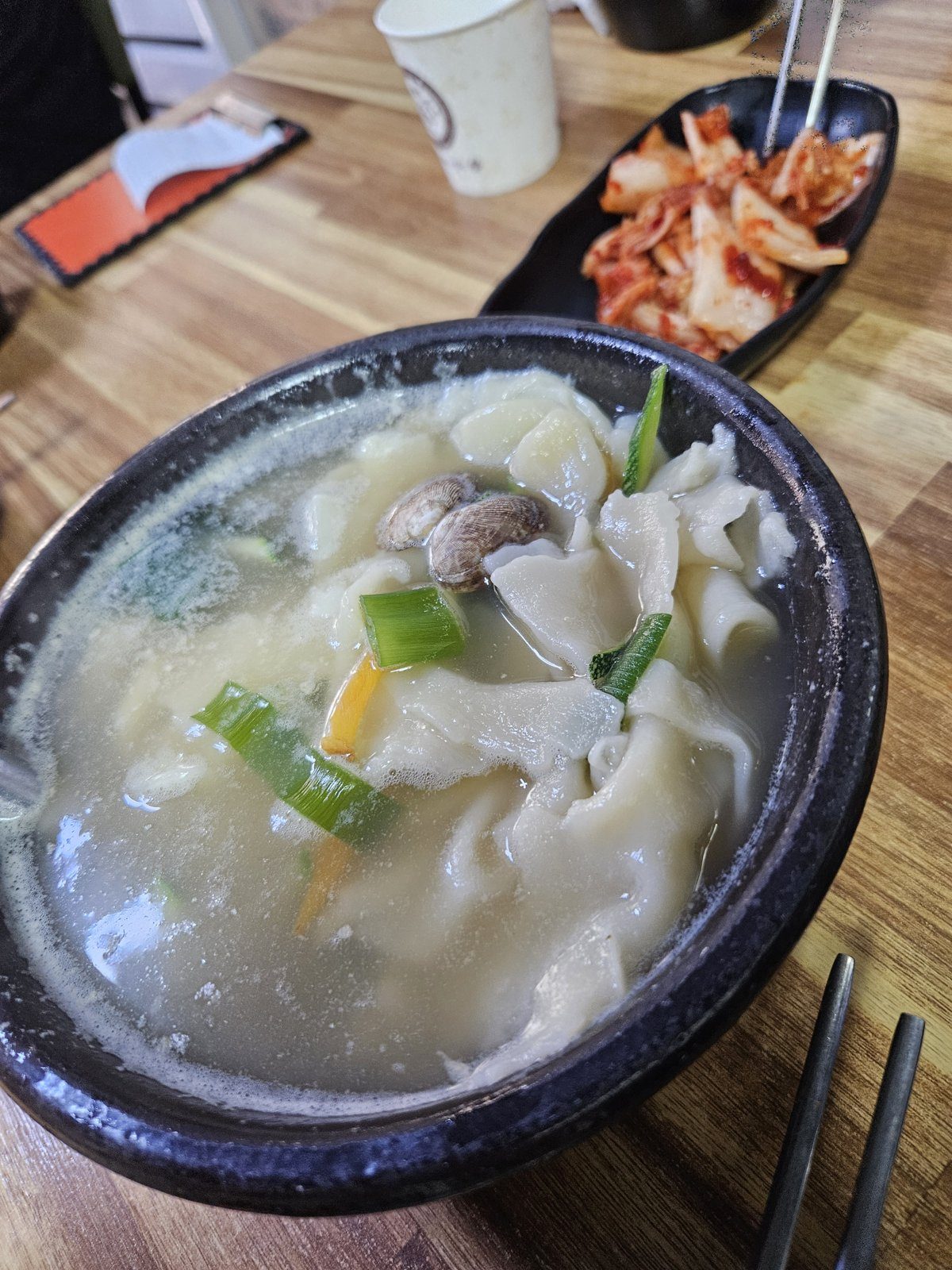
And don't stop at the famous ten. Some of my favourite Korean meals are the homey, comforting ones — a rainy-day bowl of sujaebi (hand-torn dough-flake soup), or the generous spread of a traditional hanjeongsik feast.
Frequently asked questions
Is all Korean food spicy? No — this is the biggest myth, honestly. Plenty of staples are mild or not spicy at all: bulgogi, gyeran-bap, many soups, most of the grilled meats, and a lot of banchan. The chilli-heavy dishes (tteokbokki, the red jjigae, spicy chicken) are the famous ones, but you can build an entire happy Korean meal without much heat. And even spicy dishes can usually be ordered milder — just ask.
I'm vegetarian or have allergies — can I still eat Korean food? You can, but go in informed. Many "vegetable" dishes are seasoned with fish sauce, anchovy stock or fermented shrimp, and broths are often meat- or seafood-based, so things aren't always as plant-based as they look. There's still lots to enjoy — bibimbap (ask without meat and egg), many tofu and vegetable banchan, temple-style cooking — but it's worth learning a couple of key phrases or checking ingredients rather than assuming.
What should I order if I'm nervous about trying Korean food for the first time? Start with bulgogi or bibimbap. Both are gentle, fragrant rather than fiery, and almost universally liked — they're the dishes I hand to friends who think they "don't like spicy food." Once you're comfortable, move on to a comforting kimchi or soft-tofu stew, then to a samgyeopsal dinner with friends. There's no wrong order; just don't start at the spiciest end and scare yourself off.
Your Korean food adventure starts here
Korean food is more than just fuel — it's how Koreans show love, build friendships, and process emotions. Every dish has a context, a season, a feeling attached to it. When you understand that, the food hits differently.
Start with tteokbokki and ramyeon. Work your way to samgyeopsal. And one day, if you're lucky, you'll find yourself eating hotteok from a street cart on a cold Seoul evening, wondering how you ever lived without it.
And when you're ready to visit Korea — let our AI Drama Recommender find you the perfect drama to get you in the mood first. 🎬