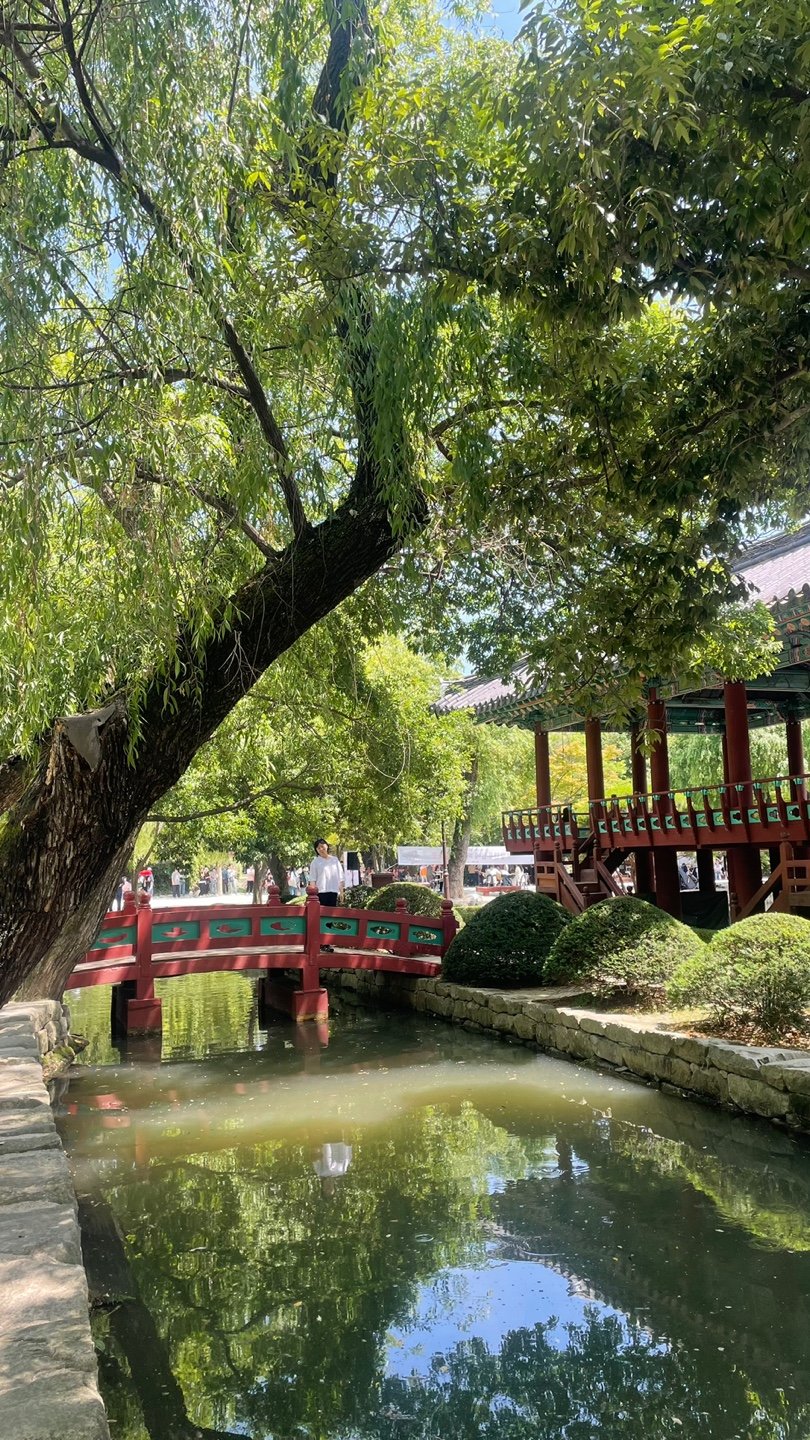
If you've ever watched a sageuk (historical drama) and swooned over a forbidden romance between a nobleman and a girl beneath his rank, you've felt the shadow of one story: Chunhyangjeon (춘향전), the Tale of Chunhyang. It's Korea's Romeo and Juliet — except it ends happily — and it's been told and retold for centuries in pansori, novels, films and dramas. And it's set in one real place you can actually visit: Namwon (남원), and its beautiful garden, Gwanghalluwon (광한루원).
I went two years ago, on a slow southern loop with my sister, and it completely charmed me — a garden built to look like a palace on the moon, a bridge tied to a star-crossed-lovers legend, and the very swing where the story's heroine first caught the hero's eye. I'll be honest: I almost skipped Namwon. It's not on the usual Korea itinerary, it took some doing to reach, and I half-expected a small-town theme-park version of a story. What I found instead was one of the most quietly romantic afternoons I've had in Korea — a real, centuries-old garden with a love story braided through every bridge and willow. Here's what it is, and how to see it (these are all my own photos).
And if you're a K-drama person specifically: this matters more than it looks. So much of what you love about Korean romance — the noble who falls for the commoner, the heroine who stays loyal against every pressure, the dramatic last-minute rescue — runs straight back to this one tale. Standing in the garden where it's "set" is a bit like a Shakespeare fan walking into Verona. The fiction and the place have grown into each other.
On Dano (the 5th day of the 5th lunar month), a young nobleman named Yi Mongryong — son of the local magistrate — is taking in the view from Gwanghallu pavilion when he spots Seong Chunhyang, the daughter of a retired gisaeng, playing on a swing. It's love at first sight. They secretly marry, but he must leave for the capital to sit his exams. While he's away, a cruel new magistrate demands Chunhyang become his concubine; she refuses out of loyalty to her husband and is imprisoned and tortured. Mongryong returns — now a secret royal inspector (암행어사) — exposes the corrupt magistrate, and saves her. Fidelity rewarded, love wins. It's the most beloved romance in Korea.
Why this story runs so deep in Korea
To understand why a whole town leans into one folktale, it helps to know what Chunhyangjeon actually is to Koreans. It began not as a book but as pansori (판소리) — Korea's epic sung storytelling, where a single singer, accompanied only by a drummer, performs a whole sweeping tale for hours, switching between narration, dialogue and song. Chunhyangga, the sung version of this story, is the most beloved of the surviving pansori repertoire, and pansori itself is recognised by UNESCO as an intangible cultural treasure. So before it was ever printed, this love story lived in the air, in performance, passed mouth to mouth across generations.
What made it stick wasn't only the romance. Chunhyang's refusal to become the corrupt magistrate's concubine — her insistence on staying faithful to her husband even under torture — landed as a story about integrity, about ordinary virtue standing up to abusive power. In a rigidly class-bound society, a low-born woman out-nobling the noblemen was quietly radical, and audiences loved her for it. That's why, centuries on, she has a shrine in the garden and a festival in her name. She's fictional, and yet to a lot of Koreans she feels as real and as honoured as any historical heroine.
Keep all that in your back pocket as you walk the garden. The pavilion, the bridge, the swing — they're lovely on their own, but they hum when you know the story humming behind them.
What to see at Gwanghalluwon Garden
Gwanghalluwon is a Joseon-era landscape garden — a designated Scenic Site — built to recreate the mythical palace of the moon. It's small enough to wander in an hour or two, but every corner has a story.
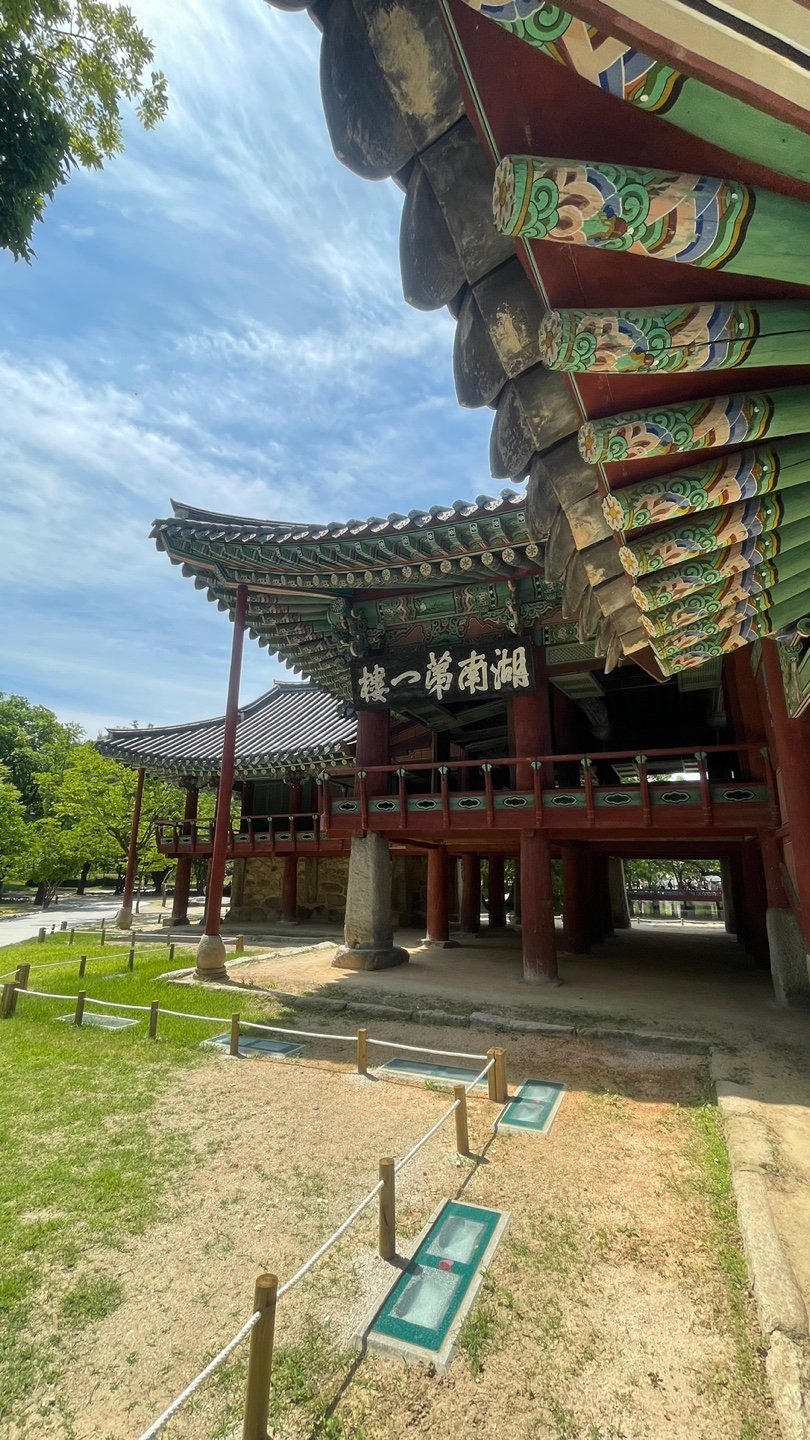
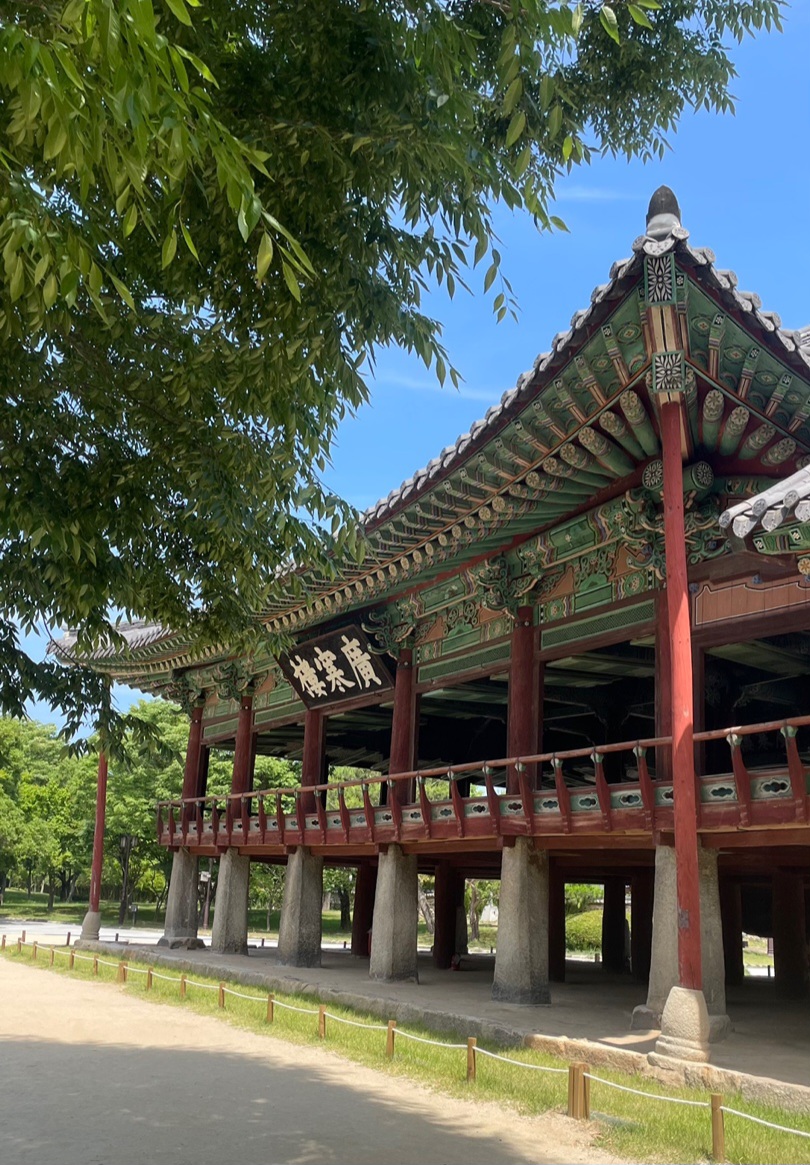
The heart of the garden. First built in 1419 by the famous statesman Hwang Hui, it was renamed Gwanghallu in 1444 after the imaginary "Moon Palace" of legend, because its beauty was thought heavenly. Raised on stone pillars with a gracefully curved, brightly painted roof, it's regarded as one of Korea's loveliest pavilions — its signboard proudly calls it Honam-jeil-ru, the finest pavilion in the whole Jeolla region.
The pretty red-railed arched bridge over the garden's pond (you can see it in the photo at the top). Built in 1582, it's named after the Gyeonu and Jiknyeo legend — the cowherd and weaver-girl stars, separated across the Milky Way, who can only meet once a year on the 7th day of the 7th lunar month, when crows and magpies form a bridge with their bodies. Fittingly, there's a sweet belief here: cross Ojakgyo with the one you love, and you'll be blessed with a happy, lasting marriage.
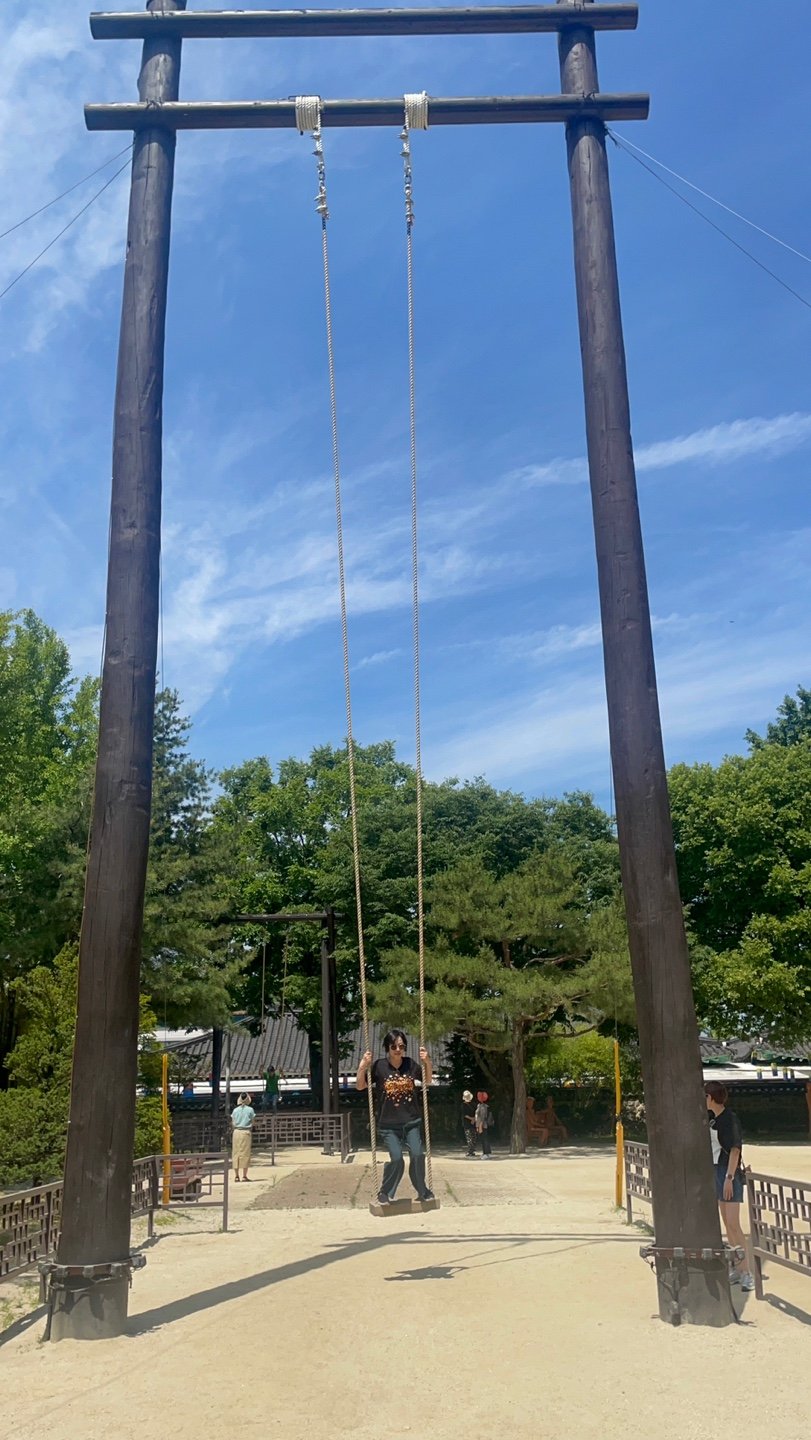
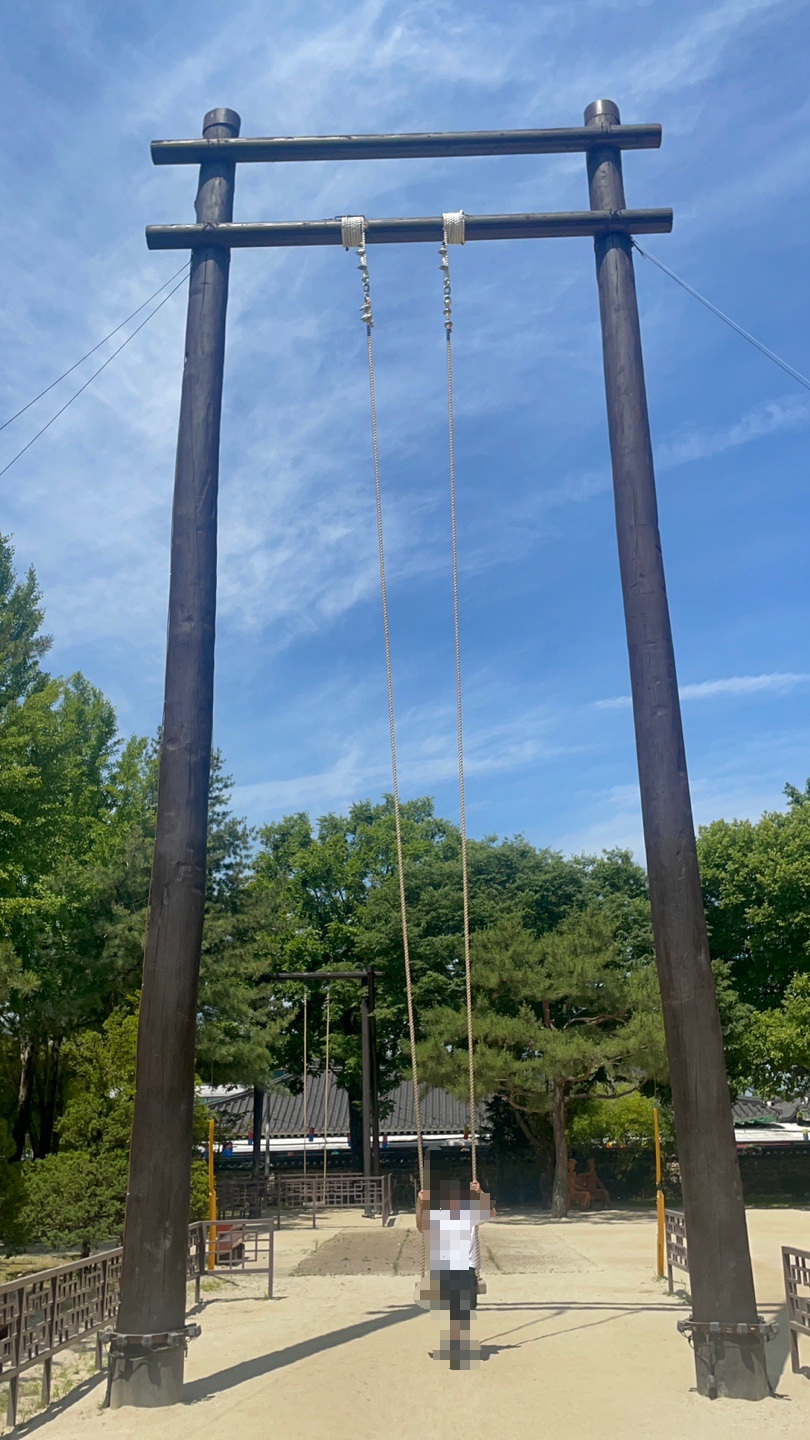
This is the moment the love story turns on: a traditional Korean swing (geune) like the one Chunhyang was riding when Mongryong first saw her — swinging high was a classic Dano-festival pastime for young women. The garden keeps a giant traditional swing, and yes, you can hop on and feel the breeze just like she did. It's pure fun, and the photo everyone takes.
Join Seoul Mate free and I'll send you "Where to Start" — the 10 K-dramas I recommend to every beginner — plus a weekly pick. No spam, leave anytime.
Inside the garden is a small shrine dedicated to Chunhyang herself — with a painted portrait of the heroine — where her devotion and fidelity are honoured as a virtue, not just a story. It's a lovely touch that shows how real this fictional character feels to Koreans: a made-up girl, given a shrine, because the values she stands for matter so much.
The whole garden is laid out as a miniature of the cosmos: the pond represents the Milky Way, with three little islands standing for the three sacred Taoist immortal mountains, and a small pavilion, Wanwoljeong ("moon-watching pavilion"), for gazing at the reflected moon. Add the willows, lotus and old trees, and it's a genuinely peaceful, romantic place to stroll — especially in the late afternoon.
A little more of Namwon
The garden is the star, but the town around it carries the Chunhyang theme everywhere — themed streets, a museum, bamboo groves and old hanok corners worth a wander. If the garden leaves you wanting more of the story, here's where to find it.
Just across the river from the garden, the town has built a hillside park and museum devoted to the love story — scenes from the tale laid out across the grounds, viewpoints back over the garden, and exhibits that walk you through the pansori and its many film and drama versions. It's frankly the more touristy, "explained" side of Namwon next to the garden's quiet beauty, but if you've fallen for the story it's a satisfying way to see it told in full, and the views back across the water are lovely.
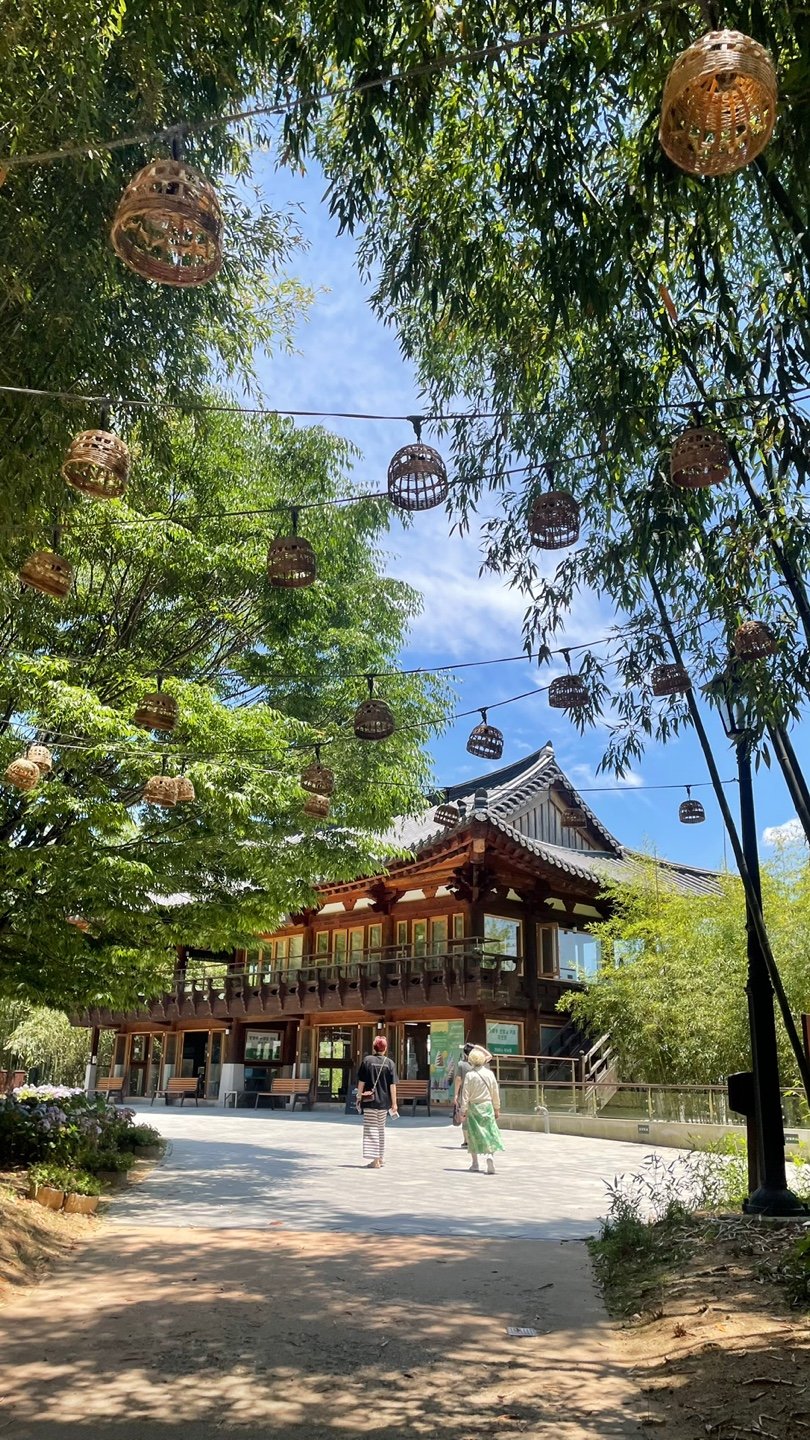
My favourite hours in Namwon weren't at any "sight" at all — they were the slow wander between them: lantern-hung hanok corners, quiet riverbank paths, the rustle of bamboo. It's a small, unhurried Jeolla town, and letting yourself drift off the marked route is where it gets under your skin. Bring a coffee, take the long way back, and don't be in a rush.
Chunhyangjeon is the source code of the Korean romance you already love — the noble-meets-commoner romance, the loyal heroine, the dramatic last-minute rescue. It began as pansori (Korea's epic sung storytelling) and has been turned into countless films and dramas, including Im Kwon-taek's acclaimed film Chunhyang (2000). Standing in the garden where it's "set" makes every sageuk romance feel a little more real.
When to visit
Gwanghalluwon is lovely year-round, and each season suits it differently. Spring is the headline act, because Namwon's big moment is the Chunhyang Festival (춘향제) every spring (around May) — one of Korea's oldest local festivals, timed near Dano, with traditional performances, a famous "Miss Chunhyang" pageant, and the garden at its liveliest. Dates shift each year, so check before you plan. Summer brings the lotus into bloom on the pond, which is gorgeous, though the Jeolla heat is real. Autumn is my own pick — the willows and old trees turn, the light goes soft, and the garden is calm. Winter is bare and quiet, but the bones of the garden and the curve of the pavilion roof stand out beautifully in the cold.
Within a day, I loved it most in the late afternoon, when the crowds thin and the light slants low across the pond and the willows — exactly the "moon-watching" mood the garden was designed for. Aim to be there as the day softens and you'll see why I'm fond of the place.
How to get there
Namwon sits in Jeollabuk-do, in Korea's southwest, roughly between Jeonju and the mountains of Jirisan. It's reachable by train or intercity bus from Seoul — allow a few hours either way — and from there the garden is a short ride or walk from the station/terminal. I won't pretend it's around the corner; this is a deliberate detour, not a quick day-trip from the capital. But that's part of why it stays peaceful.
The easier way to think about it is as one stop on a southern loop rather than a standalone trip. It pairs beautifully with Jeonju (Korea's food capital, close by) or a Hadong/Jirisan swing through the south. A rental car makes the wider region genuinely easy and lets you link several of these small places in a couple of unhurried days — which is exactly how I'd do it again.
How long you need
The garden itself is small: an hour to two is enough to walk every path, cross Ojakgyo, ride the swing, sit a while by the pond and pay the shrine a visit. Add the Chunhyang Theme Park across the river and a slow wander through the old town, and you've comfortably filled half a day. I wouldn't build a whole separate trip around Namwon — but as an afternoon stitched into a Jeonju or Jirisan itinerary, it's just about perfect.
What to do / don't miss
If you do nothing else here, do these:
- Cross Ojakgyo bridge — ideally with someone you love, for the happy-marriage blessing. Even solo, it's the prettiest few steps in the garden.
- Ride the big traditional swing — yes, actually get on it. It's where the whole love story begins, and it's pure fun.
- Climb up to Gwanghallu pavilion and find the Honam-jeil-ru signboard.
- Pay your respects at the Chunhyang Shrine — a quiet, surprisingly moving little stop.
- Stay until late afternoon by the pond, when the light and the moon-palace mood are at their best.
Affiliate link — if you book through it, KContentGuide may earn a small commission at no extra cost to you. We only point you to things we'd happily use ourselves.
For opening hours, the small entry fee, and current festival dates, check the official Gwanghalluwon Garden page on VisitKorea before you go.
Frequently asked questions
What is the Chunhyang story, in short? It's Chunhyangjeon, Korea's most beloved love story: a young nobleman, Yi Mongryong, falls for Seong Chunhyang, the daughter of a retired gisaeng, after seeing her on a swing during the Dano festival. They secretly marry; he leaves for the capital; a cruel magistrate demands she become his concubine; she refuses out of loyalty and is imprisoned and tortured; Mongryong returns as a secret royal inspector and rescues her. Fidelity is rewarded and love wins. It began as pansori (sung storytelling) and has been retold endlessly in books, films and dramas.
Is the Chunhyang story true, and is the garden the "real" setting? Chunhyang is a fictional character, so the romance itself is a folktale rather than recorded history. But the garden, Gwanghalluwon, is very real and genuinely old — the pavilion dates to the early 1400s — and the tale has always been set here, so Namwon has embraced it as the story's home, complete with a shrine and a festival in Chunhyang's name. It's a real place wrapped around a beloved fiction.
Is Namwon worth the detour if I'm short on time? Honestly, only if the romance side of Korean culture appeals to you, or you're already heading through the southwest. It's a quiet, lovely garden rather than a blockbuster sight. But slotted into a Jeonju or Jirisan trip, it's a charming half-day — and for K-drama and folklore lovers, walking the "set" of Korea's greatest love story is a real treat.
So — is Namwon worth it?
If you love the romance at the heart of so much Korean storytelling, Namwon is a quietly magical day. It's not a big flashy destination — it's a beautiful old garden with a love story woven through every bridge and tree. Walk across Ojakgyo with someone you love, ride the swing, and you'll see why Koreans have treasured this place for centuries.
Planning the bigger trip? See my guide to Korea's best small cities, the nearby Jeonju travel guide, and read up on Dano — the festival where Chunhyang's swing scene takes place.