Welcome to Samdalri (웰컴투 삼달리) is the ultimate Jeju healing drama — a hometown romance about a photographer who stumbles in Seoul and comes home to her seaside village, where her first love is now the local weather forecaster. Filmed almost entirely on Jeju Island, it's basically a love letter to the island's coast, oreum (volcanic cones) and slow island life. I've watched a lot of Jeju-set dramas, and what makes this one special is how little it has to dress the island up. The places are just genuinely that beautiful, and the show knows it — it lingers on coastlines and stone walls the way you'd linger over photos from a trip you didn't want to end.
Here's the part fans will love: unlike a lot of filming-location guides where half the "spots" turn out to be vanished studio sets, almost everything in Welcome to Samdalri is real, public and visitable. The village of "Samdal-ri" itself is fictional, but it was assembled from actual Jeju places you can stand in. There's even one purpose-built set the production left standing on purpose, which is a rare treat. So this is one of the most genuinely doable filming pilgrimages in all of Korea — you can build a real trip around it.
One honest caveat before we start: Jeju is bigger than people expect, and these spots are scattered around its whole coastline rather than clustered in one town. That's not a problem, just something to plan around — I'll group them by area later so you're not zig-zagging across the island. For now, here's the guide to each place, what was filmed there, and how to reach it.
Welcome to Samdalri (2023–2024, JTBC), starring Ji Chang-wook and Shin Hye-sun, follows Cho Sam-dal, a photographer who returns to her fictional Jeju hometown of "Samdal-ri" after a career setback — and reconnects with her childhood sweetheart, weather forecaster Cho Yong-pil. A warm, scenic story about failure, family and coming home.
Jeju's tourism board has an official Welcome to Samdalri filming-location guide with maps and the latest access details — worth checking before you go, as set pieces and opening info can change.
Why Jeju is the real star of the show
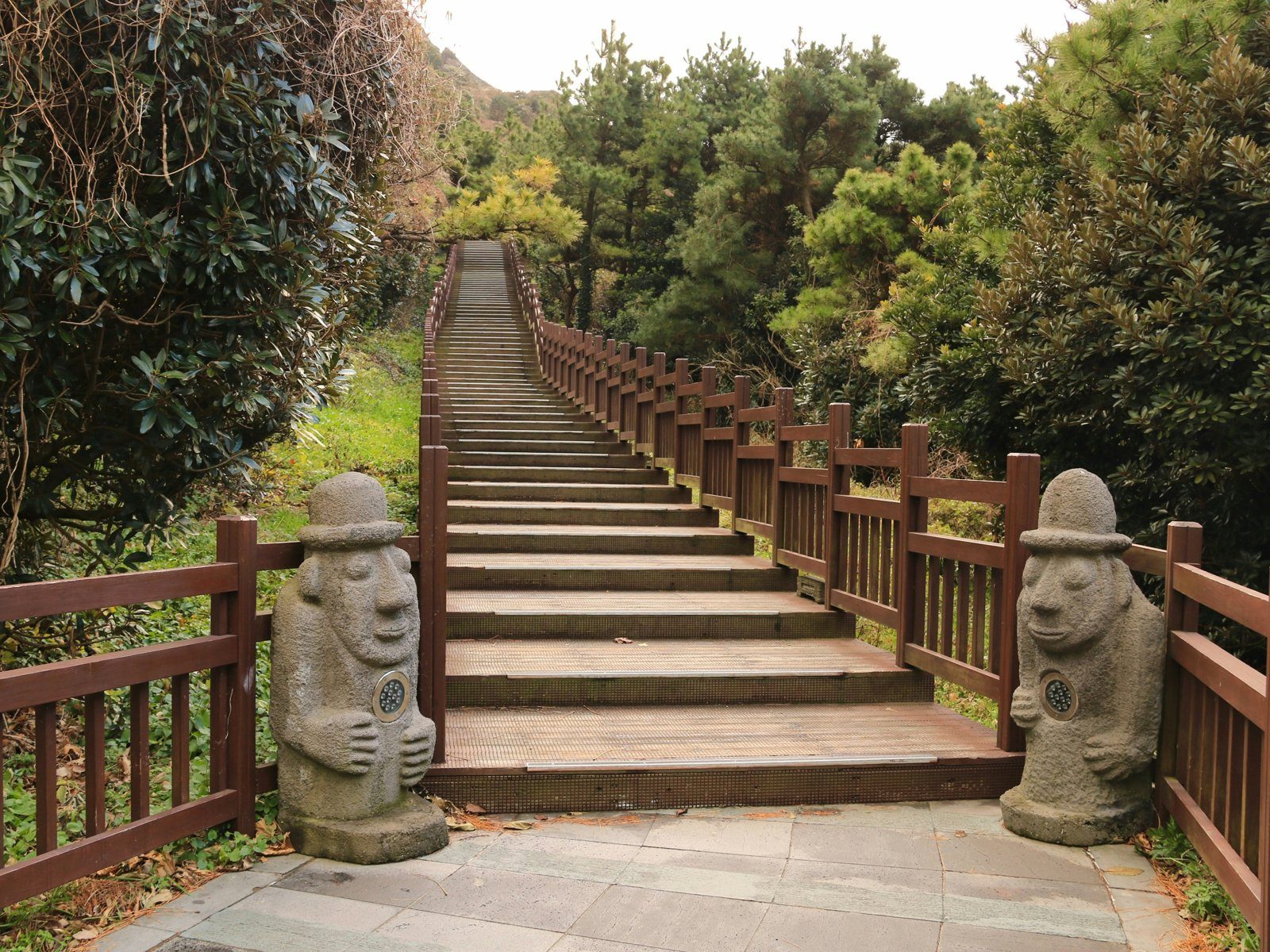
Here's something worth understanding before you go: in Welcome to Samdalri, Jeju isn't just a backdrop, it's practically a character. The whole emotional logic of the drama is that the city wore Sam-dal down and the island heals her, and that only works because Jeju genuinely feels like another world from the mainland. It's a volcanic island, formed by eruptions over hundreds of thousands of years, which is why the coastline is black basalt rather than golden sand, why the fields are walled with porous lava stone, and why those distinctive cone-shaped hills — the oreum — rise up everywhere inland. The show leans into all of it.
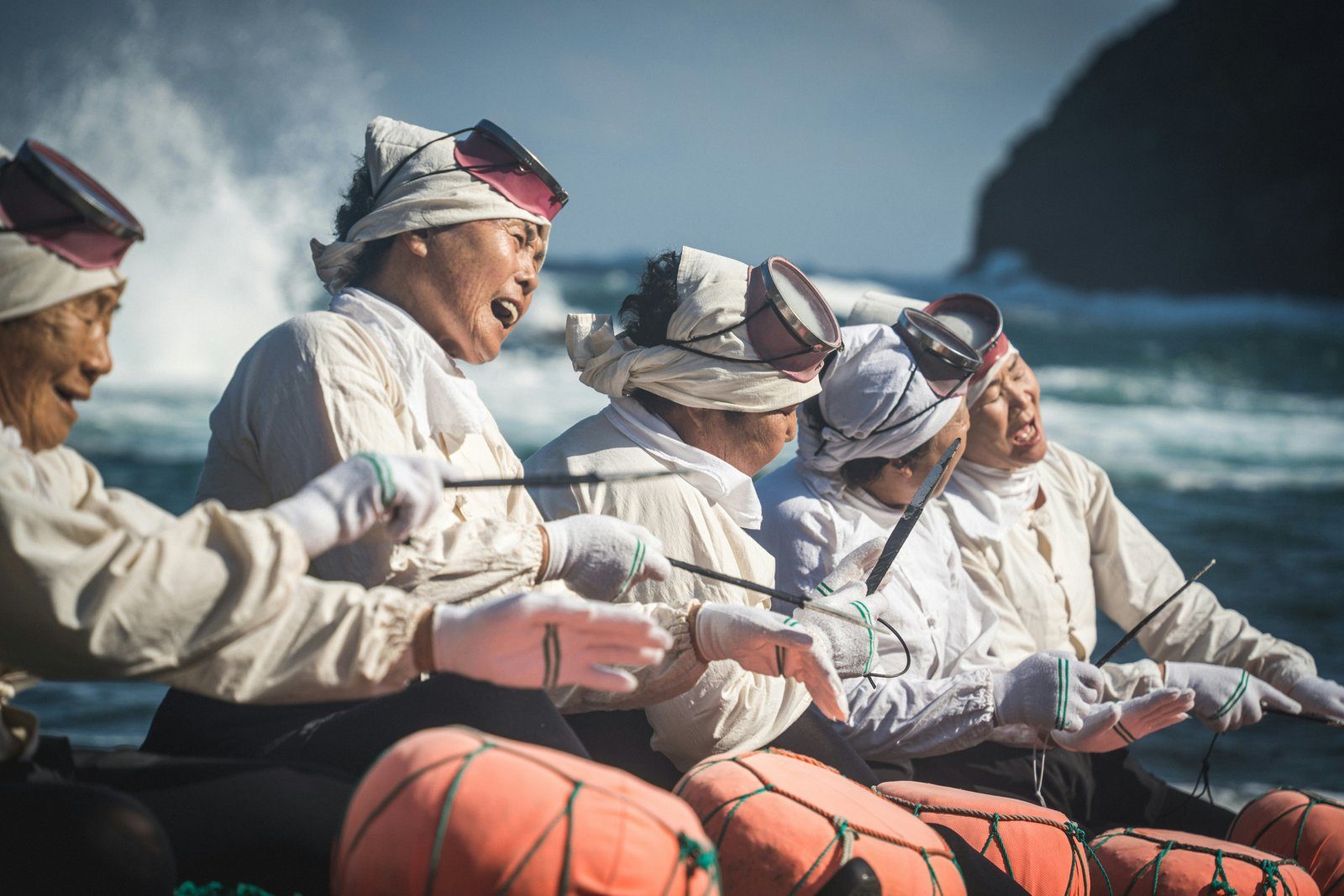
You'll also notice the island has its own culture that the drama quietly honours. The haenyeo, Jeju's famous free-diving women who harvest the sea by hand, are part of the texture of Sam-dal's hometown, and that tradition is real and centuries old. So as you visit these spots, you're not just ticking off scenes — you're seeing a place with a distinct identity that even other Koreans treat as somewhere apart. That, more than any single location, is what the show is really about, and it's why a Samdal-ri trip ends up being one of the best ways to actually understand Jeju.
The filming locations
The dramatic "Sunrise Peak" — a giant tuff cone rising straight out of the sea — is Jeju's most famous landmark and a UNESCO World Heritage Site, and it forms the backdrop to the drama's eastern-coast scenes. Hike to the crater rim for the classic view, and you'll recognise the silhouette from the show instantly.
This is the one everyone photographs, and for good reason — that great green crater rising out of the ocean genuinely doesn't look real until you're standing in front of it. It's a tuff cone, formed by an underwater volcanic eruption, and it's been protected as a UNESCO site precisely because it's such a textbook example of that kind of formation. For the drama, it's the recurring eastern-coast silhouette that tells you instantly you're on Jeju and you're home. Two honest tips from me: the climb to the rim is short but it's a real set of steep stairs, so wear proper shoes and don't underestimate it in heat. And it gets crowded — this is one of Jeju's most visited spots — so going at opening time or near sunrise transforms it from a busy attraction into something quietly spectacular. If you can catch actual sunrise here, the name suddenly makes complete sense.
On Jeju's east coast, reachable by bus or car from Jeju City (about an hour). Go early for sunrise or to beat the crowds. The walk up takes around 20–30 minutes.
A romantic stretch of west-coast road where tall white wind turbines stand right out in the sea, linked by a little seaside walkway. It's one of the drama's most memorable settings — the backdrop where the couple's feelings finally come into the open. Stunning at sunset.
This stretch is, for my money, the most romantic spot in the whole show, and it photographs even better than it looks on screen — which is saying something. The combination is unusual: giant white turbines standing out in the water, a low seaside walkway you can actually stroll along, and Jeju's west coast doing what it does best in the late afternoon. Because it faces west, it's a sunset place above all, and if you time your visit for the golden hour you'll understand exactly why the production saved an emotional turning point for here. It's also far less mobbed than the big-name attractions on the east side, so you can have a slow, unhurried wander. Bring a layer, though — the wind that powers those turbines is real, and the coast gets brisk once the sun drops.
On the far west coast near Sinchang, best reached by car. Pair it with the nearby coastal cafés and the western sunset views.
In the seaside village of Pyeongdae-ri, the production built the fictional village's bus stop and the "Lucky" convenience store — and rather than tear them down, they were left in place for fans. It's the most "you're really in Samdal-ri" spot of all, with sea views toward Seongsan, and a lovely place for photos.
This is the rare and lovely exception I mentioned at the top — an actual film set that wasn't torn down. So while everything else on this list is a real place the drama borrowed, this is a piece of the fictional village made physical, deliberately left for fans to enjoy. Standing at the little bus stop with the sea behind it is the single most "I'm in the show" moment you'll get on the whole trip, and the spot is genuinely pretty in its own right thanks to Pyeongdae-ri's coastline. The one thing I'll stress, because it matters: this sits on a working village road where people actually live. It's not a theme park. Keep your voice down, don't wander into yards or driveways for a shot, and leave it as tidy as you found it. Treat it like a gift the village chose to share, because that's what it is.
Located in Pyeongdae-ri on the northeast coast. As a kept film set on a village road, please be respectful of residents. Search "삼달리 버스정류장 평대리" on Naver Map for the current spot and access.
Join Seoul Mate free and I'll send you "Where to Start" — the 10 K-dramas I recommend to every beginner — plus a weekly pick. No spam, leave anytime.
A small, atmospheric old fishing harbour ringed by traditional black volcanic-stone walls, used for one of the drama's emotionally charged early scenes. It's quiet, unspoiled and very Jeju — the kind of working harbour the island is full of, away from the tour buses.
If the big sunrise peak is Jeju showing off, Mangjangpo is Jeju being itself. It's a small, old-fashioned fishing harbour ringed by those low black volcanic-stone walls, and there's almost nothing built up around it — no cafés competing for your attention, no crowds, just the working rhythm of a tiny port. That's exactly why the drama used it for a quieter, heavier early scene; the stillness does the emotional work. I love sending people to spots like this because they're the real Jeju most tourists never slow down enough to find. There isn't much to "do" here, and that's the point — come for ten minutes of calm, watch the boats, and you'll understand the texture of island life the show keeps reaching for.
On the southeast coast near Namwon; easiest by car. A peaceful stop to pair with the eastern-Jeju spots.
Tucked beneath Andol Oreum (a volcanic cone), this privately run "Secret Forest" of tall, straight cypress trees and mossy paths is one of Jeju's most photogenic spots, and appears in the drama's softer, dreamier moments. A small entry fee usually applies.
This one's pure mood. It's a privately managed grove of tall, dead-straight cypress trees with soft mossy ground between them, and it has become a genuine Instagram pilgrimage spot in its own right — the kind of place that looks otherworldly in photos because it sort of is in person. The drama uses it for its gentler, dreamier beats, and you'll see why the second you walk in. Two practical honesty notes: because it's privately run, opening hours and the small admission fee can change, so check before you make a special trip. And the access road is a rough farm track that surprises people in a small rental car — take it slow. It's a little effort to reach, but it rewards you with somewhere that feels secret in a way few popular spots manage.
In the eastern inland area near Songdang; reached by car on a rough farm track. It's privately managed, so check current opening and the small admission fee before visiting.
Planning a Welcome to Samdalri Jeju trip
- Rent a car if you can — the locations are scattered around Jeju's coast and inland, and public transport is slow. Driving (or a guided day tour) makes a filming route realistic.
- Group them by area — Seongsan Ilchulbong, the Pyeongdae-ri bus stop and the Secret Forest are all in the east/northeast; pair the Sinchang windmills with the west coast; slot Mangjangpo into a southeast loop.
- Use Naver Map in Korean — search the Hangul names (삼달리 촬영지) for the most accurate, up-to-date pins.
- Respect the village sets — the kept sets sit in real residential villages, so keep it quiet and tidy.
- Verify before special trips — privately run spots (like the Secret Forest) and kept sets can change their hours or access, so check first.
Best time to go
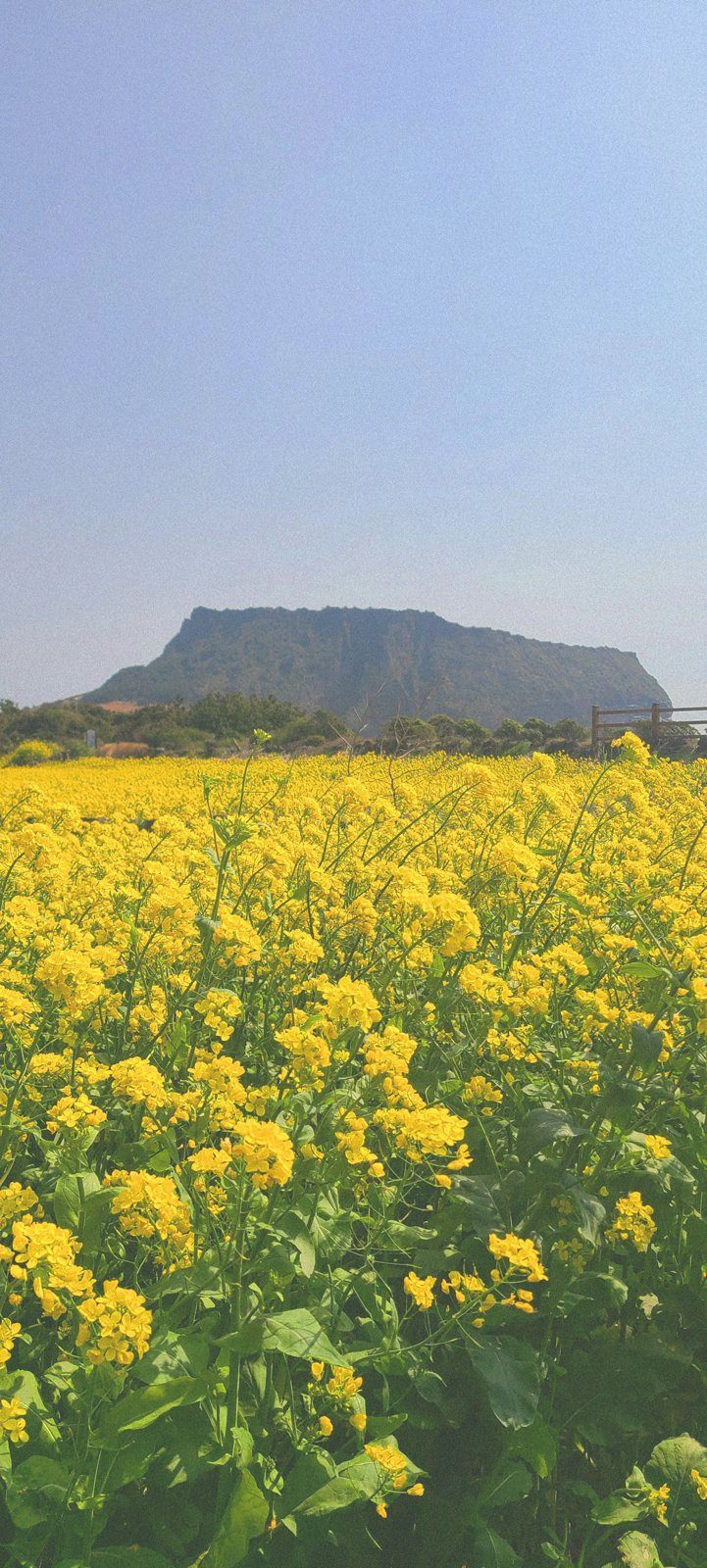
Jeju is a year-round island, but the seasons genuinely change what a Samdalri trip feels like. My personal favourite is spring, roughly late March through April, when the canola fields turn the island's edges bright yellow against the volcanic peaks — that exact "pure Samdalri scenery" you see in the show. Cherry blossoms come through around the same window, and the weather is mild and walkable. Autumn is the close second: clear skies, comfortable temperatures, fewer crowds than peak summer, and beautiful light for the coastal spots like the Sinchang windmills.
Summer is when most Koreans actually holiday on Jeju, so July and August bring the biggest crowds, the highest prices, and a humid, rainy stretch during the monsoon weeks. It's still doable — the sea is warm and the island is lush — but you'll share the famous spots with a lot of people and should pack for sudden downpours. Winter is the quietest and can be genuinely lovely and stark, with dramatic seas, but it's windy and cold on the exposed coast, and some privately run spots (like the Secret Forest) trim their hours. Whenever you come, build in flexibility: Jeju's weather turns fast, and a grey, blustery morning can become a glorious afternoon, so don't write off a day too early.
Getting around
I'll say it plainly: rent a car if you possibly can. Jeju's public buses do exist and are cheap, and a T-money card works on them, but the network is slow and indirect, and these filming spots are scattered around the coast and tucked up inland tracks that buses simply don't serve well. The Secret Forest's farm-track approach and the quiet southeast harbours are realistically car-only. With a rental, the whole island is roughly a ninety-minute drive end to end, and a Samdalri route becomes a relaxed day or two rather than a logistical headache. If you don't drive, a guided day tour is the sensible alternative — it'll cluster several spots for you and handle the navigation.
For finding the exact pins, use NAVER Map and search the Korean names in Hangul (삼달리 촬영지 will pull up the Samdalri locations) — Google Maps is unreliable for driving and walking directions across Korea, and Jeju is no exception. Fuel stations and convenience stores are easy to find on the main roads, but some of the prettiest stops have little or no facilities nearby, so top up your water and your tank before heading down a coastal or inland detour. And reach the island itself by a short flight from the mainland — Gimpo to Jeju is one of the busiest, cheapest air routes in the world, so it's rarely the hard part of the trip.
Frequently asked questions
Is the village of Samdal-ri a real place I can visit? The village itself is fictional — "Samdal-ri" was created for the drama — but it was filmed across genuine Jeju locations, and the production left its bus stop and "Lucky" store set standing in the real coastal village of Pyeongdae-ri (평대리). So you can absolutely stand in "Samdal-ri," it's just stitched together from several actual places rather than one town.
Do I really need a car for a Samdalri trip? Strongly recommended. The locations are spread around Jeju's coast and inland, and the bus network is slow and doesn't reach several of them well. A rental car (or a guided day tour) turns a frustrating day of waiting for buses into an easy, scenic drive. If you're not comfortable driving abroad, book a tour instead.
How many days should I plan for Jeju? You could hit the headline spots in a long single day with a car, but I wouldn't. Jeju rewards slowing down, which is the whole spirit of the show — give it two or three days, group the eastern spots together and the western ones together, and leave room for a harbour, a café and a sunset that aren't on any filming list.
Explore our guides to It's Okay to Not Be Okay, Crash Landing on You, and Goblin — and plan a full week with our 7-day Korea itinerary for K-drama fans.
🇰🇷 Korea Travel Essentials
Everything you need before you go
-
🚗 Getting Around Jeju
Jeju is best explored by car; a T-money card also covers the island's buses.
Read our T-money guide → -
🗺️ Navigation
Google Maps barely works in Korea. Download NAVER Map — switch to English in Settings → Language.
-
📱 Stay Connected
Get a Korea eSIM for instant data the moment you land.
Get a Korea eSIM → -
✈️ Airport → City
Flights to Jeju leave from Gimpo and other airports; here's the Incheon arrival guide.
Read our airport guide →