Yeosu (여수) is one of those places Koreans feel romantic about. It even has its own anthem — a song called Yeosu Bambada ("Yeosu's Night Sea") that practically every Korean knows — and once you've watched the harbour lights shimmer across the dark water with a drink in hand, you'll understand the fuss. It's a southern coastal city built for evenings: a sea cable car, islands a short hop away, fresh seafood, and a waterfront that comes alive after dark.
What surprised me most about Yeosu is how little of it is about "sights" in the box-ticking sense. There's no single must-see monument you queue up to photograph. The city is the experience — the way the light changes over the water, the smell of grilled shellfish drifting along the shore, the sound of a busker near the harbour while the bridge glows behind them. I've been to plenty of Korean cities that you visit; Yeosu is one you sink into. People come for a weekend and leave already plotting how to come back for longer.
Of all the places on my "best small cities" list, this is one I've actually wandered myself — so let me start with the spot that stuck with me most, then walk you through the rest, plus the practical bits: when to come, how many days you need, how to get around, and what to eat when you're hungry at 9pm with the lights on the water.
Why Yeosu feels different from other Korean cities
Most Korean cities have a centre you can point to — a palace, an old market, a downtown grid. Yeosu spreads itself thin along the coast and out onto islands, and that geography shapes the whole trip. The harbour, the Expo waterfront, Odongdo and the cable car cluster around the city's eastern edge near the sea; Dolsan island, with Hyangiram out at its tip, hangs off the south across the bridge. You're never far from water, and you're constantly crossing it.
The other thing to understand is the rhythm. Yeosu wakes up slowly and peaks at night — the opposite of a temple-and-museum city where you're done by dinner. Mornings are for the islands and viewpoints, late afternoons for the cable car at golden hour, and evenings for the waterfront, when the whole place is at its most itself. If you try to run it on a tight daytime schedule you'll feel like you've missed the point, because you have. Build your day backwards from the night sea and everything else falls into place.
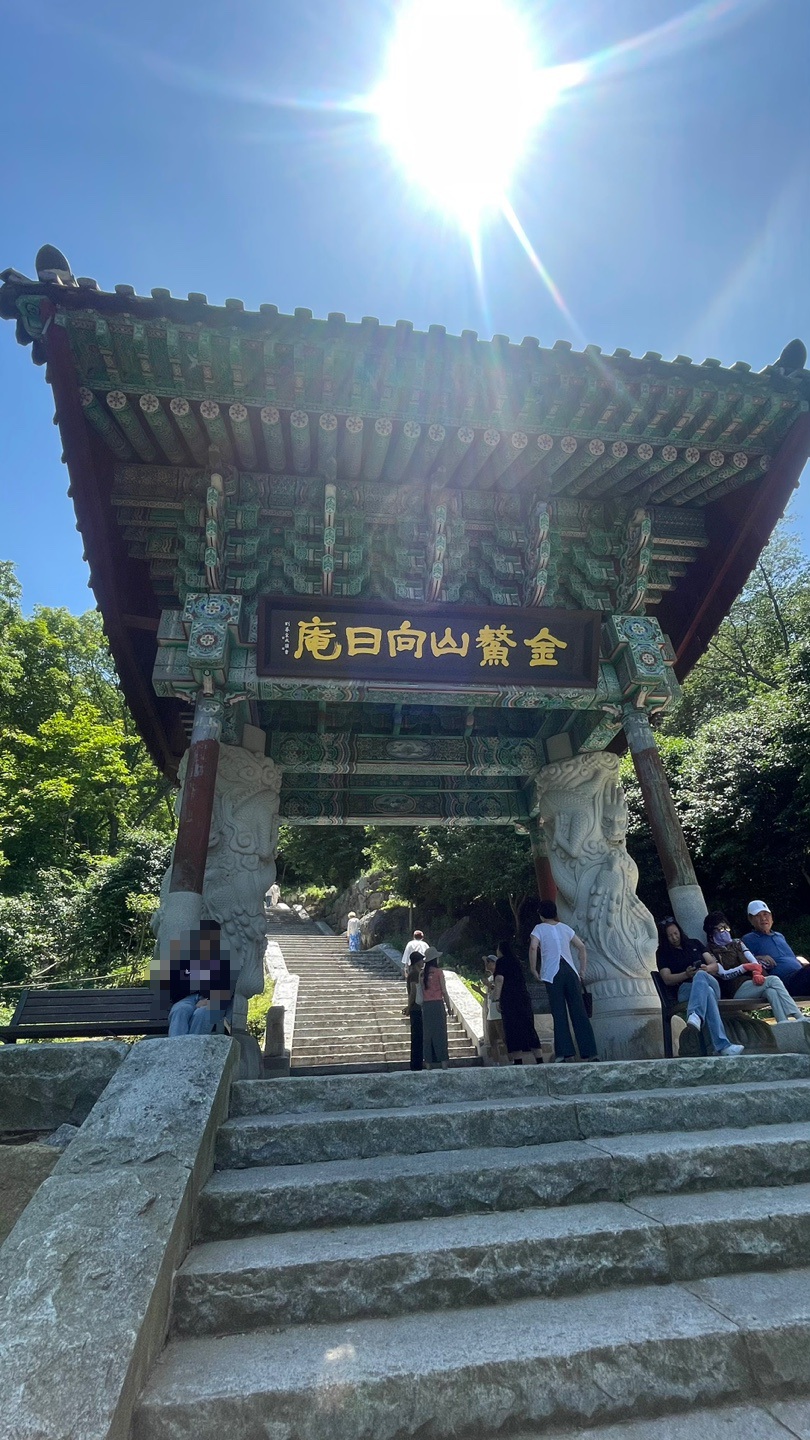
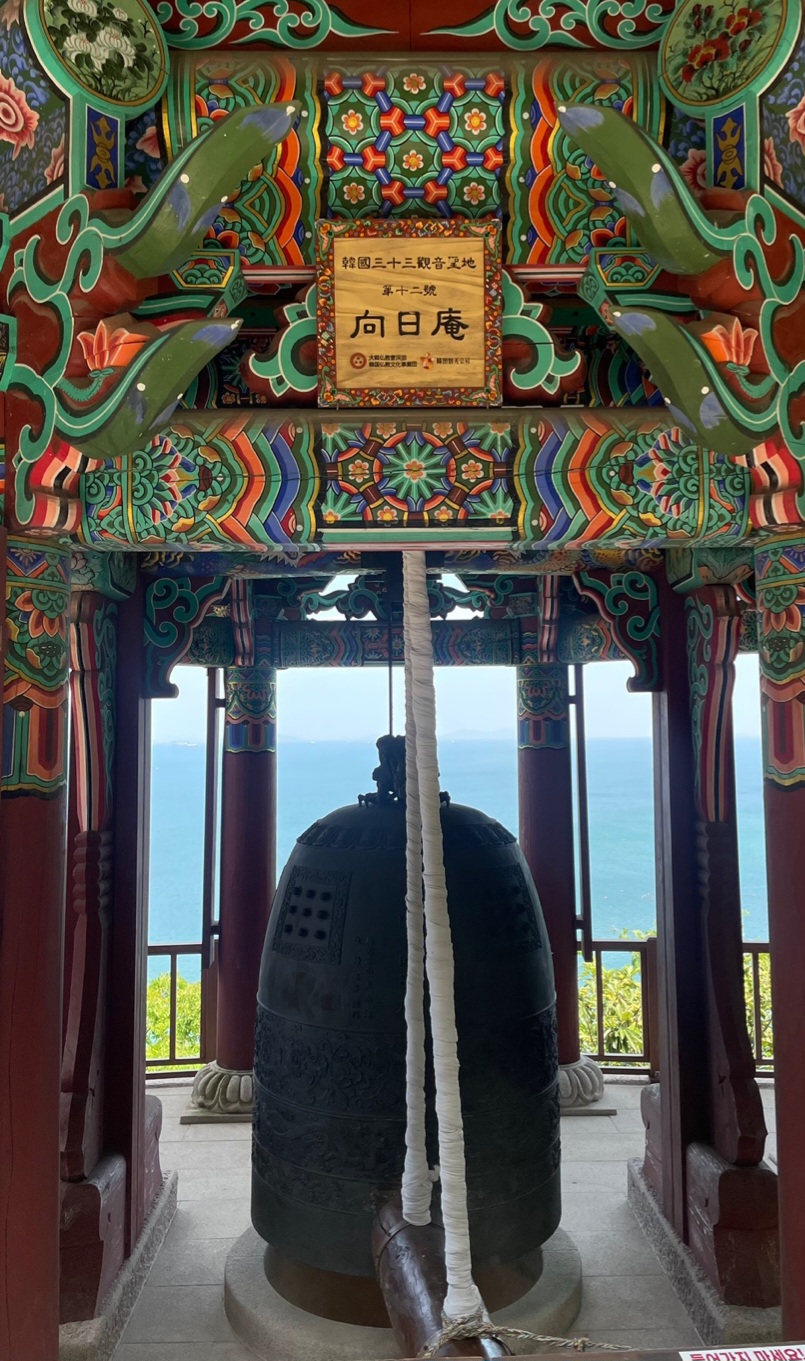
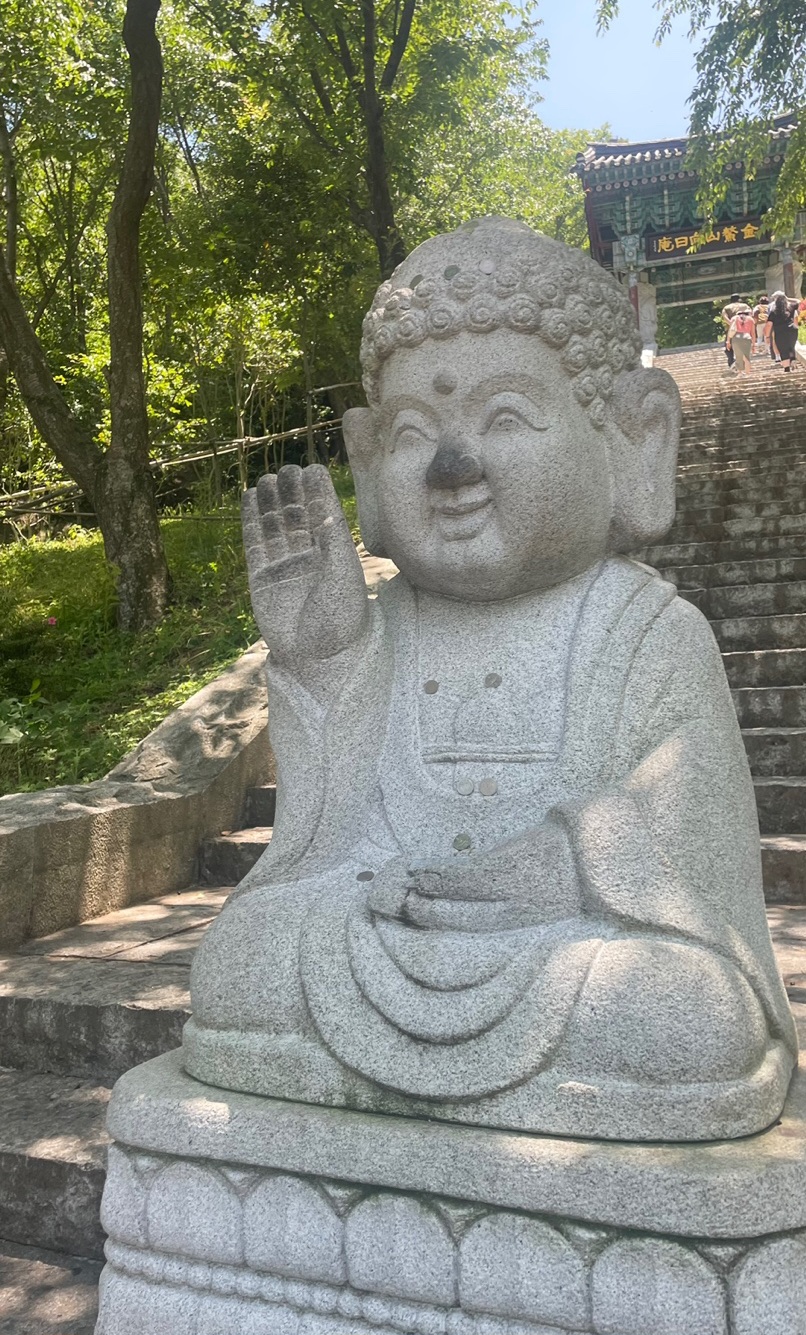
This is the one I keep telling people about. Hyangiram is a small Buddhist hermitage perched on the cliffs at the tip of Dolsan island, reached by a climb up through narrow rock passages — and on the way you pass tiny stone child-monk figures, one covering its eyes, one its ears, one its mouth (the old "see no evil, hear no evil, speak no evil"). They made me smile. But it's the view that gets you: when you reach the top and the South Sea opens up below the temple, it's genuinely one of the most beautiful sights I've seen anywhere in Korea. It's also a famous sunrise spot, if you're an early riser.
A few honest words on the climb, because nobody told me and I wish they had. The last stretch up to the main hall squeezes through gaps in the rock so narrow you turn sideways — magical, but not the place for a big backpack or anyone uneasy in tight spaces. The whole thing isn't long, but it's all uphill and uneven, so give yourself time and water. What I love about Hyangiram is that the effort is part of it: you work for that view, and when the sea finally fills the whole horizon, you've earned the quiet. Carved into the rocks along the way you'll spot the Chinese character for "turtle" in a few places — Dolsan and this headland are tied up in old turtle legends, which is a nice thing to know as you catch your breath.
Out on Dolsan island, a bus or drive from the centre, plus a steepish walk up from the car park through the rock passages. Wear comfortable shoes, take your time, and skip it if heavy crowds and tight gaps aren't your thing. Sunrise here is special, but it means a very early, dark start — only worth it if you're a committed early riser.
Yeosu is at its best in the warmer months, when the night-sea atmosphere and the waterfront food tents are in full swing. It's a city to enjoy slowly into the evening, so plan to stay overnight rather than rush a day trip.
What else to see in Yeosu
The famous "night sea" is best soaked up from the waterfront, where the lights of Dolsan Bridge and the harbour reflect on the water. Grab a seat at one of the nangman pojangmacha — the "romance" food tents along the shore — for grilled seafood and a drink, and just take in the view. This easygoing, lit-up evening is the heart of why people fall for Yeosu.
Here's the thing the song gets right: the night sea isn't a place so much as a mood. The strip of food tents (nangman pojangmacha literally means "romance pojangmacha") runs along the water, and on a warm weekend it hums — couples, friends, families, buskers, the bridge glowing in the background. You don't need a plan. Order something grilled, get a drink, and let the evening go long. If the tents are packed, just walking the promenade with an ice cream does the job nearly as well; the view is free. I'd happily spend two evenings here doing almost nothing, and that's the whole recommendation.
The food-tent strip is liveliest after dark, especially weekends and in the warmer months. Bring cash — small stalls don't always take cards. Prices at the tents run higher than a regular restaurant; you're paying for the spot, and it's worth it once.
A small, lush island joined to the mainland by a long breakwater you can walk (or take the little "dongdongbae" tram) across. It's covered in camellia trees and walking trails, with a lighthouse and sea views at the far end — prettiest when the red camellias bloom in late winter and spring. An easy, refreshing couple of hours right by the city.
I'd put Odongdo first thing in the morning, before the cable car and the night sea later. The breakwater walk out is part of the charm — sea on both sides, the city behind you — and once you're on the island the loop trails are gentle and shaded, with a quiet little tea spot and that lighthouse at the tip. It rarely takes more than an hour or two, which makes it the perfect warm-up to a Yeosu day. If your legs are tired or it's hot, the dongdongbae tram trundles you across so you save your energy for everything else.
Walk the breakwater (about 15 minutes each way) or hop the tram. Close to the Expo waterfront area, so it pairs naturally with that side of the city. Best in the cooler half of the year when the camellias are out.
Join Seoul Mate free and I'll send you "Where to Start" — the 10 K-dramas I recommend to every beginner — plus a weekly pick. No spam, leave anytime.
One of the few cable cars in Korea that runs out over the open sea, gliding between the mainland and Dolsan island. The views over the harbour and bridges are fantastic by day, and magical at night with everything lit up. You can choose a regular cabin or a glass-floor "crystal" one if you're brave.
My honest tip: time your ride for late afternoon so you go up in daylight and come back as the lights flick on. That way one ticket buys you two completely different cities — the bright blue-and-green daytime coast on the way out, and the glittering night sea on the way back. The crystal cabins with the glass floor cost a bit more and the queue for them is usually longer; I think the regular cabin's side windows give you most of the magic for less fuss, but if you love that vertigo thrill, go for it. It's one of those rides that's touristy and genuinely worth it at the same time.
Going up around sunset gives you both the day and night views in one trip. Hours and last-ride times change with the season and weather (it can close on very windy days), so check before you build your evening around it.
For a bit of history, Jinnamgwan is a vast wooden naval pavilion from the Joseon dynasty (Yeosu was a key base for Admiral Yi Sun-sin, of turtle-ship fame). And the waterfront left over from the 2012 World Expo — the Yeosu Expo grounds — has the big aquarium and open promenades that are handy if you're travelling with kids.
It's worth pausing on the Yi Sun-sin connection, because it explains a lot about Yeosu. This was the home port of the Korean navy during the 16th-century Japanese invasions, and the admiral who broke those invasions at sea is still a genuine national hero here — you'll see his name and the turtle ship (geobukseon) motif all over the city. Jinnamgwan is one of the largest single-storey wooden buildings of the old dynasty, and standing under that huge roof gives you a real sense of the scale of things. It's a quick stop rather than a half-day, but it grounds the city's identity. The Expo waterfront next door is the modern counterweight: wide, breezy, family-friendly, and the part of town you'll likely arrive into by train.
The Expo area sits right by Yeosu-Expo Station, so it's an easy first or last stop. Jinnamgwan has been under restoration in recent years, so check it's open and what's viewable before you make a special trip.
Just across Dolsan Bridge, on the island side, Dolsan Park sits on a small rise looking straight back at the city and the lit-up bridge. It's one of the best free vantage points for that classic Yeosu night-sea photo — the harbour, the bridge, the reflections, all in one frame. There's an observation deck and, near the waterfront below, an old set of foghorn "organ pipes" you can sometimes hear sounded out over the bay. Quiet by day, lovely at dusk.
A short hop over the bridge from the waterfront by car, taxi or bus. Come around sunset and stay for the lights — then drop back to the food tents for dinner.
If you like wandering a city on foot, give yourself a slow morning in the older streets near the inner harbour and Jinnamgwan. This is everyday Yeosu — fish markets, small cafés, hardware shops, grandmothers sorting the morning catch — and it's a nice counterweight to the polished waterfront. The Geobukseon ("turtle ship") Bridge nearby is named, again, for Admiral Yi's famous warship. There's no big attraction here; it's just the texture of a real port town, and I always end up enjoying it more than I expect.
Best in the morning when the markets are busy. Wear shoes you don't mind getting a little wet near the fish stalls.
Best time to visit Yeosu
Yeosu is a warm-weather city at heart, and I'd point most first-timers at late spring through early autumn — roughly May to October — when the evenings are mild enough to sit by the water and the whole night-sea scene is in full swing. Midsummer (July–August) is peak domestic holiday season: it's lively and the atmosphere is electric, but it's also hot, humid, busy, and the most expensive time for rooms, and it overlaps Korea's rainy spell, so pack for sudden downpours. If you want the buzz, that's when to come; if you want the buzz without the crush, aim for the shoulders of it.
My own favourite windows are May–June and September–October — comfortable days, soft light, warm-enough nights, and thinner crowds. Late winter into early spring has its own quiet reward: the red camellias on Odongdo bloom while much of Korea is still bare. Deep winter is the off-season — the food tents thin out and the night sea loses some of its warmth, literally and figuratively — so unless you specifically want it empty, I'd skip January and February. Whenever you come, check the forecast: a clear evening is the difference between "nice" and "now I understand the song."
How many days do you need?
Yeosu rewards an overnight far more than a day trip — the whole magic is in the evening, so arriving and leaving in daylight means missing the best of it. Here's how I'd think about it:
- One night / two days: the sweet spot for most people. Arrive midday, do Odongdo and the waterfront the first afternoon and the night sea that evening, then the cable car and Hyangiram (or whichever you skipped) the next day before heading on.
- Two nights: the relaxed version, and what I'd choose. It gives you a full unhurried day for Dolsan island and Hyangiram, a second evening to do nothing by the water, and room to fold in the islands or a long lunch without watching the clock.
- A half-day on a wider loop: possible if Yeosu is just one stop, but you'll only scratch it — the Expo waterfront and Odongdo, maybe. Honestly, if you can't stay the night, I'd rather you came back another time than rushed it.
How to get there & get around
Yeosu is down on the south coast, and the easy way in is the KTX to Yeosu-Expo Station (roughly 3–3.5 hours from Seoul). The waterfront and Expo area are walkable from the station, but the cable car, Odongdo and especially Hyangiram out on Dolsan island are spread out — so plan on local buses, taxis, or a rental car to link them comfortably.
Once you're in the city, here's the honest layout. The Expo waterfront, Odongdo and the cable car are clustered close enough that you can walk or take short taxi hops between them. The night-sea food tents are a little further along the harbour. And Dolsan island — the bridge, Dolsan Park, and Hyangiram out at the far tip — is a proper drive away, with Hyangiram itself a fair distance down the island. Local buses cover all of this, but they're not frequent, especially out to Hyangiram, so I'd factor in waiting time. For a one-night trip, a mix of buses and the odd taxi works fine. If you're a confident driver and want to do Hyangiram comfortably, a rental car saves a lot of standing at bus stops. Either way, download Naver Maps before you arrive — Google Maps barely functions for navigation in Korea, and Naver's bus and walking directions are what locals actually use.
If Yeosu is one stop on a southern-Korea loop — with Hadong, Tongyeong or Busan — a rail pass keeps the train legs simple:
Affiliate link — if you book through it, KContentGuide may earn a small commission at no extra cost to you. We only point you to things we'd happily use ourselves.
What to eat in Yeosu
Yeosu is a seafood town, and the food is a real reason to come — this is a coast that takes its catch seriously. You don't need a list of specific restaurants (and I won't pretend to remember the exact names of places I ate at), but you should know what to look for, because Yeosu has a few specialties that are genuinely local.
- Gat-kimchi (갓김치) — kimchi made from mustard leaf, a Yeosu signature. It's pungent, a little spicy, slightly bitter in a good way, and once you've had the local version you'll understand why people buy it by the bagful to take home. Look for it as a side dish everywhere.
- Grilled and steamed shellfish — the heart of the night-sea food tents. Clams, mussels, whatever's in season, cooked simply over heat. This is the quintessential Yeosu evening.
- Seogeo-hoe / fresh raw fish (회) — being a port, Yeosu does sashimi-style raw fish exceptionally well and exceptionally fresh. If you like hoe, this is a great place for it.
- Jangeo (장어), grilled sea eel — a southern-coast favourite, rich and savoury, often eaten as a restorative summer dish.
- Gulbap (굴밥), oyster rice — comforting oyster-and-rice in cooler months, a lovely warming lunch.
My honest steer: do the food tents once for the experience and the view, but don't assume they're where the best food is — a proper hoe or seafood restaurant in town will often feed you better for less. And don't leave without trying the gat-kimchi; it's the one taste of Yeosu you can't really get elsewhere.
A sample two-day Yeosu plan
This is roughly how I'd lay out a relaxed overnight, built (as everything in Yeosu should be) backwards from the night sea. Treat it as a loose frame, not a schedule — and check current opening hours yourself, since I won't quote times I can't verify.
Day 1 — arrive and ease in. Roll into Yeosu-Expo Station around midday and drop your bags. Walk over to Odongdo for the breakwater and the island loop while your legs are fresh. Late afternoon, head to the maritime cable car and ride up in daylight, timing your return for dusk so you catch the lights coming on. Then make your way to the waterfront for the night sea — grab a spot at the food tents or just walk the promenade, and let the evening run long.
Day 2 — Dolsan island. Start earlier today and cross Dolsan Bridge. Go straight out to Hyangiram while you have energy for the climb, take your time at the top, then work back toward the city. Stop at Dolsan Park for the daytime view back over the harbour and bridge. If there's time before your train, swing through the old-town lanes or Jinnamgwan, grab a last seafood lunch, and head on. If you've got a second night, slow all of this down and add a long, do-nothing evening by the water — which, honestly, is the most Yeosu thing you can do.
Frequently asked questions
Is Yeosu worth visiting if I only have one day? You can see Odongdo, the Expo waterfront and ride the cable car in a day — but you'll miss the night sea, which is the whole reason to come. If a day trip is all you can manage, time it so you're there into the evening, even if it means a late train out. Better still, stay the night.
How do I get from Yeosu to Hyangiram without a car? Local buses run out to Dolsan island and toward Hyangiram, but they're not frequent and the trip takes a while, so build in extra time and check the schedule on Naver Maps. Many people without a car simply take a taxi out (and sometimes arrange to be picked up), which costs more but saves a lot of waiting.
When is the night sea at its best? Warm evenings, roughly May to October, on a clear night — ideally a weekend when the food tents are buzzing. Summer has the most atmosphere but the biggest crowds and prices; late spring and early autumn give you the same magic with a little more breathing room.
The bottom line
Yeosu isn't about ticking off big sights — it's about the feeling: the sea breeze, the harbour lights, a plate of grilled shellfish as the night settles in. Climb to Hyangiram for the view of your trip, ride the cable car at dusk, and let the night sea do the rest. It's one of Korea's most quietly romantic places, and most foreign visitors never make it down here.
Planning more? See my guide to Korea's best small cities, the Hadong & Seomjin River guide nearby, and grab a T-money card for the buses and trains.