Korean food is having a global moment, and some of its biggest new fans are in Indonesia, Malaysia and across the Muslim world. But if you keep halal, the same question comes up at every restaurant: can I actually eat this?
The honest answer is that Korean food is not halal by default — pork is everywhere, and cooking alcohol turns up in places you'd never expect. But a huge amount of it is workable once you know what to look for, and Korea's halal-friendly scene is growing fast. Here's the practical version, from years of ordering Korean food around meat I couldn't eat.
Avoid pork outright (it's extremely common), check for cooking alcohol (soju, mirin, rice wine) in sauces and stews, and remember most Korean restaurant beef and chicken is not halal-certified. Seafood and vegetable dishes are usually your safest ground — and look for properly certified halal restaurants where you can.
What to avoid
Pork is one of the most popular meats in Korea. Watch for samgyeopsal (pork belly BBQ), jeyuk-bokkeum (spicy stir-fried pork), bossam, dwaeji-gukbap, and sundae (blood sausage). Pork also hides in broths and dumpling fillings, so it's worth asking even when the dish isn't obviously "pork."
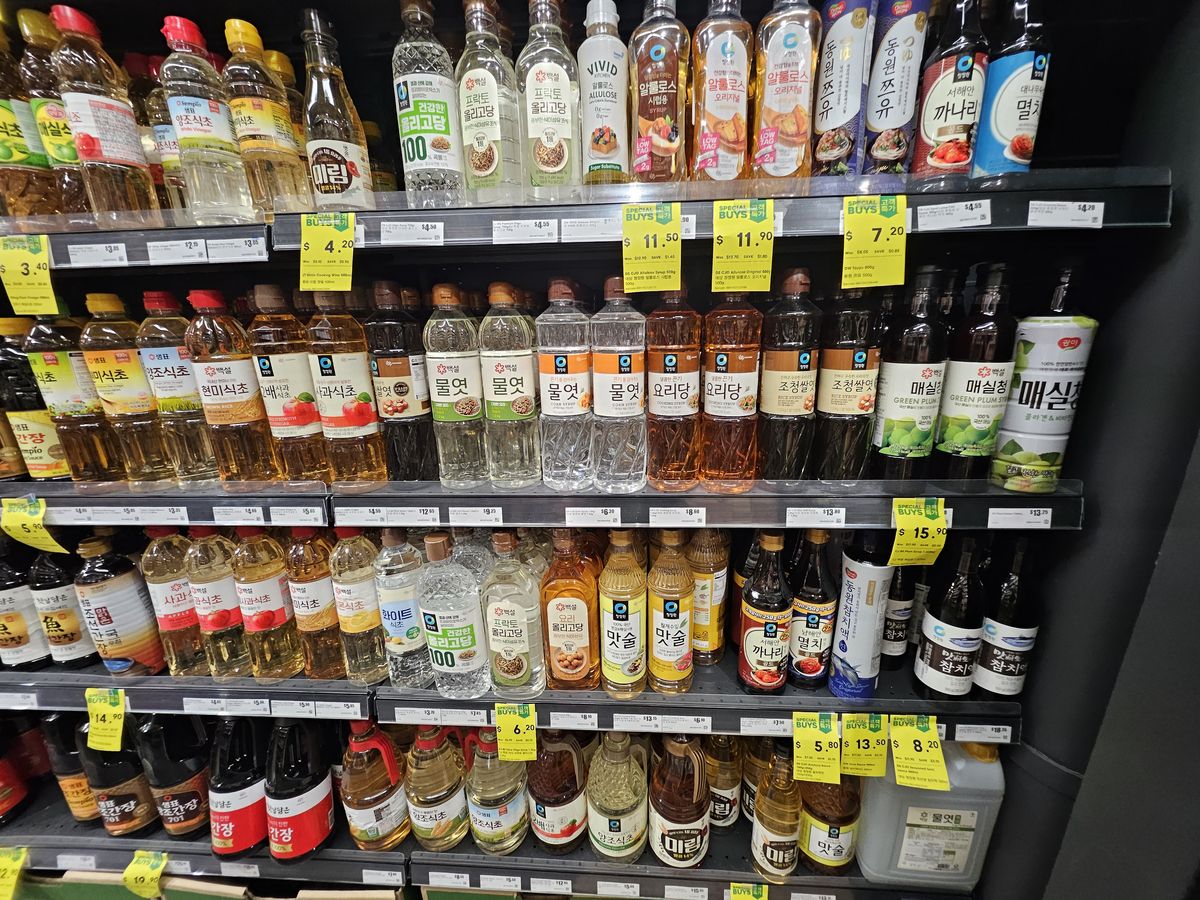
This is the hidden one. A splash of soju, mirin or rice wine is a common seasoning in marinades, braises and some stews to remove gaminess. It usually isn't on the menu description at all — so for anything braised or marinated, it's worth a direct question.
Beef and chicken aren't forbidden foods, but in an ordinary Korean restaurant the meat is almost never halal-slaughtered. So a beef or chicken dish becomes a "only at a certified place" rather than an automatic yes. Gelatin in desserts and some marshmallow-like sweets can also be pork-derived.
Join Seoul Mate free and I'll send you "Where to Start" — the 10 K-dramas I recommend to every beginner — plus a weekly pick. No spam, leave anytime.
The safe-for guide
Here's how common Korean dishes line up — focused on halal, with the vegan and red-meat-allergy columns alongside so the whole family can use it.
| Dish / ingredient | Halal 🕌 | Vegan 🌱 | Red-meat allergy 🩺 |
|---|---|---|---|
| Pork dishes (samgyeopsal, etc.) | 🔴 | 🔴 | 🔴 |
| Beef / chicken (uncertified) | 🟡 | 🔴 | 🟡 (beef 🔴, chicken 🟢) |
| Soju / mirin in the sauce | 🔴 | 🟢 | 🟢 |
| Seafood (grilled fish, jjigae) | 🟢 | 🔴 | 🟢 |
| Vegetable banchan & tofu | 🟢 | 🟡 (fish-sauce check) | 🟢 |
| Certified halal restaurant | 🟢 | — | — |
🟢 generally fine for this diet · 🟡 depends — must confirm (certification, alcohol, cross-contamination) · 🔴 avoid. The same dish can be safe for one diet and off-limits for another — always read your own column.
The non-halal ingredients that hide
Pork and cooking alcohol are the headline issues, but a few less obvious ones trip people up:
- Gelatin — common in desserts, gummies, marshmallows and some yoghurts, and frequently pork-derived. Worth checking on anything jelly-like.
- Lard and animal fat — some fried foods, pastries and stir-fries are cooked in or enriched with pork fat.
- Pork-based broths — many comforting bowls start from a pork-bone stock: dwaeji-gukbap, some ramyeon, and pork versions of gamjatang and budae-jjigae (army stew, which also usually contains ham and Spam).
- Sneaky pork bits — ham or bacon in fried rice and gimbap, pork in mandu (dumplings), and pork fat folded into some kimchi stews.
The reassuring news: kimchi itself is usually fine — it's seasoned with fish, not pork or alcohol — and plain soy sauce is generally acceptable. It's the meat, the fat and the splash of cooking wine that need your attention. (If you also eat vegan, note that the fish seasoning in kimchi changes the picture — see is kimchi vegan?)
Muslims differ on whether alcohol that cooks off in a sauce is acceptable; many avoid it entirely to be safe. Either way the practical move is the same — ask whether soju, mirin or rice wine went into the marinade or dressing, because it's rarely written on the menu. Some vinegars and condiments are alcohol-derived too, so when it matters, ask.
What you can actually enjoy
It's easy to read all this and feel boxed in, so here's the other side — a great deal of Korean food is naturally within reach:
- Seafood — grilled fish such as godeungeo-gui (mackerel), seafood stews, and haemul-pajeon (seafood pancake) when no cooking wine is used.
- Vegetable & tofu dishes — bibimbap (ordered without meat, or with halal meat), seasoned namul side dishes, and soft-tofu sundubu-jjigae once you've checked the broth.
- Rice & noodles — gimbap (vegetable or tuna), kongguksu (cold soy-milk noodles), and bibim-naengmyeon, with a quick broth check on the soupy versions.
- At certified spots — halal Korean BBQ, dakgalbi and Korean fried chicken are now served at halal-certified restaurants, mostly in Seoul.
The good news: Korea's halal scene is growing
Seoul in particular has become much easier. The Itaewon area near the Seoul Central Mosque has long been the hub for halal restaurants, and you'll now find halal-certified and "Muslim-friendly" spots flagged across the city, plus halal Korean options like halal-certified bulgogi and dakgalbi. Many tourist-area restaurants are used to the question and some keep a halal or vegetarian menu.
How to read Korea's halal labels
If you're travelling, it helps to know the system. The Korea Muslim Federation (KMF) issues Korea's official halal certification, and Muslim-friendly restaurants are commonly grouped into a few tiers you'll see on signage and travel apps: Halal Certified (KMF-approved), Self-Certified (the owner is Muslim and vouches for the kitchen), Muslim-Friendly (offers halal options but also serves non-halal), and Pork-Free. Knowing which tier you're looking at tells you how much to ask before you sit down.
On the ground, the Itaewon neighbourhood around the Seoul Central Mosque is still the easiest place to eat — halal butchers, grocers, and both Middle Eastern and Korean halal restaurants cluster there. Outside the main tourist areas it gets harder, so a translation app and the questions below go a long way. Convenience stores are handy for quick snacks, but check labels there too, since gelatin and pork extracts turn up in unexpected packets.
"Is there pork in this?" — "Dwaeji-gogi deureoga-yo?" (돼지고기 들어가요?). And for the hidden one: "Is there any alcohol or cooking wine in the sauce?" — "Sosu-e sul deureoga-yo?" (소스에 술 들어가요?).
For a red-meat allergy reading this table too: the logic is different from halal. Pork and beef are both off-limits for alpha-gal (they're mammalian), while chicken and seafood are generally fine — but cross-contamination is real, so treat the matrix as a starting point and confirm every time.
Korean BBQ when you keep halal
Korean BBQ is the experience most travellers don't want to miss, and it's manageable with a little planning. The cleanest option is one of Seoul's halal-certified BBQ restaurants, where the meat is certified and pork is off the menu entirely. At an ordinary grill house it's trickier: even if you order beef or chicken, the same grill, tongs and scissors are usually used for pork too, so cross-contamination is the real issue. If you go that route, ask for a fresh grill and clean tools, lean on seafood or vegetables, and skip the marinated cuts that may contain rice wine.
The free side dishes are mostly your friend — ssam (lettuce wraps), rice, and vegetable banchan are fine, and ssamjang (the dipping paste) is soybean- and chilli-based. The thing to confirm is simply the meat and the marinade. When in doubt, a certified restaurant removes the guesswork — and there are now several across Seoul.
Convenience stores and instant ramyeon: the label habits
Korean convenience stores are a blessing for any traveller, but for halal eaters they come with two specific traps that deserve their own paragraph. The first is instant ramyeon: a large share of Korean instant noodles use meat-based soup powders, and pork extract appears even in flavours that don't sound porky at all. The happy flip side: Korean noodle brands produce halal-certified export versions of famous lines (Korea exports heavily to Indonesia and Malaysia), so a halal logo on the packet is genuinely worth scanning for — some Seoul marts and the shops around Itaewon stock them. The second trap is gelatin, which can be pork-derived and hides in jellies, marshmallow snacks, and some candies and yoghurts.
The label words that do the most work: 돼지고기 (pork), 돈지/돼지기름 (pork fat/lard), 젤라틴 (gelatin), and 주정 (spirits/alcohol, common in some seasonings and vinegars). Point Papago's camera at the ingredients box and these jump out in seconds. Plain rice packs, fruit, boiled eggs, roasted seaweed and most seafood-flavoured items make easy low-stress picks while you're out exploring.
A halal traveller's day in Seoul
To make it concrete, here's a realistic, low-stress day — confirming as you go, as always. Breakfast: convenience-store items with checked labels, or juk (rice porridge) — the plain, abalone and vegetable versions are naturally pork-free, with just a quick broth question. Lunch: a certified or Muslim-friendly restaurant around Itaewon and the Seoul Central Mosque — halal bulgogi or dakgalbi without a single follow-up question needed. Afternoon: street snacks lean sweet and safe — bungeoppang (red-bean fish bread), roasted chestnuts and hotteok are flour-and-sugar territory, though anything fried shares oil with who-knows-what, a comfort-level call. Dinner: a seafood restaurant (grilled mackerel, seafood stews — ask about cooking wine) or halal-certified Korean BBQ if you want the full grill experience. None of that day required compromise; it just required knowing where the questions live.
Frequently asked questions
Is kimchi halal? Kimchi's usual questions are the salted seafood in the seasoning (a separate issue from pork — fine for most halal eaters, but some prefer to know) and, for a strict standard, the trace alcohol that any fermented food can develop — a point Muslims weigh differently. Most halal travellers in Korea eat kimchi without concern, but if you want the full ingredient story, we broke it down in our kimchi deep-dive.
Is Korean fried chicken halal? At an ordinary chain — usually not, for two reasons: the chicken itself isn't halal-slaughtered, and some of the famous sauces include rice wine or other alcohol-based ingredients. The good news is that halal-certified Korean fried chicken exists in Seoul, so you don't have to leave Korea without the KFC-that-stands-for-Korean-Fried-Chicken experience — just have it at a certified spot.
Where can I pray while I'm out eating my way through Seoul? The Seoul Central Mosque in Itaewon is the anchor — which is exactly why the neighbourhood became the halal food hub. Incheon Airport maintains prayer rooms, and a growing number of major tourist facilities advertise prayer spaces; details change, so check current listings before you rely on a specific one. Planning food and prayer around Itaewon makes for the smoothest day in any case.
Affiliate link — if you book through it, KContentGuide may earn a small commission at no extra cost to you. We only point you to things we'd happily use ourselves.
This is a food and lifestyle guide based on real experience, not medical or religious advice. Ingredients vary by household, brand and restaurant. If you have a diagnosed food allergy, follow the plan your doctor gave you and confirm ingredients in person every time. For halal, rely on the restaurant's own certification. When in doubt, ask — and if you can't get a clear answer, choose another dish.
Bottom line
Korean food isn't halal by default, but with pork and cooking alcohol on your radar — and a certified restaurant when you want meat — there's a lot you can enjoy. Build your confidence with the questions above, and explore the rest of the Eat guides, including what to ask in a Korean restaurant and our genuinely meat-free Korean dishes.