If Seoul is Korea's fast-paced, ambitious capital, Busan (부산) is its laid-back coastal cousin. Korea's second-largest city sits on the southeastern coast, wrapped around beaches, mountains, and one of Asia's busiest ports. It's warmer, slower, and friendlier — and it makes the perfect contrast to a Seoul trip.
I have a real soft spot for Busan. The accent is broader and warmer than Seoul's, people talk to you more readily, and the whole city has a salt-air looseness to it — even in the busy parts, nobody seems to be in quite the hurry they are up north. You can be standing on a skyscraper-backed beach in the morning and clambering around a temple perched on sea rocks by lunchtime, then eating raw fish you watched get pulled from a tank an hour earlier. That range — mountains, sea, markets, art villages, all stacked into one city — is exactly why I send so many first-time visitors here as a second stop after Seoul.
This is your complete first-timer's guide to Busan: where to base yourself, the experiences I'd genuinely build a trip around, when to come, how long to give it, what to eat, and a simple plan to tie it together. Let me start with the practical decision that shapes everything — where to stay.
Why Busan, and who it's for
Busan is the easiest "second city" in Korea to fall for, and it suits almost everyone. Beach lovers get long sandy crescents and seaside cafés. Culture travellers get temples, a famous art village and a buzzing film-festival pedigree — every October the city hosts BIFF, Asia's biggest film festival. Food obsessives get one of the best seafood scenes in the country and a clutch of dishes you'll find nowhere else. And because the city is more compact and far less frantic than Seoul, it's a gentle place to find your feet if Korea is new to you.
Here's the honest framing I'd give a friend: think of Busan as the relaxed, scenic counterweight to Seoul rather than a rival to it. Seoul is for palaces, shopping, history and big-city intensity; Busan is for sea views, slower mornings, and that holiday feeling. Most people don't choose between them — they do a few days of each, link them by the high-speed train, and come home having seen two very different sides of the country. If your trip only has room for one city beyond Seoul, though, Busan is the one I'd pick almost every time.
The easiest way is the KTX high-speed train from Seoul Station to Busan Station — about 2.5 hours. Trains run frequently throughout the day. Flights take about an hour but with airport transfers, the train is usually just as fast and far more convenient.
Where to stay in Busan
Busan is spread out, so choosing the right area matters. Three main options for first-timers:
Haeundae (해운대) — best for beaches
Busan's most famous beach district. Modern hotels, a long sandy beach, restaurants, and a relaxed holiday atmosphere. Best if you want a beach-holiday feel and don't mind being a little away from the historic centre.
Seomyeon (서면) — best for first-timers
The central transport hub and shopping district. Centrally located, great for getting everywhere by subway, with endless food and shopping. Best for first-time visitors who want convenience.
Nampo-dong (남포동) — best for old Busan charm
The historic downtown, near the famous markets and Gamcheon village. Atmospheric, walkable, close to the port. Best if you want character and history over modern polish.
The essential Busan experiences
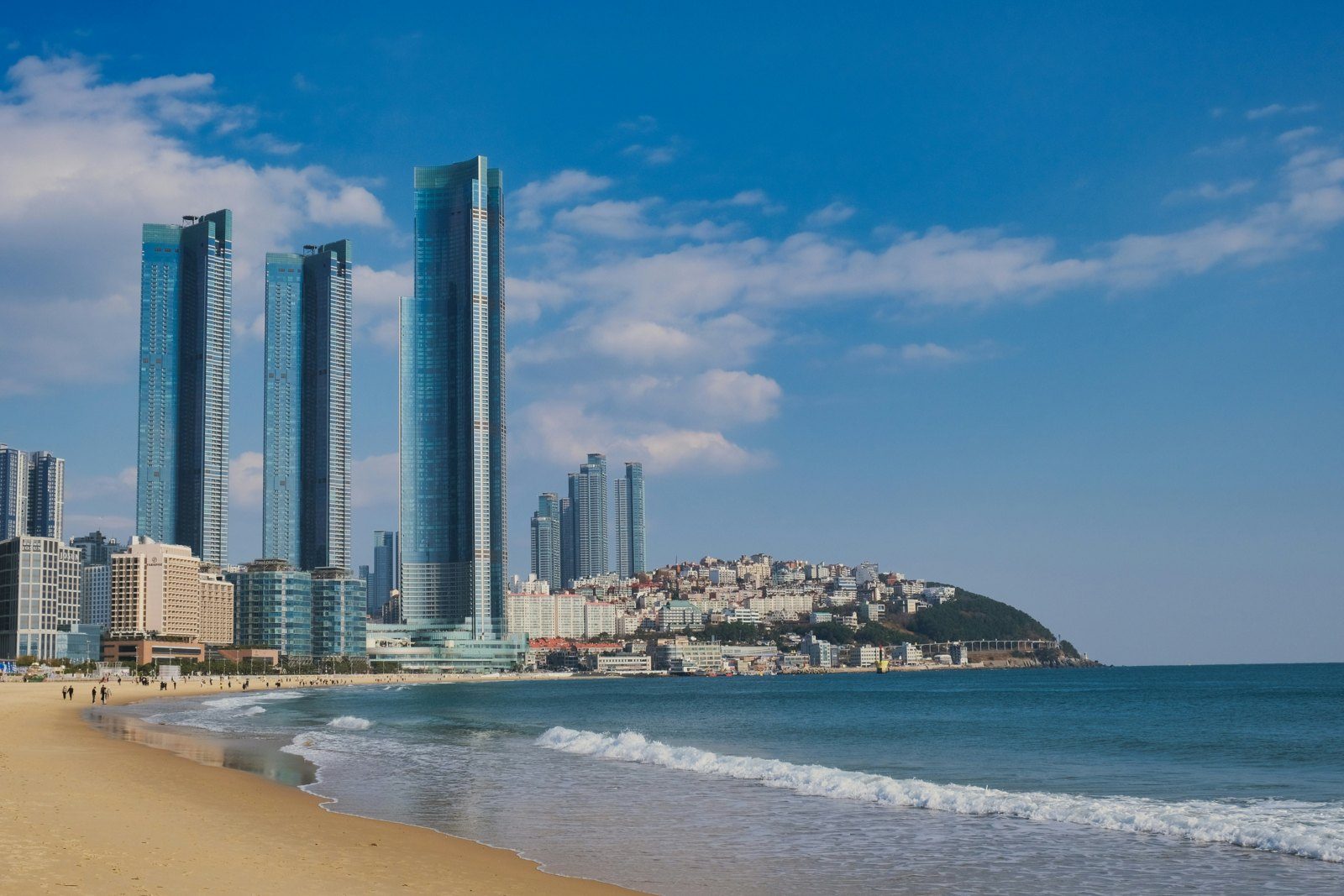
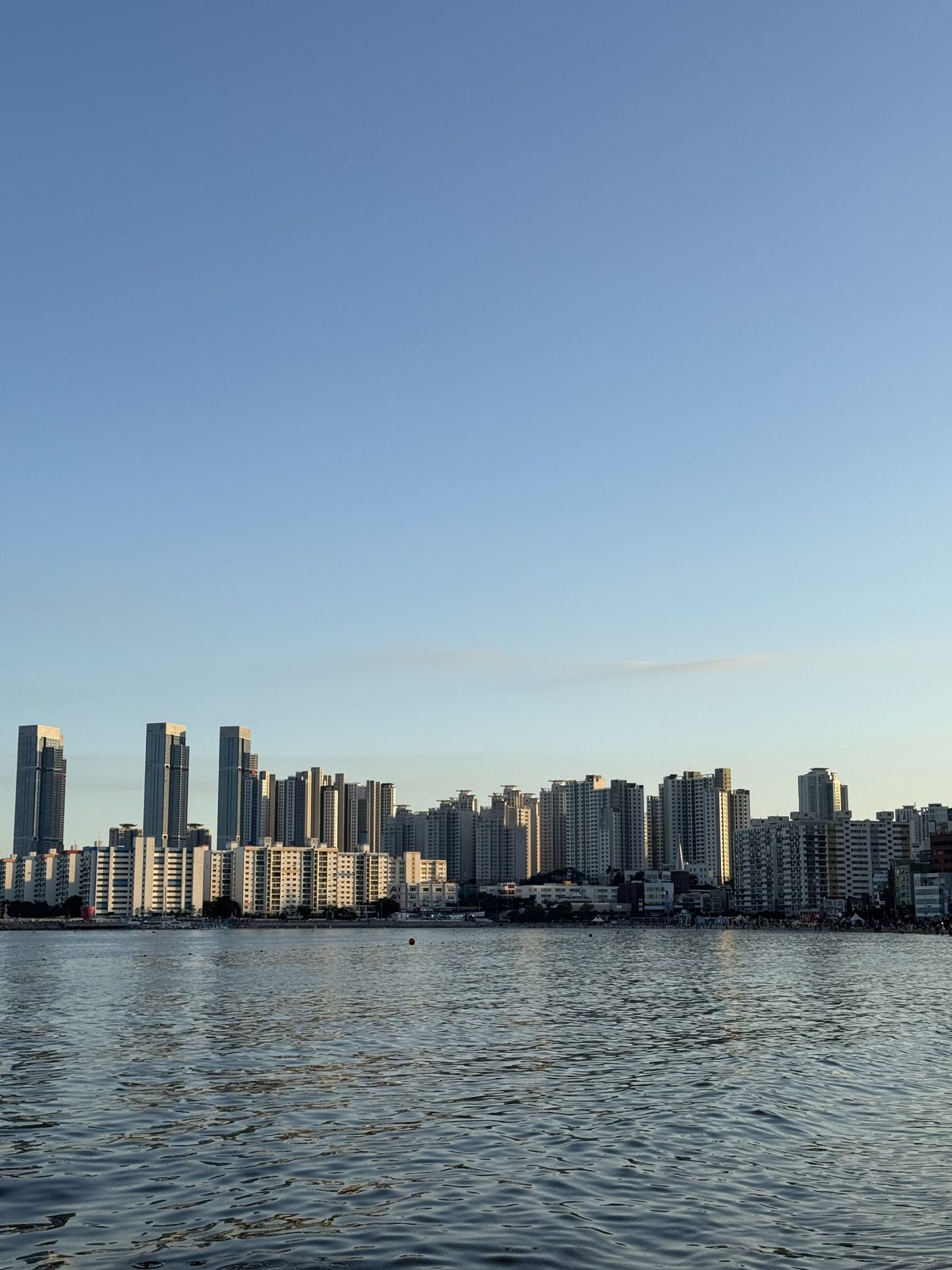
Busan's most famous beach — a wide crescent of sand backed by skyscrapers and mountains. Busy in summer, peaceful in other seasons. Even if you don't swim, the beachfront walk, nearby cafés, and the views are worth it. The adjacent Dongbaekseom Island has a beautiful coastal walking trail.
Take Busan Subway Line 2 to Haeundae Station (Exit 3 or 5), then a 5-minute walk to the beach.
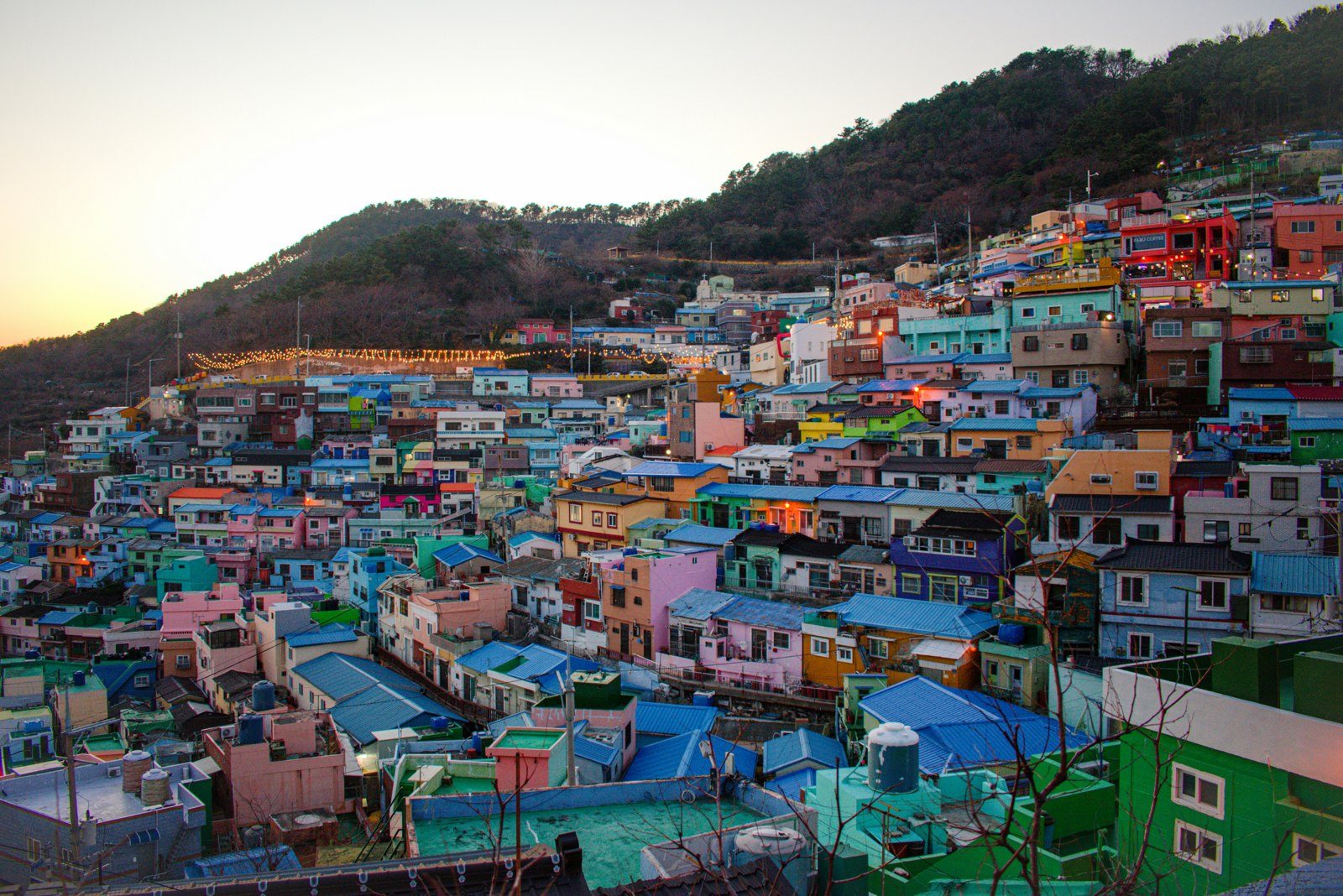
Often called the "Santorini of Korea" or "Machu Picchu of Busan" — a hillside neighbourhood of brightly painted houses stacked up the slope, full of murals, art installations, tiny galleries, and cafés. One of the most photogenic places in all of Korea. Allow 2–3 hours to wander the maze of alleys.
Take Busan Subway Line 1 to Toseong Station, then a local bus (2, 2-2, or 1-1) up the hill. Or take a taxi from Nampo-dong — it's quick and cheap.
Join Seoul Mate free and I'll send you "Where to Start" — the 10 K-dramas I recommend to every beginner — plus a weekly pick. No spam, leave anytime.
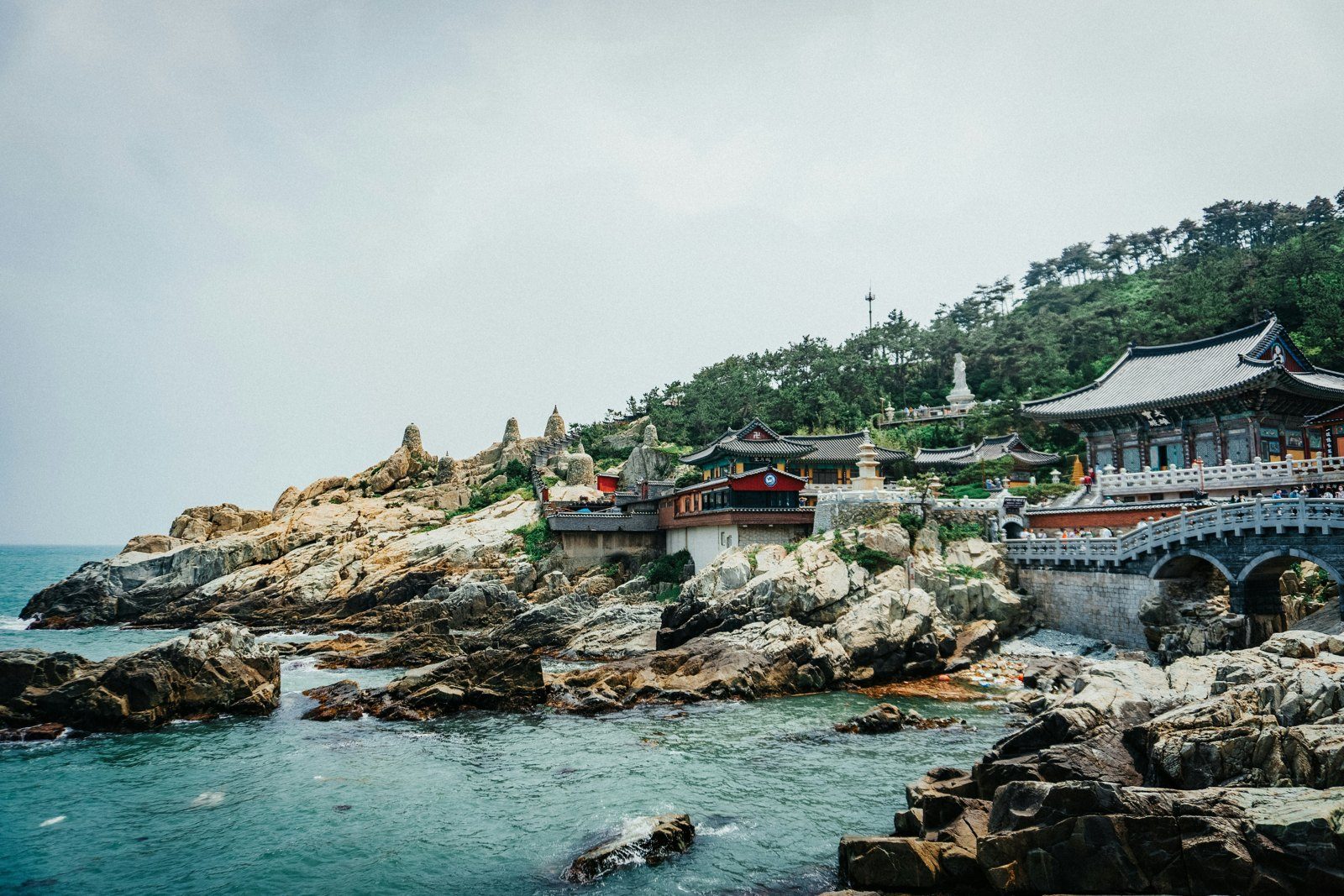
A rare and beautiful seaside Buddhist temple, built right on the rocks above the crashing waves. Most Korean temples sit in the mountains — this one's dramatic coastal setting makes it unique. Especially stunning at sunrise. Free to enter.
Take Busan Subway Line 2 to Haeundae or Jangsan Station, then bus 181 to the temple. Allow about an hour from central Busan.
Korea's largest seafood market — a sprawling, lively place where you can pick fresh seafood downstairs and have it prepared for you to eat upstairs. A true Busan experience and a feast for anyone who loves seafood. The surrounding Nampo-dong streets are full of street food too.
Take Busan Subway Line 1 to Jagalchi Station (Exit 10), a short walk to the market.
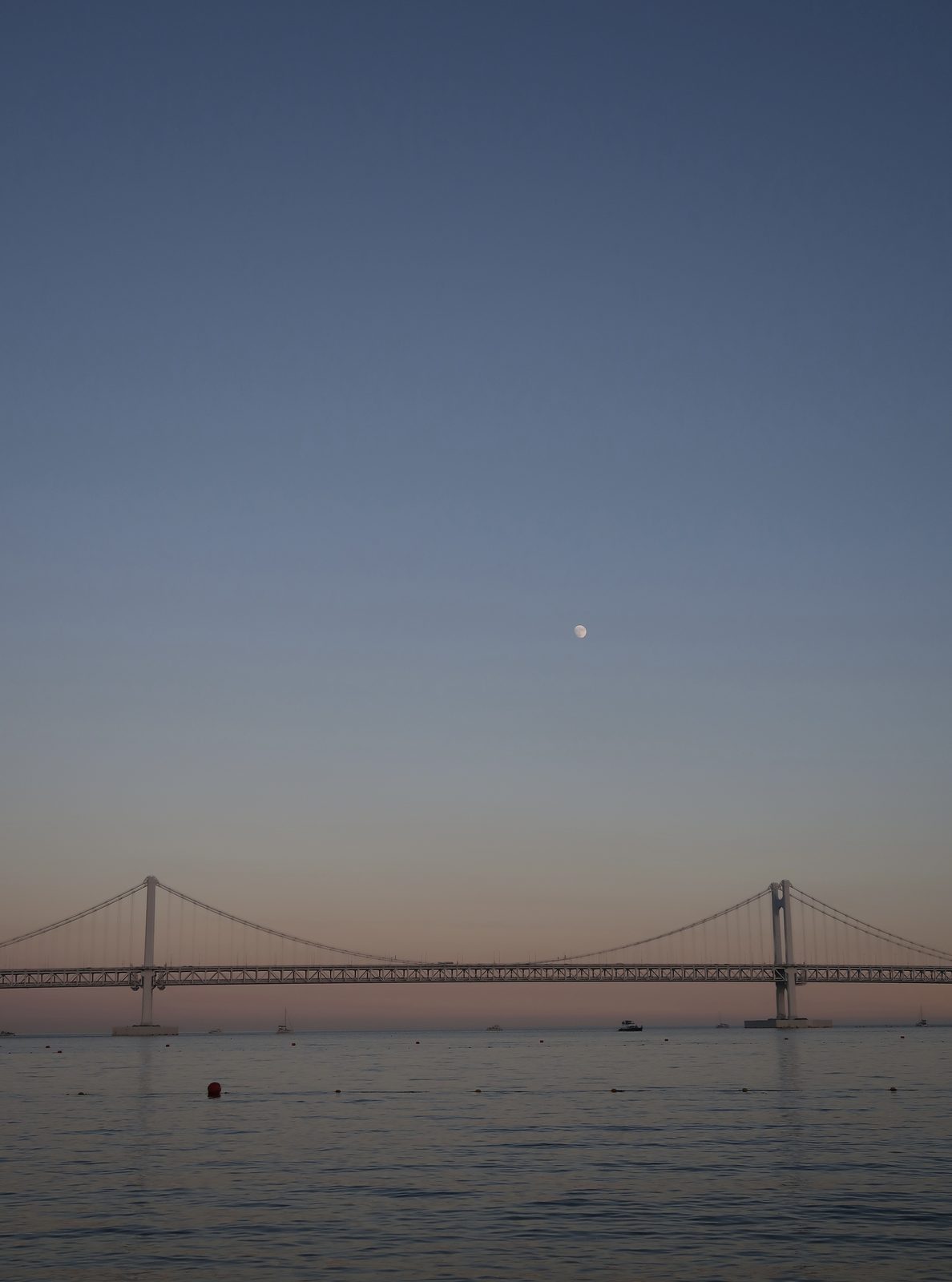
A more relaxed, local-favourite beach than Haeundae, famous for its view of the illuminated Gwangan Bridge at night. The beachfront is lined with cafés, bars, and restaurants. The best spot in Busan for an evening drink with a view.
Take Busan Subway Line 2 to Gwangan Station (Exit 3 or 5), about a 10-minute walk to the beach.
On the southern tip of Yeongdo island, Taejongdae is a forested headland of dramatic sea cliffs dropping straight into the water, with pine-lined walking trails, a lighthouse, and sweeping views out over the open sea. A little tourist train loops the park if you don't fancy the full walk. It's the place I send people who want Busan's wilder, more elemental side after the beaches and markets — on a clear day the horizon goes on forever.
From central Busan, take a bus out toward Yeongdo and Taejongdae; allow time, as it's on the far side of the island. Check return bus times before you set off.
A cliffside neighbourhood of white houses strung along a narrow path right above the sea, on the way to or from Taejongdae. Think of it as Busan's quieter, breezier answer to Gamcheon — fewer crowds, more sea, with cafés tucked into old houses and a coastal walkway looking straight out at the ships in the harbour. It's become a beloved photo and café spot, and it pairs perfectly with a Yeongdo day.
It's on Yeongdo island, easy to combine with Taejongdae. A taxi from Nampo-dong is quick if the bus feels fiddly.
Best time to visit Busan
Busan is a coastal city, so the weather shapes your trip more than it does inland. Here's the quick rundown.
Spring and autumn are the sweet spots. Mild, comfortable, and easy for walking the beaches, temples and hilltop villages without melting or freezing — these are my favourite times to be here, and autumn in particular gives you clear skies and gentle sea light. Summer is beach high season: Haeundae and Gwangalli come alive, the energy is fantastic, but it's hot, humid and crowded, and Korea's rainy spell usually falls in the middle of it, so pack for showers. Winter is Busan's secret — much milder than Seoul thanks to the coast, often clear and crisp, and wonderfully quiet on the beaches. You won't be swimming, but a winter coastal walk with the temple and the sea to yourself is its own reward.
How many days you need
Busan is bigger and more spread out than people expect, so give it a little room to breathe:
- Two days is the practical minimum and enough to hit the headliners — beaches, Gamcheon, the seaside temple and the markets. It's the most common add-on to a Seoul trip, and it works well (there's a suggested two-day plan further down).
- Three days is where Busan really opens up: you can add the Yeongdo island side (Taejongdae and Huinnyeoul), slow down over the food, and not feel like you're racing the subway map.
- Four or more if you want to use Busan as a base for day trips — nearby Gyeongju (경주), Korea's ancient capital, is an easy and very worthwhile one.
Book a Busan day out
Busan rewards a little planning. Booking a pass or a tour before you go saves you queueing and fumbling with directions once you're there — here are two easy ways to do it, depending on how you like to travel.
Affiliate links — if you book through them, KContentGuide may earn a small commission at no extra cost to you. We only point you to things we'd happily use ourselves.
What to eat in Busan
Busan has its own distinct food culture, shaped by the sea and its history as a port city:
- Dwaeji gukbap (돼지국밥) — pork and rice soup, Busan's signature comfort dish.
- Milmyeon (밀면) — Busan's local cold wheat noodles, born from the Korean War era.
- Ssiat hotteok (씨앗호떡) — a Busan twist on the sweet pancake, stuffed with seeds and nuts. Famous at Nampo-dong street stalls.
- Fresh seafood — at Jagalchi Market, or grilled at any seaside restaurant.
Want the full rundown? See our complete Busan food guide — every must-eat dish and exactly where to find it.
Getting around Busan
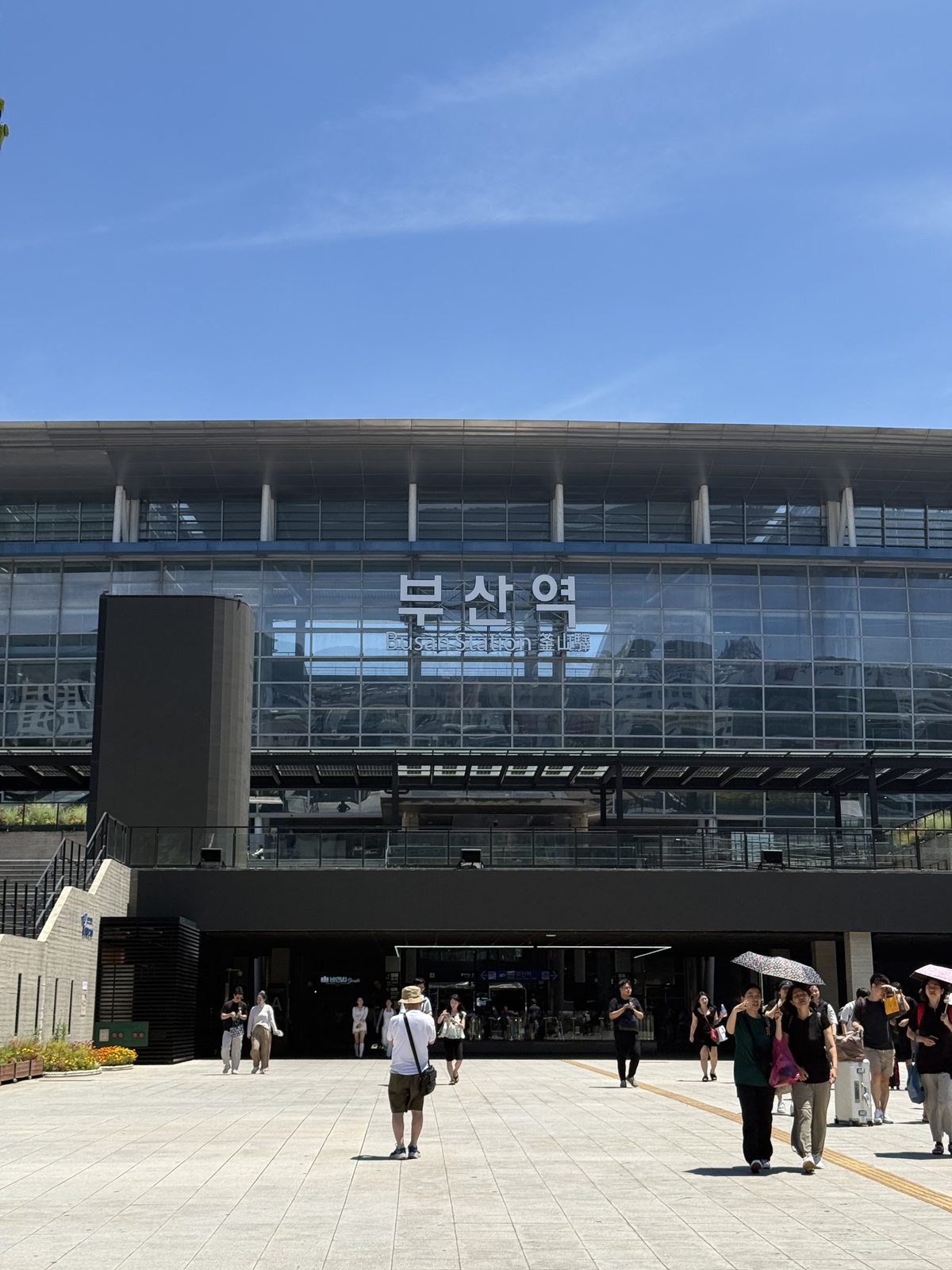
Good news: Busan is genuinely easy to get around, and noticeably less daunting than Seoul. The subway is the backbone — clean, signposted in English, and connecting most of the places in this guide. Your T-money card works here exactly as it does in Seoul, so if you've already got one, just keep tapping; if you don't, pick one up at any convenience store. For the spots the subway doesn't quite reach — the seaside temple, Taejongdae, Gamcheon up its hill — you'll finish the journey with a short local bus or a taxi, both of which are cheap and straightforward.
A couple of honest tips from experience. Taxis are inexpensive and worth taking for the awkward uphill or out-of-the-way legs, especially in a small group. And use Naver Maps (or KakaoMap) rather than Google Maps for directions — Google's transit and walking routing simply doesn't work well in Korea, while the local apps are excellent. Download one before you arrive and getting around Busan becomes almost effortless.
Busan has its own subway system separate from Seoul, but your T-money card works here too. The system is smaller and easier to navigate than Seoul's. Two or three days is enough to see the highlights — perfect as an add-on to a Seoul trip.
Suggested 2-day Busan itinerary
Day 1: Gamcheon Culture Village in the morning → Jagalchi Market and Nampo-dong for lunch and street food → Gwangalli Beach for sunset and dinner.
Day 2: Haedong Yonggungsa Temple at sunrise → Haeundae Beach and Dongbaekseom walk → relax at a beachfront café before catching the KTX back.
Frequently asked questions
Should I visit Busan or just stay in Seoul? Do both if you possibly can — they're very different cities and the high-speed train links them in around two and a half hours. Seoul gives you palaces, history and big-city energy; Busan gives you beaches, temples, seafood and a slower pace. If you only have time for one stop beyond Seoul, Busan is the one I'd choose.
How many days should I spend in Busan? Two days covers the highlights as a Seoul add-on; three lets you add the Yeongdo island side and actually relax; four or more if you want to day-trip to nearby Gyeongju. It's bigger and more spread out than first-timers expect, so don't try to cram it into a single day.
Is Busan good for a first-time Korea trip? Very. It's more compact and less overwhelming than Seoul, people are famously warm, the subway is easy, and your T-money card and Naver Maps work just as they do up north. It's a gentle, scenic place to find your feet.
Read our T-money card guide and Naver Maps guide before you go — both work in Busan and will make getting around much easier.