Damyang (담양) is a small county up near Gwangju in the southwest, and it's the kind of place you go to breathe out. It's long been Korea's bamboo country, and that's still its calling card: cool green bamboo groves, a famous avenue of towering trees, old scholar's gardens, and a riverside walk shaded by ancient trees. Add a couple of local specialties you'll find nowhere else, and it makes one of the loveliest, most restful day trips in the country.
I keep coming back to Damyang in my head. There's a particular sound the wind makes moving through a big bamboo grove — a dry, soft, rushing hush, almost like the sea heard from a long way off — and once you've stood inside it you understand why Korean poets and scholars have written about bamboo for centuries. It isn't a dramatic, look-at-me destination. It's the opposite: a place that asks nothing of you except that you slow down and pay attention. After a few busy days in Seoul or on the road, a day in Damyang feels like setting something down you didn't realise you'd been carrying.
It's actually one of the spots that made me want to start writing these guides. Below I'll take you through the places I'd put on any first visit, then get properly practical — when to come, how long you need, how to reach a county with no station of its own, what to eat, and a simple plan to string it all together. So let me begin with the place I keep picturing.
What makes Damyang special — and who it's for
Damyang is built for slow travellers, and I want to say that plainly so the right people come. If you measure a trip by how many sights you bag in a day, Damyang will baffle you; there isn't a long checklist here. What there is, is quality of feeling — a few genuinely beautiful, deeply restful places clustered close together, all turning on the same gentle theme of green, growing things and old, unhurried Korean taste.
The county has been associated with bamboo for so long that the plant is woven through everything: the forest you walk, the rice steamed inside a bamboo cup at lunch, even the craft traditions. Layered on top of that is a strain of old scholarly culture — the kind of Joseon-era literati who built gardens designed to disappear into nature rather than dominate it. Put together, Damyang is a place for nature lovers, photographers, couples, families with little ones who need room to roam, and anyone craving a calm counterpoint to a busy Korea itinerary. It pairs beautifully with neighbouring Gwangju (광주). If you need buzz and nightlife, look elsewhere — but if you want one of the most peaceful half-days in the country, you've found it.
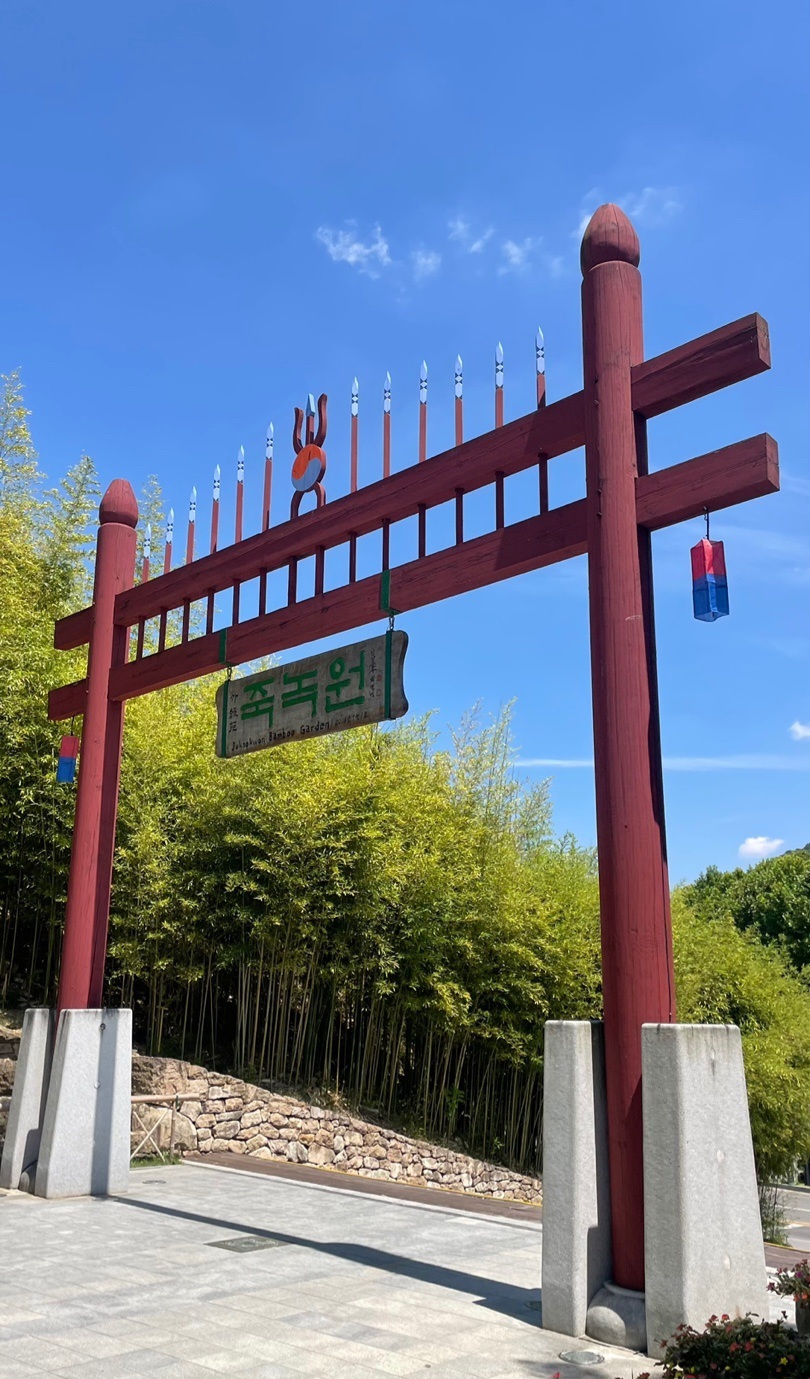
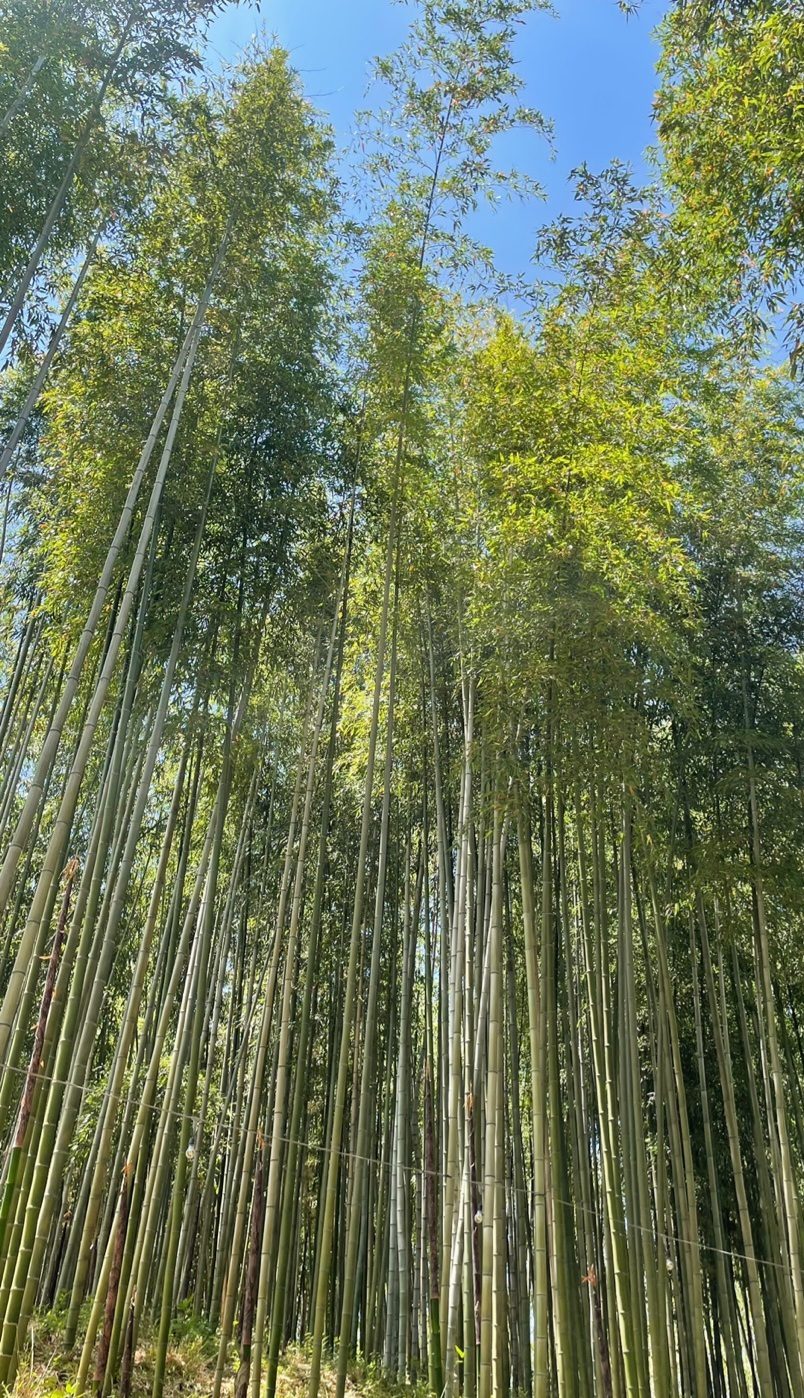
This is the one. Juknokwon is a big bamboo forest laced with walking paths, where tall green stalks close over your head and the light filters down soft and cool — even on a hot day it feels several degrees cooler inside. It's astonishingly peaceful; the wind moving through the bamboo makes its own quiet music, and you come out calmer than you went in. Of everywhere on my small-cities list, this is one of the places I think about most.
There are several looped trails of different lengths, plus viewpoints and tea spots. Lovely in any season; especially refreshing in summer. Small admission fee.
One of the most beautiful tree-lined roads in Korea — a long, straight avenue flanked by towering metasequoia trees that meet overhead like a green cathedral. It's a favourite for a slow walk or a bike ride, gorgeous in summer green and again when the needles turn russet in autumn. Endlessly photogenic, and a perfect pair with the bamboo forest nearby.
You can walk or rent a bike. Summer green and autumn colour are both stunning.
One of the most celebrated traditional gardens in Korea, built in the 16th century as a retreat for a Joseon scholar who withdrew from politics. It's a masterclass in the Korean idea of a garden — not manicured, but designed to sit gently within nature, with a clear stream running through wooden pavilions, stone, and trees. Quiet, contemplative, and deeply Korean.
A short ride from the bamboo forest. Peaceful on a weekday morning.
Join Seoul Mate free and I'll send you "Where to Start" — the 10 K-dramas I recommend to every beginner — plus a weekly pick. No spam, leave anytime.
A long levee beside the Damyang stream, planted centuries ago with trees to hold back floods — and now a gorgeous shaded walking path lined with huge, gnarled old trees, some hundreds of years old. It runs right by the bamboo forest, so it's easy to combine, and beside it you'll find Damyang's well-known guksu (noodle) street for a cheap, tasty lunch.
Free to walk, and right next to Juknokwon. The noodle street is a local institution.
Damyang has two dishes worth planning a meal around. Tteokgalbi is a patty of finely chopped, seasoned short-rib meat, grilled until caramelised — rich and a little sweet. And daetongbap is rice (with nuts and grains) steamed inside a section of bamboo, served still in the cup, with a delicate bamboo fragrance and a spread of side dishes. Together they're the perfect Damyang lunch.
Many restaurants near the bamboo forest serve set meals built around both.
If you have a little extra time, the area around Damyang's lake and wetland eco-park makes a gentle add-on to the bamboo and tree-road core. The county leans into its green identity here with walking paths and reedy waterside scenery — the kind of place to amble slowly with a coffee rather than rush. It's a nice way to stretch a half-day into a full one without ever raising your heart rate, which is very much the Damyang spirit.
Best with a car, since it's a little out from the bamboo-forest cluster. Lovely in mild weather.
Damyang is quietly one of the most important places in Korea for old garden pavilions — the little wooden jeong where Joseon scholars sat, wrote poetry and watched the seasons turn. Sigyeongjeong is one of the loveliest, set on a wooded rise near a stream not far from Soswaewon, and the surrounding area is dotted with similar pavilions tied to a whole tradition of classical Korean literature. If Soswaewon leaves you wanting more of that contemplative scholar's-garden mood, this is where to find it.
Close to Soswaewon, so easy to pair. Quietest and prettiest on a weekday.
Best time to visit
Damyang is green and lovely most of the year, but each season has its own character, so here's how I'd time it.
Summer is, for me, the signature season. The bamboo forest is at its most refreshing exactly when you most need it — the dense green canopy keeps the air inside noticeably cooler than the heat outside, and the whole county is lush. Autumn is the photographer's pick: the metasequoia tree road turns a gorgeous russet, and the cool, clear air is perfect for long walks. Spring is gentle and fresh, with new bamboo shoots coming up — and the bamboo festival usually lands around this time, when the town leans fully into its identity. Winter is bare and quiet, but a bamboo grove still holds a stark beauty under a cold sky, and you'll likely have the paths almost to yourself. There's no wrong time; just match the season to whether you want cool green shade, autumn colour, or solitude.
How many days you need
Damyang is compact and its sights cluster close together, so it doesn't ask for much time — the question is really how much calm you want to soak up:
- A half-day is enough to walk the bamboo forest, stroll the tree road and eat a local lunch — easily done as a side trip from Gwangju. This is how most people experience Damyang, and it works.
- A full day is what I'd actually recommend, because it lets you add Soswaewon and the riverside tree forest, linger over a proper tteokgalbi-and-bamboo-rice meal, and not feel like you're hurrying through a place whose entire point is slowness.
- An overnight or two days only if you're combining Damyang with Gwangju city — together they make a relaxed, well-rounded couple of days in the southwest.
How to get there & get around
Damyang sits right next to Gwangju, so the usual route is the KTX to Gwangju-Songjeong Station and then a local bus or short taxi out to Damyang (the county is small and the sights cluster close together). There are also direct intercity buses from Seoul if you'd rather skip the connection. The simplest mental model: get yourself to Gwangju, then treat Damyang as an easy hop out from there.
Once you're in Damyang, the core sights are wonderfully close — the bamboo forest, the tree road and the riverside walk are practically neighbours, so you can do that cluster comfortably on foot. Soswaewon and the pavilion gardens are a short hop away, and that's where a taxi or rental car earns its keep, since the country buses out to them aren't frequent. If you're relying on buses, check the return times before you set off so you're not left waiting in the quiet. As always in Korea, use Naver Maps rather than Google Maps for bus times and directions — Google's transit routing is unreliable here. Honestly, for a relaxed Damyang day, a car is the nicest option: the whole county is pretty to drive through.
If Damyang is part of a wider trip through the southwest, a rail pass keeps the train legs simple:
Affiliate link — if you book through it, KContentGuide may earn a small commission at no extra cost to you. We only point you to things we'd happily use ourselves.
What to eat here
Damyang punches well above its size on food, and there are two dishes I'd genuinely plan a meal around — plus a noodle street worth knowing about.
Tteokgalbi (떡갈비) is the local star: short-rib meat finely chopped, seasoned, pressed into a patty and grilled until the edges caramelise. It's rich, faintly sweet, and a world away from a plain grilled steak — Damyang is one of the places most associated with it in Korea, and eating it here feels right. Daetongbap (대통밥), bamboo rice, is the other must-try: rice with nuts and grains steamed inside a section of real bamboo and served still in the cup, carrying a delicate woody fragrance and arriving with a generous spread of side dishes. Order both as a set and you've got the perfect Damyang lunch, deeply tied to the place around you.
And don't overlook the humble option — the guksu (국수) noodle street beside the riverside tree forest is a beloved local institution, all simple, cheap, comforting bowls of noodles eaten at long tables. It's the casual, everyday counterpoint to the tteokgalbi feast, and on a hot day a cold bowl there is exactly what you want.
A sample Damyang plan
Here's how I'd shape a calm, unhurried day — and "unhurried" really is the assignment.
Morning: start at Juknokwon, the bamboo forest, while it's cool and quiet, and walk one of the looped trails slowly enough to actually hear the wind in the stalks. Carry straight on to the riverside tree forest right next door, then either the metasequoia tree road for that green-cathedral walk or bike ride.
Lunch: tteokgalbi and bamboo rice at one of the restaurants near the forest — or a cheap, cheerful bowl on the noodle street if it's hot.
Afternoon: head to Soswaewon to sit a while in the old scholar's garden, and if you've got the appetite for more of that mood, the nearby pavilions like Sigyeongjeong. End with a slow amble by the lake if there's time. Then let the calm carry you home.
Frequently asked questions
Can I visit Damyang as a day trip from Gwangju? Easily — that's exactly how most people do it. Damyang sits right next to Gwangju, the sights cluster close together, and a half-day or full day is plenty. Get yourself to Gwangju, then hop out to Damyang by bus or taxi.
Is Damyang worth it if I'm not a "nature person"? Honestly, give it a chance even then. The bamboo forest is the kind of place that wins over people who don't think they care about nature — it's atmospheric and a little uncanny in the best way. But if you genuinely need cities and nightlife to enjoy a trip, Damyang will feel too quiet, and that's fine.
When is the bamboo festival? It's usually held in spring, when the new shoots come up, but the exact dates change every year — so check the official Damyang tourism pages before planning a trip around it. The town leans fully into its bamboo identity during the festival, which is a lovely time to come.
Damyang holds a bamboo festival in spring, when the new shoots come up and the town leans fully into its bamboo identity. Dates change yearly, so check the official Damyang tourism pages before planning around it. Subscribe below for festival timing through the seasons.
The bottom line
Damyang is the antidote to a busy Korea trip — green, quiet, and unhurried. Walk the bamboo forest, drift down the tree road, sit in an old garden, and eat bamboo rice for lunch. If you're pairing it with nearby Gwangju, it makes a gentle, beautiful half-day you won't forget.
Planning more? See my guide to Korea's best small cities, the Jeonju guide nearby, and grab a T-money card for the buses and trains.