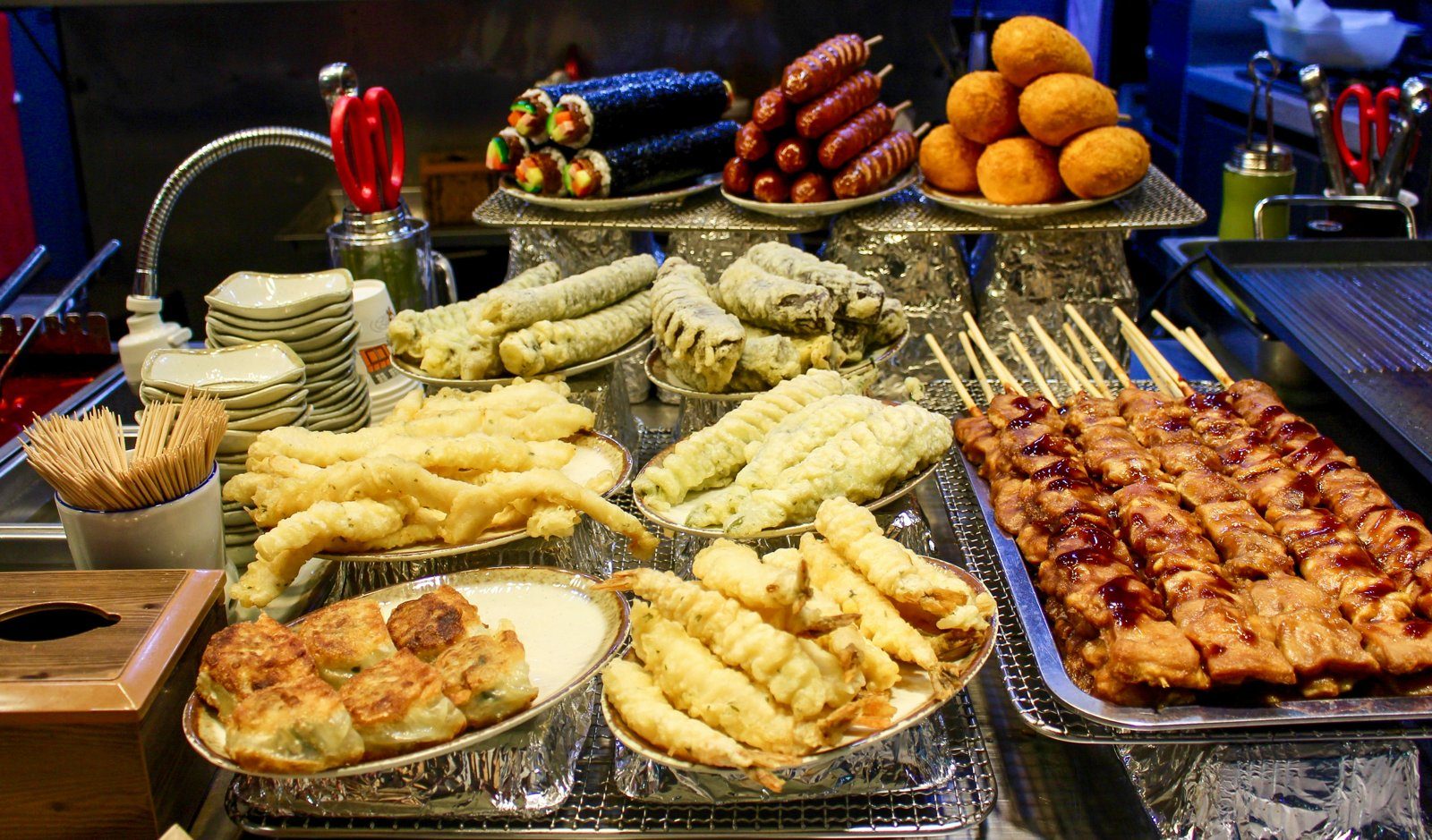
If K-dramas taught you anything about Korea, it's this: people are always eating something delicious from a tiny cart or a steamy little shop. Tteokbokki shared under one umbrella in the rain. A fish-cake skewer and hot broth on a freezing night. A whole gang crowded around a street stall after school.
That whole world has a name: bunsik (분식) — Korea's cheap, cheerful street food. It's the taste of school days, late nights and cold winter walks, and it's some of the most fun eating you'll ever do.
I have to be honest: bunsik is the food I get most homesick for. Not the elaborate restaurant meals — the snack-shop stuff. The smell of tteokbokki sauce thickening on a cart, the first fish-cake skewer of winter, the specific joy of splitting a corn dog with someone while you both wait for it to stop being lava-hot. It's food tangled up with memory, which is probably why it shows up in dramas so constantly: nothing says "ordinary Korean life" faster than a scene around a steaming street stall.
Here are the bunsik snacks every K-drama fan should know — what they are, where you've spotted them on screen, and how to order them like a local. I've eaten every single one of these more times than I could count, so the tips are the real ones I'd give a friend.
Bunsik (분식) literally means “flour-based food.” It dates back to a time when rice was scarce and wheat snacks were promoted instead — and it grew into a whole category of cheap, casual comfort food. Today you'll find it at a bunsik-jip (분식집, snack shop) or a pojangmacha (포장마차, street food tent).
Where bunsik comes from (and why it's everywhere)
Bunsik has a slightly bittersweet backstory, and I think it's worth knowing because it explains why this food carries so much feeling for Koreans. In the lean decades after the Korean War, rice was scarce and expensive, while wheat flour arrived cheaply as aid. The government actively encouraged people to eat flour-based foods instead of rice — and a whole generation of cheap, filling, flour-built snacks grew up around that push. Tteokbokki as we know it, instant noodles, fried dough, stuffed breads: this is their world.
What started as making-do turned into something genuinely beloved. The snack shop near a school became a fixture of growing up; the winter street cart became part of the season itself. That's the thing to hold onto as you read: bunsik isn't trying to impress anyone. It's the food of everyday life, and its warmth comes precisely from being humble, shared, and a little nostalgic. When a K-drama wants a scene to feel real and unguarded, it puts the characters in front of bunsik.
The bunsik line-up
The undisputed king of bunsik. Chewy cylinders of rice cake simmered in a sticky, sweet-and-spicy gochujang sauce, usually with fish cake and boiled egg. It's cheap, warming and gloriously addictive — the snack Korean characters stress-eat, share with friends, and queue for in the rain. Modern shops pile on variations: cheese tteokbokki, rose (cream) tteokbokki, and rabokki with instant noodles thrown in.
Korea's take on tempura: vegetables, squid, dumplings, sweet potato and boiled eggs in a crisp golden batter. Twigim almost never travels alone — the move is to dunk each piece straight into your tteokbokki sauce. That crunchy-meets-spicy combo is half the reason bunsik exists.
Steamed glass-noodle blood sausage, sliced and served with a sprinkle of salt — usually alongside pieces of liver and lung. It sounds intense, but it's a beloved, savoury market staple with a soft, mild flavour. Together with tteokbokki and twigim it forms the classic bunsik “trio.”
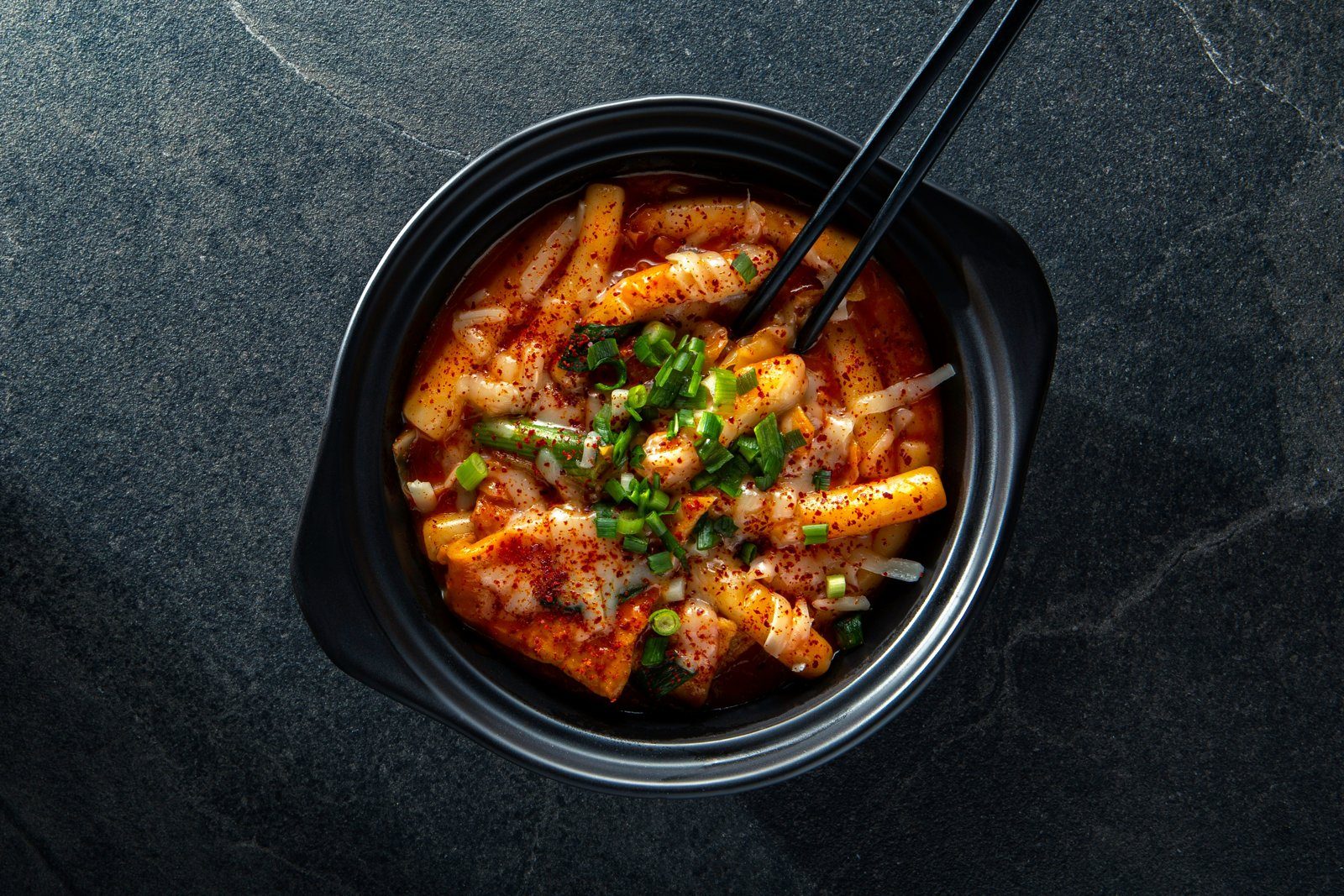
Rice and fillings — egg, pickled radish, carrot, spinach, ham or tuna — rolled in seaweed and sliced into bite-size wheels. Portable, cheap and endlessly customisable, it's Korea's go-to for picnics, road trips and quick lunches. You've seen it packed into lunchboxes in countless dramas.
Sheets of fish cake folded onto skewers and simmered in a clear, savoury anchovy-kelp broth. On a freezing night at a street stall, you eat the fish cake and then drink the hot broth from a paper cup — and the cup is usually free and refillable. Peak Korean winter comfort.
The one taking over the world right now. A skewer of sausage and/or stretchy mozzarella in a crisp fried batter — often rolled in cubed potato or sugar, then drizzled with ketchup and mustard. The dramatic cheese-pull made it a social-media superstar, and it's now the trendiest snack on any Korean street.
A small, sweet-savoury loaf with a whole egg baked right into the middle — soft, fluffy bread around a warm egg. Sold hot from winter street carts, it's the snack you cup in both hands to warm your fingers while you walk.
A fish-shaped waffle-pastry with a sweet red-bean filling, pressed hot in a fish-mould iron. An icon of Korean winter — the first bungeoppang cart appearing on the street is practically a sign that the cold season has begun. There are custard and other modern fillings too.
A chewy fried dough pancake pressed flat on a griddle, filled with a molten mix of brown sugar, cinnamon and crushed nuts that turns to syrup inside. You hold it in a little paper sleeve and bite carefully, because that sugar filling is genuinely scalding for the first minute. Busan's seed-packed ssiat hotteok is the famous regional upgrade.
Bite-size chunks of chicken grilled on a skewer and brushed with a glossy sweet-and-spicy sauce, sometimes alternated with rounds of spring onion or rice cake. It's the smoky, hand-held snack you smell from half a block away at any market or festival, and you pick your spice level at the cart.
Korean dumplings, stuffed with pork, kimchi, glass noodles and vegetables, then steamed (jjin-mandu) or pan-fried (gun-mandu). At a bunsik shop they're a standard sidekick to tteokbokki, and the big steamed ones — wang-mandu — are a meal in themselves. Comforting, filling, and never spicy unless the filling is kimchi.
A soft, cloud-white steamed bun with a sweet red-bean or savoury filling, kept hot in a steamer box you'll spot glowing on every convenience-store counter once the weather turns cold. It's less a street-cart item than a winter ritual — grab one with cold hands and it warms you from the fingers in. There are pizza, vegetable and custard versions now too.
If you only do one thing: order tteokbokki + twigim + sundae together. Dip the fritters and the sausage into the spicy tteokbokki sauce. This combo is the heart and soul of bunsik — ask any Korean and they'll agree.
Where to find bunsik
In Korea, bunsik is everywhere: dedicated bunsik-jip snack shops, pojangmacha street tents (especially magical in winter), traditional markets, and carts outside schools and subway stations. It's cheap, fast, and made for sharing.
Outside Korea, your best bet is a Koreatown or a Korean snack bar — corn dogs and tteokbokki in particular have gone global. And many of these snacks (tteokbokki, gimbap, fish cake) are easy to find frozen at Korean grocery stores.
Read our 10 Korean foods every K-drama fan must try, learn how to eat Korean BBQ like a local, or get into Korean drinking culture. And if you don't eat meat, don't miss our guide to Korean food for halal, vegan & allergy eaters.
A little secret from a Korean: the restaurants packed with foreigners aren't always the best ones. In very touristy areas — parts of Myeongdong and Insadong, for example — some places quietly tweak their food for visitor tastes (often noticeably sweeter or milder), and locals tend to skip them. A spot with few tourists but a steady local crowd is usually where the real flavour is. My rule of thumb? Eat where Seoul's office workers eat — around business districts like Gwanghwamun, Jongno, Euljiro and Gangnam, white-collar workers eat out almost every day, so the food there has to deliver on taste and value.
How to order and eat bunsik like a local
Bunsik is low-stakes by design — nobody expects you to have a system — but a few small things make it smoother and more fun. These are the habits I fall into without thinking:
- Cash and card both work, but carry a little cash. Sit-down bunsik-jip shops take cards; a tiny street cart might prefer cash, and the older pojangmacha tents sometimes only take it.
- You usually order at the counter and grab a stool. At a snack shop you order, pay, and find a seat; the food comes fast. At a cart, you point, eat standing, and pay at the end.
- Dip everything in the tteokbokki sauce. This isn't a rule anyone writes down, but it's how it's done — twigim, sundae, even a stray dumpling all go into that spicy-sweet sauce.
- The fish-cake broth is free. At eomuk carts, help yourself to the hot broth in the paper cups — it's there to warm you up while you eat, and refills are expected.
- Spice is adjustable. "Deol maepge haejuseyo" (덜 맵게 해주세요) asks for it less spicy. Most cooks are happy to dial it down.
- It's made for sharing. Bunsik tastes better in twos and threes — order a few things and pick across them rather than each getting your own.
Frequently asked questions
Is Korean street food safe to eat? Generally, yes. Bunsik carts and shops have high turnover, so food is usually fresh and cooked or simmering hot in front of you — which is exactly what you want. Pick a busy stall with a steady line, go for things served piping hot, and you'll be fine. Use the same common sense you would with street food anywhere.
How spicy is tteokbokki, really? The classic version has a noticeable kick, but it's more sweet-and-warming than punishingly hot, and the sweetness softens it a lot. If you're spice-sensitive, ask for it milder, or start with the rose (cream) tteokbokki, which is gentle. Twigim and gimbap are spice-free if you want a break.
Can vegetarians eat bunsik? It's tricky. Even "vegetable" items often hide fish cake, anchovy stock or meat — the tteokbokki sauce and fish-cake broth in particular aren't vegetarian. Plain gimbap (skip the ham), some twigim, and certain mandu can work, but always ask. Our guide to Korean food for halal, vegan & allergy eaters goes deeper on how to navigate it.
Your bunsik bucket list starts here
Bunsik isn't fancy, and that's exactly the point. It's the food Koreans grow up on — eaten standing up, shared with friends, made better by cold weather and good company. It's comfort, nostalgia and joy on a skewer.
Start with the tteokbokki trio. Brave the corn-dog cheese pull. And on some cold evening, cup a warm bungeoppang in your hands on a Korean street — and you'll finally taste the scene you've watched a hundred times. And when you need a drama to watch while you snack, let our AI Drama Recommender pick one. 🎬