On the surface, Korean food looks like a vegan dream: rice, tofu, mountains of vegetables, fermented everything. And a lot of it is plant-based. But Korean cooking leans hard on a few animal ingredients for its savoury backbone — and they hide in dishes that look completely vegetable.
As someone who's spent years reading Korean menus for what's not on them, here's the real guide: the genuinely vegan dishes, and the traps that catch people out.
Plenty of Korean food is vegan — but watch for four hidden animals: anchovy/beef broth, fish sauce (aekjeot), salted shrimp (saeujeot), and egg. Korea's Buddhist temple cuisine is fully plant-based and a brilliant safe haven.
The four traps
The big one. Most kimchi is made with fish sauce or salted shrimp (jeotgal), which is why "is kimchi vegan?" is usually a no. The same seasonings flavour many namul (seasoned vegetables) and stews. Vegan kimchi exists — temple-style and many commercial brands — but you have to seek it out.
That clear, savoury soup base is usually built on dried anchovies or beef — or a beef/anchovy bouillon powder (dashida). It makes a bowl that looks vegetable taste anything but. A kelp (dashima) broth is the vegan version, and it's what temple kitchens use.
Egg tops a lot of "vegetable" dishes: bibimbap, some gimbap, bao and pancakes. If you're an ovo-lacto vegetarian this is fine; if you're vegan, ask for it without — "gyeran ppaego juseyo" (계란 빼고 주세요). For the full topping-versus-batter map of where egg (and dairy) hide, see our egg & dairy guide.
Join Seoul Mate free and I'll send you "Where to Start" — the 10 K-dramas I recommend to every beginner — plus a weekly pick. No spam, leave anytime.
The traps beyond the big three
Fish sauce, broth and egg catch most people, but a few more are worth knowing once you're eating out regularly:
- Honey — strict vegans avoid it, and it sweetens things like hotteok (sweet pancakes), some dressings and yakgwa sweets.
- Gelatin — in jellies, marshmallow-style sweets and some desserts, often animal-derived.
- Oyster sauce & dashida — oyster sauce sneaks into stir-fries, and dashida (a beef or anchovy bouillon powder) is a default shortcut in countless home and restaurant dishes.
- Dairy in disguise — fusion dishes love cheese: corn cheese, cheese tteokbokki, rose (cream) sauces, and milk or butter folded into breads and pastries.
The safe-for guide
Common dishes, read down the vegan column — with halal and red-meat-allergy alongside.
| Dish | Vegan 🌱 | Halal 🕌 | Red-meat allergy 🩺 |
|---|---|---|---|
| Standard kimchi | 🟡 (usually fish sauce) | 🟢 | 🟢 |
| Bibimbap | 🟡 (no egg / check meat) | 🟡 | 🟡 (check beef) |
| Japchae (glass noodles) | 🟡 (often beef/egg) | 🟡 | 🟡 |
| Kongguksu (soy-milk noodles) | 🟢 | 🟢 | 🟢 |
| Temple food (sachal eumsik) | 🟢 | 🟢 | 🟢 |
| Plain tofu & namul | 🟡 (fish-sauce check) | 🟢 | 🟢 |
🟢 generally fine for this diet · 🟡 depends — must confirm (certification, alcohol, cross-contamination) · 🔴 avoid. The same dish can be safe for one diet and off-limits for another — always read your own column.
Your safe havens
The most reliable vegan Korean food is temple cuisine (sachal eumsik) — Buddhist cooking that uses no meat, fish or even the pungent "five spices." It's increasingly available in dedicated restaurants, especially in Seoul and Jeonju. Beyond that, kongguksu (chilled soy-milk noodle soup), naturally vegetable namul made without fish sauce, and a kelp-broth doenjang jjigae are all genuinely plant-based when made right.
What to actually order
Beyond the obvious safe bets, here's a working order list once you've confirmed the seasoning:
- Bibimbap — ask for no egg and no meat; the gochujang is usually fine, and sanchae (mountain-vegetable) bibimbap is veggie by design.
- Japchae — sweet-potato glass noodles; order it vegetable-only, since it often arrives with beef and egg.
- Kongnamul-bap & bibim-guksu — bean-sprout rice and cold mixed noodles, plant-based when the sauce skips fish.
- Jeon — vegetable pancakes like gamja (potato) and buchu (chive), though most batter contains egg, so they suit vegetarians more than strict vegans.
- Sundubu-jjigae — soft-tofu stew can be vegan, but classic versions start from seafood or a meat broth, so treat it as a "confirm the broth first" dish.
- Porridges & sides — hobak-juk (pumpkin porridge), seasoned namul, roasted gim (seaweed), and a kelp-broth doenjang jjigae.
Temple cuisine, explained
It's worth understanding why sachal eumsik (Korean Buddhist temple food) is the safest vegan cooking in the country. It uses no meat or fish — and famously skips the "five pungent vegetables" (garlic, green onion, leek, chives and a wild relative), which are thought to disturb a calm mind. Instead it leans on seasonal vegetables, mushrooms, tofu and fermented soybean for depth. Korea's temple cuisine has drawn real global attention in recent years, and dedicated restaurants in Seoul (around Insadong and Jogyesa) and in Jeonju make it easy to eat a full course without a single hidden ingredient to worry about.
Eating out & shopping as a vegan
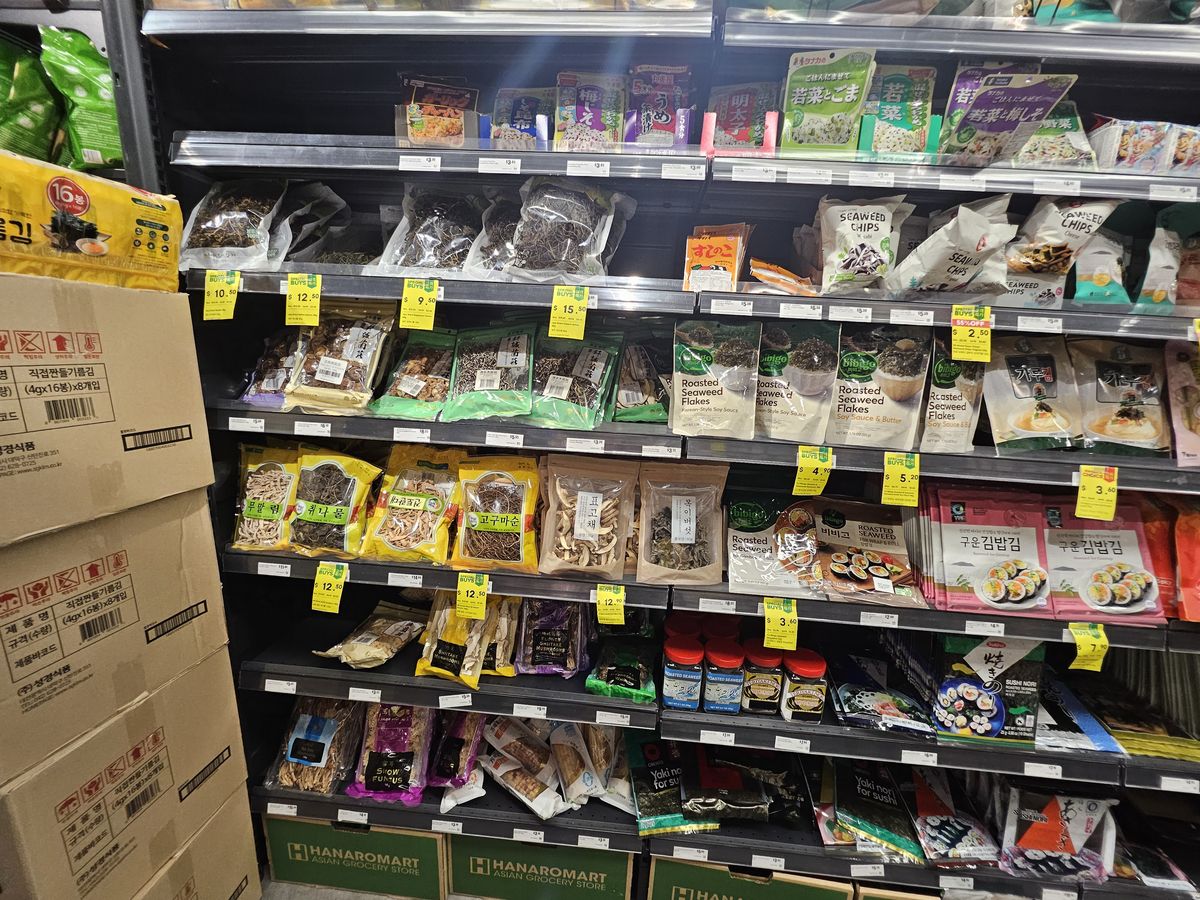
The wider scene is catching up fast. Seoul now has a growing cluster of vegan restaurants and cafes, especially around Hongdae and Itaewon, and Korean grocers stock more plant-based options every year — including vegan kimchi. Convenience stores are handy in a pinch: plain rice triangles (samgak-gimbap) with vegetable fillings, roasted gim, soy milk and fruit are easy safe picks, though it's still worth a quick label check for hidden fish or milk. For a fuller list of dishes you can order with confidence, see our genuinely meat-free Korean dishes.
Don't forget the free side dishes
Here's the blind spot that catches careful vegans: the complimentary banchan. Those little plates of seasoned vegetables look perfectly plant-based, but many namul are dressed with fish sauce, and some hide tiny dried anchovies or salted shrimp. You can't assume the "vegetable" sides are vegan just because they're vegetables. When it matters, ask which banchan are seafood-free, or stick to the ones you've confirmed — plain rice, roasted gim, and a vegan kimchi if they have it.
Vegan vs vegetarian in Korea
The two diverge more here than you might expect. Egg and dairy give ovo-lacto vegetarians extra room — most jeon (egg batter), and a fried egg on bibimbap, are fine for them but not for vegans. What they share is the harder problem: the hidden fish in broths, kimchi and namul. So whichever you are, the same two questions about fish sauce and broth do most of the work.
Is Korean food vegan-friendly, honestly?
The honest answer, from years of doing it: not by default, but absolutely workable once it clicks. In Seoul it's genuinely easy now; in smaller towns it takes more asking, and home cooking is where it really opens up. The reward is that the plant-based heart of Korean food — temple cuisine, fresh namul, fermented soy, tofu a hundred ways — is some of the best vegan eating anywhere, once you know how to steer around the fish.
A quick word on the sauces
Good news on the big Korean pastes: traditional gochujang (chilli paste), doenjang (soybean paste) and ssamjang are plant-based, so the red and the funky aren't your enemy here — it's the broth and the seasoning around them. The catches are small: a few commercial gochujangs slip in a little anchovy or dashida for depth, and some ssamjang blends vary by brand, so a glance at the label settles it. One more note if you're avoiding gluten as well — those same pastes often contain wheat, so see our gluten-free Korean food guide.
"I don't eat meat, fish, or eggs — is that okay?" — "Gogi, saengseon, gyeran an meogeoyo" (고기, 생선, 계란 안 먹어요). And the key follow-up: "Is there fish sauce or anchovy broth?" — "Aekjeot-ina myeolchi yuksu deureoga-yo?" (액젓이나 멸치 육수 들어가요?).
A vegan day in Korea, start to finish
To show the shape of it in practice. Breakfast: plain juk (rice porridge) with the broth question asked, or a convenience-store run — fruit, soy milk, plain rice, roasted gim. Lunch: bibimbap ordered the practiced way — "gogi, gyeran ppaejuseyo" (no meat, no egg), sauce checked, or a proper temple-food restaurant if you're in Seoul or near a big temple — the one meal where you can put the questions down entirely. Afternoon: hotteok or roasted sweet potato (gun-goguma) from a street cart in winter, tteok from a rice-cake shop — checking fillings, since a few use honey or milk powder. Dinner: a vegan restaurant in Hongdae or Itaewon, or sundubu-jjigae at a kitchen that's confirmed a kelp broth. That's a full, genuinely Korean day — the questions become reflexes faster than you'd think.
Cooking for yourself: the vegan Korean pantry
If you have a kitchen — at home abroad or in a Korean stay — the game changes completely, because you control the broth. The foundation is dasima-pyogo yuksu: kelp and dried shiitake simmered together, which does the deep-savoury job anchovies do in restaurant cooking and honestly loses very little. Add the plant-based pastes (gochujang, doenjang, ssamjang — labels checked), soy sauce, sesame oil, and a jar of vegan kimchi (now easy to find at Korean grocers and H-Mart, made without shrimp paste or fish sauce), and most of the home-cooking canon opens up: doenjang-jjigae, kimchi-jjigae, japchae, bibimbap, kimbap, tteokbokki with a kelp broth. This is the quiet secret of vegan Korean eating — the cuisine's building blocks are overwhelmingly plants; it's restaurant shortcuts that add the fish.
Frequently asked questions
Is Korean instant ramyeon vegan? Usually not — most soup powders are meat- or seafood-based, even in flavours that sound vegetable-y. But Korean brands now make explicitly plant-based lines, and the word to scan for is 비건 (vegan) on the packet, which is appearing on more products every year. When in doubt, the allergen box tells the truth faster than the flavour name.
What about Korean desserts and cafe drinks? Traditional rice cakes (tteok) are mostly rice and beans — good territory, with occasional honey or milk-powder fillings to check. The modern cafe scene is trickier: patbingsu is built on milk snow and condensed milk, and Korean bakery items are usually butter-and-egg affairs. The win is that Seoul cafes increasingly stock oat and soy milk, and dedicated vegan bakeries exist in the big neighbourhoods — 비건 on the signboard is your friend again.
Is soju vegan? Standard green-bottle soju is distilled from starches and generally contains no animal ingredients, though as with any processed product, brands vary and certification is rare. Makgeolli (rice wine) is similar territory. If strict certification matters to you, look for explicitly labelled products — Korea's vegan certification mark is slowly spreading to drinks too.
Affiliate link — if you book through it, KContentGuide may earn a small commission at no extra cost to you. We only point you to things we'd happily use ourselves.
This is a food and lifestyle guide based on real experience, not medical or religious advice. Ingredients vary by household, brand and restaurant. If you have a diagnosed food allergy, follow the plan your doctor gave you and confirm ingredients in person every time. For halal, rely on the restaurant's own certification. When in doubt, ask — and if you can't get a clear answer, choose another dish.
Bottom line
Vegan Korean food is absolutely doable — the skill is spotting the fish sauce, the broth and the egg. Lean on temple cuisine, learn the two questions above, and check our list of genuinely meat-free Korean dishes and what to ask in a Korean restaurant.