Let me save you a disappointment before it happens. If you search for Dr. Romantic (낭만닥터 김사부) filming locations expecting a long list of cafés and street corners like you'd get for a Seoul romance, you won't find one. This is a show that lives almost entirely inside one hospital, and that hospital is a set. The operating theatres, the corridors, the staff room where Teacher Kim eats his ramyeon — all built on a stage in Goyang, all gone.
But there's one real place, and it's a good one. The building that plays Doldam Hospital from the outside — the one you see in every establishing shot, with the ambulance pulling up and the mountains behind — is a real former hotel on the shore of a mountain lake in Pocheon, about an hour and a half north-east of Seoul. It has been Doldam for all three seasons. It has a Doldam sign on it. And the lake it sits beside is one of the prettier places in Gyeonggi-do that almost no foreign visitor goes to.
So this guide is honest about its shape: one location, done properly, plus the lake and the mountain that make the trip worth it. I've written up exactly what's there, what the rules are, and the one piece of geography that confuses everyone — because Doldam is supposed to be in Gangwon, and the building isn't.
Dr. Romantic (낭만닥터 김사부, SBS) is the Korean medical franchise everything else gets measured against: Han Suk-kyu as "Teacher Kim," a legendary surgeon who walked away from a Seoul mega-hospital to run a scrappy country hospital in the mountains, and the young doctors who end up there and get rebuilt by him. Season 1 (2016–17, 20 episodes) starred Yoo Yeon-seok and Seo Hyun-jin; Seasons 2 (2020) and 3 (2023) brought in Ahn Hyo-seop and Lee Sung-kyung. Directed by Yoo In-shik, written by Kang Eun-kyung. Season 1 peaked at 27.6% nationwide — enormous numbers. Our full Dr. Romantic review covers all three seasons.
Where Doldam actually is (and isn't)
In the story, Doldam Hospital is in Gangwon-do — the mountainous, under-served province in Korea's north-east, far from the Seoul hospitals the young doctors came from. That's the whole point of the premise: a genius in the wilderness, a place where the nearest big hospital is hours away and a trauma case either gets handled here or dies. If you've read our piece on Korean hospitals in real life vs K-dramas, you'll know that setup is less of a fantasy than it sounds; regional hospitals really do carry that kind of weight.
The real building, though, is in Gyeonggi-do, not Gangwon — in Pocheon, right up against the Gangwon border. Myeongseongsan, the mountain that rises behind the lake, actually straddles the line between Pocheon (Gyeonggi) and Cheorwon (Gangwon). So the production found a spot that looks like deep Gangwon mountain country while staying within a reasonable drive of the Seoul studios. Smart location scouting, and a nice reminder that drama geography is always a bit of a cheat.
One more thing to know before you go: the hospital you see from the outside and the hospital you see from the inside are two different things. The interiors were sets. What's in Pocheon is the facade — a building that was dressed up to be looked at, not walked through. Keep that in mind and the visit makes sense. Expect to go inside and you'll be let down.
The filming locations
This is the one. A modest, slightly tired hotel building a hundred metres or so from the lake, which stopped operating as a hotel in 2012 and has been Doldam Hospital ever since. It's listed by the Korea Tourism Organization as an official filming-location attraction, which tells you how many fans have turned up over the years. The "돌담병원" signboard is still up, and the text of the Hippocratic Oath is displayed on the building — the two things that make it unmistakably Doldam the second you see them.
The rule is simple and it's official: you cannot go inside. This is an exterior to photograph from the car park and the road, nothing more. There's no ticket, no gate, no guide — just a building, a sign and the mountains behind it. Fan guides give daytime hours, but honestly there's nothing to be "open"; it's a view. Go in daylight so you can see it, and go when the light is on the front of the building rather than behind it.
A small thing I love from a Korean fan's write-up: the Doldam sign is a plastic prop, and it wobbles if you push it. Please don't push it. It has survived three seasons and a lot of visitors because people have been gentle with it, and it would be a very silly thing to be the person who finally broke Doldam Hospital.
Search 낭만닥터김사부촬영지 on NAVER Map — that's the name it's listed under. The lake's official address is 402 Sanjeonghosu-ro, Yeongbuk-myeon, Pocheon-si, and the building is a short walk from it; Korean fan guides give the navigation address as 포천시 영북면 산정리 204-1. It's listed on the Korea Tourism Organization's official site (Korean), which confirms the no-entry rule.
Season 3's big new element was Doldam's regional trauma centre, and for that the production built an actual structure next to the hotel building — but only the ground floor. Everything above it was added digitally. So the gleaming multi-storey trauma centre you see in Season 3 was, in person, a one-storey shell beside an old hotel, with the rest painted on in post-production.
I'm including this because it's a lovely piece of how-the-sausage-is-made, and because fans who saw it in 2023 wrote about it. What I can't tell you is whether it's still standing. Sets like this are temporary by nature, the source I have is from the year Season 3 aired, and I couldn't find anything official confirming its status since. Treat it as a possible bonus, not a reason to go.
If the trauma-centre storyline is what you loved, by the way, you'll want The Trauma Code next — it takes the same "regional trauma centre against the odds" idea and goes much harder with it.
Same site as Location #1. Look for a low modern structure beside the hotel building. If it's not there any more, it's not there — don't go asking locals to find it for you.
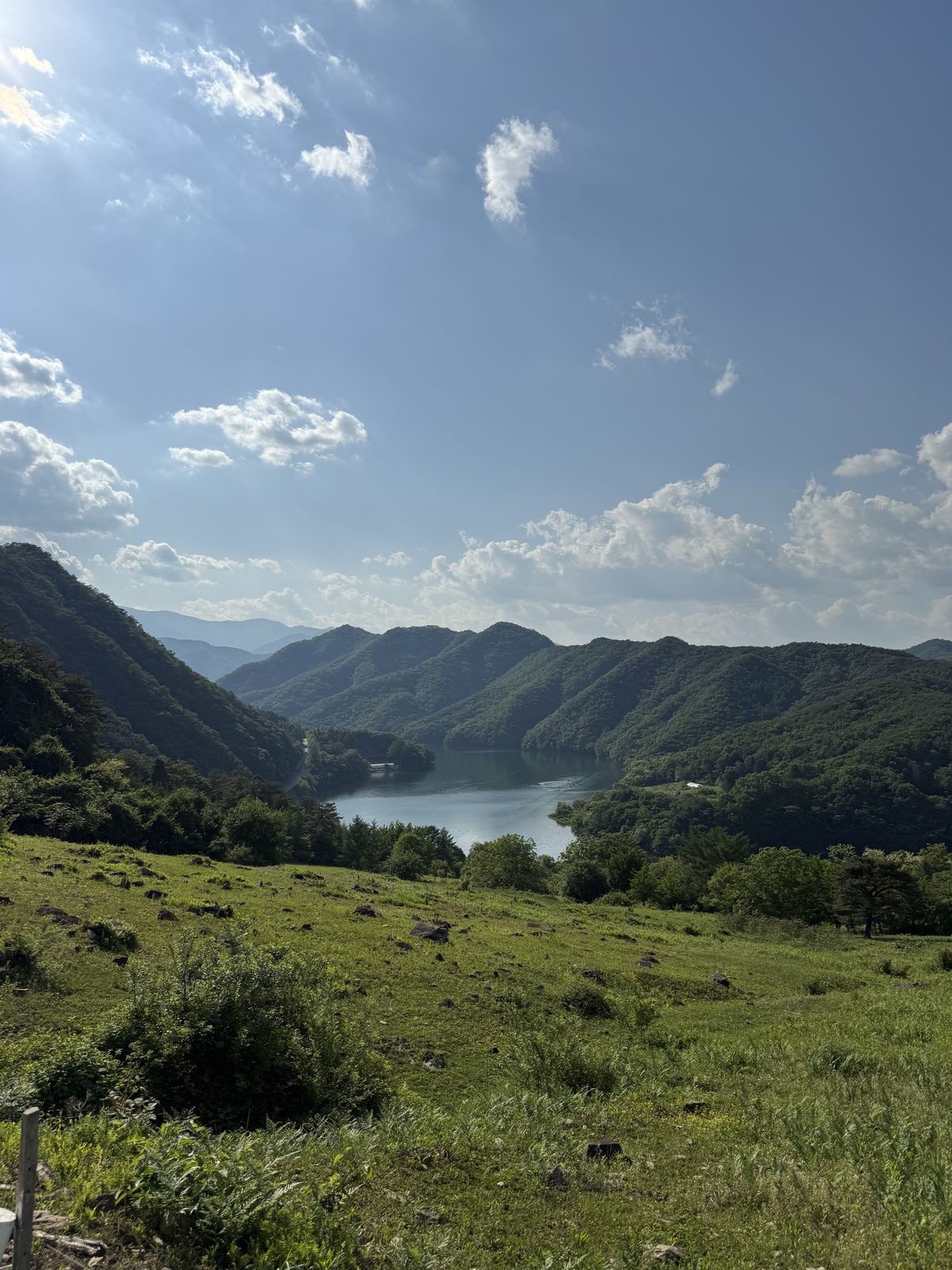
Sanjeong Lake is why the hospital is here at all. It's a reservoir dug in 1925 for farm irrigation that turned into one of Pocheon's best-known scenic spots: clear water, mountains straight up on every side, and a walking path around the shore that locals come for on weekends. In spring and autumn the lake gets a famous night fog that sits on the water like something out of the show's moodier episodes.
This is where you spend most of your time. The hospital takes fifteen minutes; the lake can take a whole afternoon. Walk the loop, which is an easy stroll rather than a hike, sit on the shore, and you'll understand why the production wanted this backdrop — it reads as "remote Gangwon mountain country" without actually being remote at all. There are cafés and restaurants around the lake, a resort, and in winter a hot-spring sauna nearby if you want to make a soft day of it.
It's free, it's open around the clock, and parking is available (with a fee). The combination of "ten-minute drama photo" and "genuinely nice lake walk" is what makes this a day trip worth the drive rather than a pilgrimage you regret.
402 Sanjeonghosu-ro, Yeongbuk-myeon, Pocheon-si, Gyeonggi-do. Details, parking and contact numbers on the official VisitKorea page for Pocheon Sanjeonghosu Lake.
Join Seoul Mate free and I'll send you "Where to Start" — the 10 K-dramas I recommend to every beginner — plus a weekly pick. No spam, leave anytime.
The mountain rising over the lake is Myeongseongsan, and it's the literal line between the drama's two geographies — its summit ridge is the boundary between Pocheon in Gyeonggi and Cheorwon in Gangwon. It's famous in Korea for one thing above all: in autumn its upper slopes turn into huge fields of silver grass (억새), pale and waving, which draw walkers from all over the Seoul area in October and November.
You don't need to climb it to do the Doldam trip. But if you're coming in autumn and you have the legs for it, this is the thing that turns a nice day into a memorable one — the lake below, the grass fields above, and the mountains the show kept telling you were Gangwon finally, actually, being Gangwon. It's a proper hike rather than a stroll, so wear real shoes and start early.
Trailheads are reached from the Sanjeong Lake side. Background on the official VisitKorea page for Myeongseongsan Mountain. Check the weather — it's exposed up top.
Why a country hospital, and why it works
Here's the thing about Dr. Romantic that's worth understanding before you stand in front of that building. The premise — the brilliant surgeon who chose a small rural hospital over fame — isn't just a romantic conceit. It's pointed at something real in Korea: the gap between the enormous, prestigious hospitals in Seoul and everywhere else. Young Korean doctors overwhelmingly want the big-city teaching hospitals. Regional hospitals struggle to staff certain specialties. Trauma care outside the capital has been a political argument for years. Season 3's whole trauma-centre plot is basically that argument dramatised.
That's why the show put Doldam in Gangwon rather than, say, a Seoul suburb. Gangwon is the province Koreans picture when they think "far from the city, hard to reach, beautiful and under-served." And it's why the production needed a location that looked the part even if it was technically in Gyeonggi. The lake, the mountains, the slightly worn hotel building — they sell the idea that this is a place the system forgot, which is the emotional engine of all three seasons.
I bring this up because it changes what you're looking at. It's not just "the building from the show." It's the production's answer to the question "what does a hospital that chose to be here look like?" — and the answer they found was a closed family hotel by a lake, which is a lovely, slightly sad, very Korean piece of casting.
Plenty of Korean fans have filmed walkarounds of the building and the lake path, including some from the Season 3 era showing the trauma-centre set. Have a look at YouTube results for 낭만닥터 김사부 촬영지 돌담병원 — searching in Korean gets you far better results than in English for this one.
Doing it as a day trip from Seoul
I'll be straight with you: Pocheon is not a subway town. The sensible ways to do this are a rental car, a guided day tour, or an intercity bus to Pocheon followed by a local bus or taxi out to the lake — and the last option eats a lot of your day in waiting. If you don't drive in Korea, a tour is the honest recommendation. If you do, it's roughly an hour and a half to two hours from central Seoul depending on traffic, and the drive north through the Gyeonggi hills is pleasant in its own right.
Here's the shape of the day I'd suggest. Leave Seoul mid-morning. Go to the hospital first while the light's good — it takes fifteen minutes, including the photos. Then give the lake the rest of the day: walk the loop, eat lunch at one of the places around the shore, and sit for a while. If it's October or November and you're feeling fit, swap the lazy afternoon for the Myeongseongsan silver-grass hike and come back down to the lake for a late lunch. Either way, aim to be driving back by late afternoon; the roads toward Seoul get busy at the end of a weekend.
If you'd rather stay in Gangwon proper afterwards — the real Gangwon the show imagines — our Sokcho guide and Gangneung guide cover the east coast, which is a couple of hours further on from here and a completely different landscape.
Practical notes
- Exterior only. This is the one rule. The building is closed, the sign is a prop, and the whole thing survives on visitors behaving. Photograph from outside, don't touch, don't try doors.
- Search in Korean. On NAVER Map use 낭만닥터김사부촬영지 for the hospital and 산정호수 for the lake. Our NAVER Map guide shows how to switch the app to English.
- Car or tour, realistically. Public transport exists but turns a relaxed day into a logistics exercise.
- Check before a special trip. Sets get removed, buildings get sold. The hotel building has been stable for years, but the Season 3 trauma-centre structure is exactly the kind of thing that disappears without notice.
- Autumn is the season. Night fog on the lake, silver grass on the mountain, and the colours the show's exteriors were mostly shot in.
The restaurants around Sanjeong Lake are rural Korean restaurants: Korean-only menus, fewer substitutions, and staff who will say yes to be polite rather than because they've checked. That makes what to ask a Korean restaurant more useful here than in Seoul. The lakeside places lean toward grilled meat — see the Korean BBQ dietary guide for what's in the marinades and sauces. And there's a slightly grim irony worth taking seriously: the whole premise of Dr. Romantic is being far from a big hospital, and out here you really are. If you carry a serious allergy, read our allergic reaction emergency guide for Korea before you leave the city, not after. Recipes vary — ask every time.
Frequently asked questions
Is Doldam Hospital a real hospital? No. It's a fictional hospital. The building you can visit is a former hotel that was dressed with a sign and used for exterior shots; all the medical interiors were sets in a studio in Goyang. Nobody has ever been treated at "Doldam."
Can I go inside? No, and that's official — the Korea Tourism Organization's own listing for the site says so. It's an exterior to look at. There's genuinely nothing inside that relates to the show anyway, since none of the interiors were filmed there.
Was it the same building for all three seasons? Yes — the Pocheon hotel has been the Doldam exterior throughout, which is unusual for a franchise with multi-year gaps between seasons. Season 3 added the trauma-centre structure beside it.
Is it in Gangwon-do like in the show? No. It's in Pocheon, Gyeonggi-do — but right on the Gangwon border, with the mountain behind the lake actually straddling the two provinces. Close enough that the show gets away with it.
Is it worth the trip if I'm not a huge fan? For the building alone, no — it's a ten-minute stop. For the building plus Sanjeong Lake, yes, especially in autumn. Think of it as a nice lake day with a drama photo attached, not the other way around. If you want a filming trip that's more walkable and more varied, the Doctor Slump and Hospital Playlist locations are both doable on the Seoul subway.
Explore our guides to Hospital Playlist, Doctor Slump and Crash Landing on You — and plan a full week with our 7-day Korea itinerary for K-drama fans.
🇰🇷 Korea Travel Essentials
Everything you need before you go
-
🚌 Getting Around
A T-money card covers Seoul's subway and the intercity buses out toward Pocheon.
Read our T-money guide → -
🗺️ Navigation
Google Maps barely works in Korea. Download NAVER Map — switch to English in Settings → Language.
-
📱 Stay Connected
Get a Korea eSIM for instant data the moment you land — you'll want it for navigation out here.
Get a Korea eSIM → -
✈️ Airport → City
Landing at Incheon? Here's how to get into Seoul without stress.
Read our airport guide →